
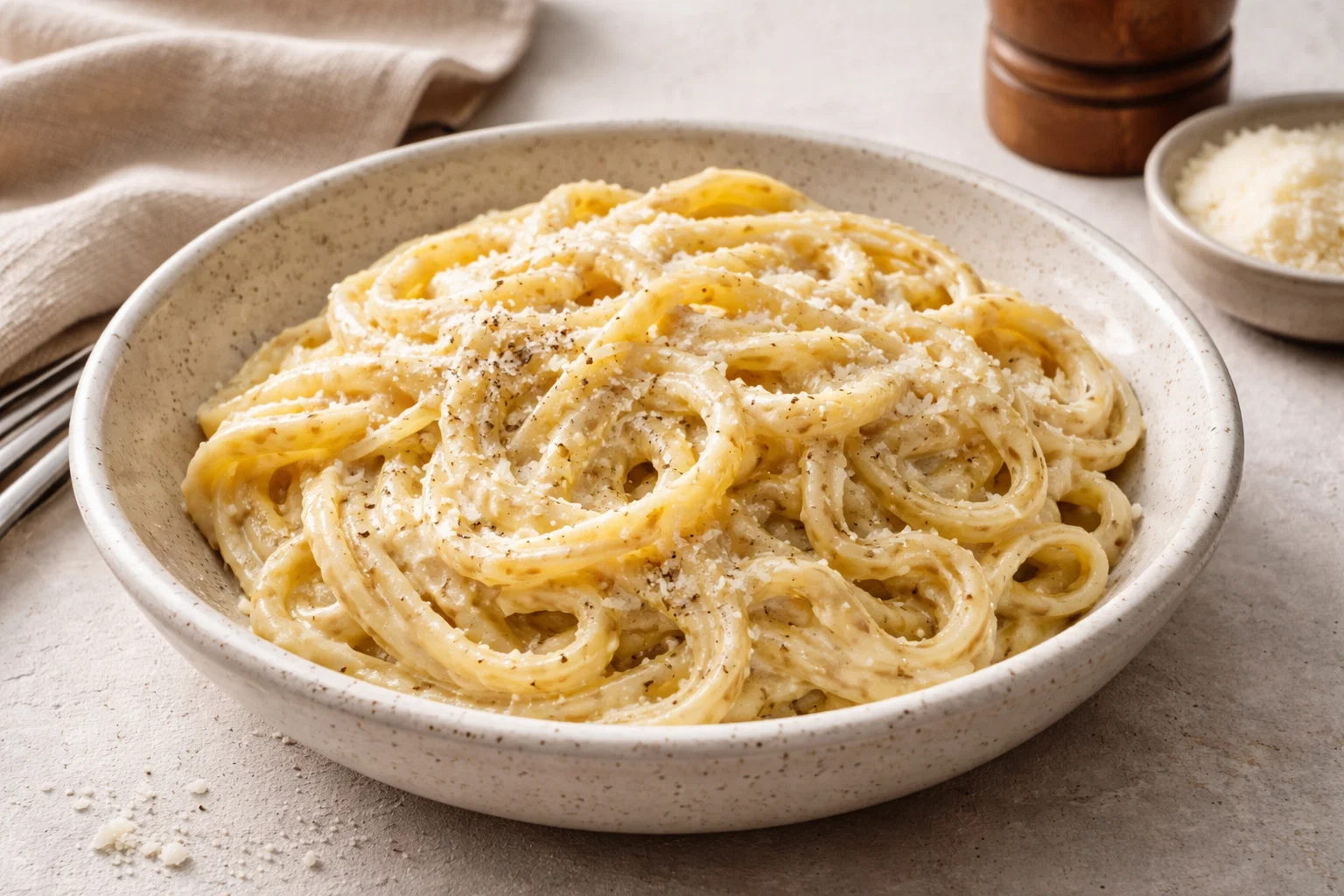
Creamy Garlic Pasta
Table of Contents
This Creamy Garlic Pasta cooks entirely in one pan — spaghetti simmered directly in seasoned chicken broth, finished with heavy cream, a three-cheese blend, and fresh lemon juice. Restaurant-quality results in 30 minutes with minimal cleanup.
Thank you for reading this post, don't forget to subscribe!I. Why This Creamy Garlic Pasta Belongs in Your Weekly Rotation
There are weeknight pasta recipes, and then there are weeknight pasta recipes that feel genuinely gourmet without requiring a culinary degree, a sink full of dishes, or more than thirty minutes from the moment you open the refrigerator to the moment you set the bowl on the table.
This Creamy Garlic Pasta is emphatically the second kind.
It is the recipe that earns a 4.8-star rating after 339 reviews not because it is complicated or clever, but because it is simply, reliably, consistently excellent. Over 771 home cooks have made it — in apartment kitchens and farmhouse kitchens, for picky children and sophisticated dinner guests, on Tuesday nights when nothing was planned and on special occasions when something impressive was needed on short notice. It works every time, for everyone, in every circumstance.
One Pan. Thirty Minutes. Genuinely Gourmet.
The defining feature of this Creamy Garlic Pasta recipe is its one-pan method — the pasta cooks directly in the seasoned chicken broth rather than in a separate pot of boiling water. This is not merely a convenience shortcut. It is a technique that fundamentally changes the flavor of the finished dish. As the spaghetti simmers in the broth, it absorbs the garlic, butter, herbs, and bouillon directly into each strand. By the time the pasta is tender, it is already seasoned from the inside out — and the starchy, flavor-packed cooking liquid becomes the foundation of the creamy sauce without any draining or transferring required.
One pan. One round of dishes. Thirty minutes. And a pasta dish that tastes like it came from a restaurant that takes reservations.
Infinite Flexibility: Side Dish or Full Meal
The other remarkable quality of this Creamy Garlic Pasta is how naturally it transforms based on what you add to it. In its base form, it is an extraordinary side dish — the kind that steals the spotlight from whatever protein it is supposed to be accompanying. But add a handful of prawns and scallops and it becomes a seafood pasta worthy of a dinner party. Stir in sautéed mushrooms and power greens and it becomes a satisfying vegetarian main course. Top it with crispy breaded chicken and it becomes the comfort food dinner that your family will request every single week. The base recipe is a canvas, and the canvas is exceptional.
II. Ingredients: What Makes This Creamy Garlic Pasta Better Than the Rest
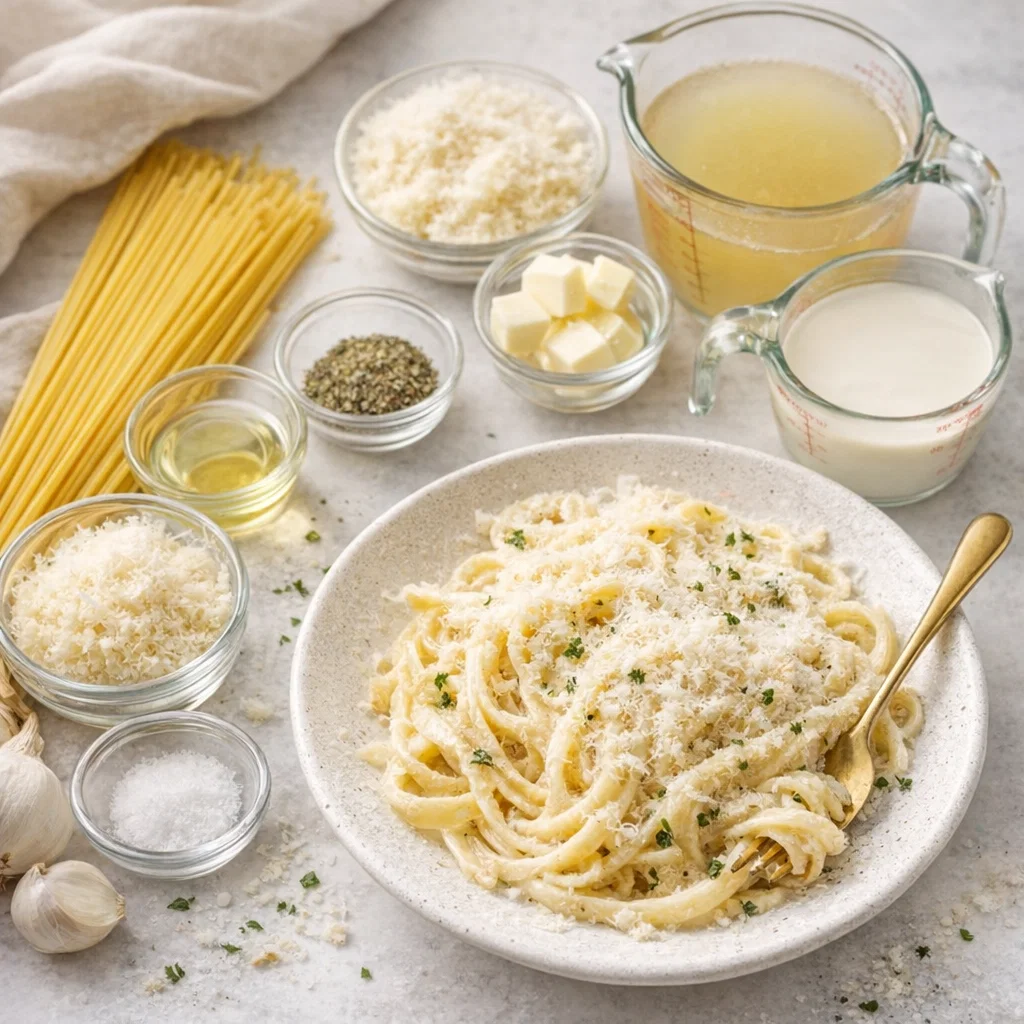
Every ingredient in this recipe was chosen with intention. Understanding why each element is here — and what the gourmet upgrades do for the finished dish — gives you the knowledge to make this Creamy Garlic Pasta your own.
The Foundation: Butter, Olive Oil, and Garlic
Olive oil and butter used together is the foundational fat combination of Italian-inspired cooking for good reason. Olive oil raises the smoke point of the butter, preventing burning during the sauté stage, while the butter contributes a rich, creamy flavor and a golden color that olive oil alone cannot provide. Together they create the ideal medium for the most important ingredient in this recipe.
Fresh garlic — a minimum of 4 cloves, minced — is the flavor cornerstone of this Creamy Garlic Pasta. Do not substitute garlic powder or pre-minced jarred garlic here. Fresh minced garlic sautéed in butter and olive oil develops a sweet, nutty, aromatic depth that no dried or processed alternative can replicate. The garlic essentially perfumes the entire cooking medium, and since the pasta will cook directly in that medium, it infuses the flavor into every single strand. Use at least four cloves. Six is better. Eight is acceptable for garlic enthusiasts and no one will stop you.
Salt and black pepper are added throughout the cooking process — not just at the end — to build layered seasoning that distributes evenly through the finished dish.
The Umami Liquid Base: Chicken Broth and Bouillon
Chicken broth or stock is the cooking liquid that replaces the traditional pot of plain boiling water — and this substitution is responsible for a significant portion of the flavor advantage this Creamy Garlic Pasta recipe has over standard pasta preparations. As the pasta absorbs the broth during cooking, it takes on a deep, savory, rounded flavor from the very first bite rather than relying entirely on surface sauce for its taste.
Chicken bouillon — added to the broth — amplifies this effect considerably. Bouillon concentrates the savory, meaty flavor notes of the broth and gives the cooking liquid an intensity that homemade stock achieves through hours of simmering. A single cube or teaspoon of bouillon powder transforms good chicken broth into an extraordinary pasta cooking base.
The Pasta: Spaghetti and Its Better Alternatives
Traditional spaghetti is the classic choice for this Creamy Garlic Pasta — its long, thin strands work beautifully in the one-pan method and coat evenly with the creamy sauce. But if you want to genuinely elevate the recipe, consider these alternatives:
Bucatini — thick, hollow spaghetti that traps the creamy sauce inside each strand as well as coating the outside — is arguably the best possible pasta for this recipe. Every bite is twice as saucy. Rotini provides a different textural experience, with its spiral shape gripping the sauce in every crevice. Whole wheat pasta adds a nutty, slightly earthy flavor and additional fiber that makes the dish feel more substantial. Any of these options work within the one-pan method in the same way as standard spaghetti.
The Creamy Finish: Heavy Cream and the Three-Cheese Blend
Full-fat heavy cream is the non-negotiable ingredient that gives this Creamy Garlic Pasta its signature silky, coating, restaurant-quality sauce. Do not substitute half-and-half, whole milk, or any lower-fat dairy alternative here. Lower-fat options lack the fat content needed to create a stable, thick, emulsified sauce — they produce a watery, thin, disappointing result that runs off the pasta rather than coating it. Heavy cream produces a sauce that clings to every strand and maintains its consistency from the first serving to the last.
The three-cheese blend — Parmesan, Pecorino Romano, and Wine Cheese (or a sharp aged cheese of your choice) — creates a depth of flavor that no single cheese can achieve alone. Parmesan provides the classic savory, slightly nutty backbone. Pecorino Romano adds a sharper, saltier, more assertive edge. The Wine Cheese (such as a BellaVitano or similar aged variety) contributes a subtle complexity and a smooth melt that rounds out the blend beautifully. Always use freshly grated cheese rather than pre-shredded — the anti-caking agents in pre-shredded cheese prevent proper melting and produce a grainy rather than silky sauce.
Gourmet Add-Ins: The Tweaks That Make It Better
Fresh lemon juice or lemon powder is the brightness element that keeps this rich, creamy pasta from feeling heavy. The acidity cuts through the cream and cheese, lifts every other flavor, and gives the finished Creamy Garlic Pasta that clean, vibrant finish that makes you want another bite immediately after the first.
Dried parsley, oregano, thyme, and a pinch of cayenne build the herbal complexity and subtle warmth that distinguish a genuinely seasoned pasta from a one-dimensional cream sauce. The cayenne is particularly important — it does not make the dish spicy, but it prevents the richness of the cream and cheese from feeling cloying, adding a barely perceptible background warmth that makes everything else taste sharper and more defined.
Toasted breadcrumbs scattered over the finished pasta just before serving add a satisfying textural contrast — a golden, crispy, slightly nutty element against the silky creaminess of the sauce. This is the detail that makes a home-cooked Creamy Garlic Pasta look and taste genuinely professional.
III. Step-by-Step Instructions: The One-Pan Method
The Sauté Secret: Two Paths to the Same Great Result
Option A — The Classic Approach: Heat olive oil and butter together in a large, deep skillet or wide saucepan over medium heat. When the butter is melted and foaming, add the minced garlic. Sauté for 60 to 90 seconds, stirring constantly, until the garlic is fragrant and just barely golden at the edges. Watch carefully — garlic goes from perfectly golden to burnt and bitter in seconds, and burnt garlic will ruin the entire dish. Fragrant and pale golden is the target.
Option B — The Pro Approach (For Maximum Flavor): If you are adding a protein to this Creamy Garlic Pasta, cook it first. Sear seasoned meatballs or a seasoned pork steak in the butter and olive oil until golden brown. Remove the cooked protein and set it aside — but leave every drop of the cooking fat and any browned bits in the pan. This rendered fat is now infused with the flavor of the seared meat, the garlic is about to be cooked in it, and the finished pasta sauce will have a depth and complexity that the classic approach cannot fully achieve. This is the single pro-level technique that explains why restaurant pasta tastes different from home pasta.
The One-Pan Simmer
Add the chicken broth, bouillon, salt, pepper, dried herbs (parsley, oregano, thyme), and the pinch of cayenne to the pan with the sautéed garlic. Stir to combine and dissolve the bouillon. Increase heat to medium-high and bring to a rolling boil. Once boiling, add the pasta directly to the pan, pressing it down to submerge as much of it as possible in the liquid.
Active Cooking: Stir, Watch, Adjust
This stage requires a bit of active attention — more than standard boiled pasta, but the payoff is worth it. Stir the pasta occasionally to prevent it from sticking to the bottom of the pan and to ensure even cooking. As the pasta absorbs the broth, the liquid level in the pan will drop. If the liquid absorbs completely before the pasta is fully tender, add extra chicken broth a splash at a time — never plain water, which would dilute the flavor you have been building. Cook until the pasta is al dente — tender but with a slight firmness at the center that will finish softening in the sauce.
The Emulsion: Building the Creamy Sauce
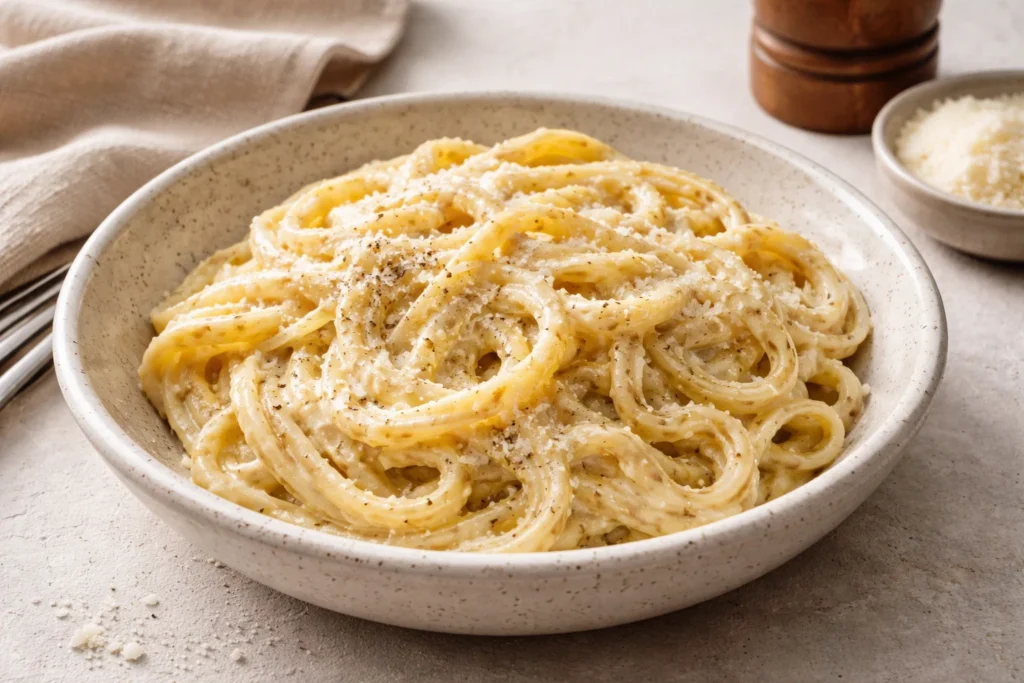
Turn off the heat entirely. This step is critical — adding cream and cheese to an actively boiling pan will cause the sauce to break, producing a greasy, separated result rather than the silky emulsion you want. With the heat off, pour in the heavy cream and stir it into the starchy, garlicky broth that remains in the pan. Then add the three-cheese blend in two or three additions, stirring between each addition until each addition is fully incorporated and the sauce is thick, glossy, and coating every strand of pasta evenly.
The residual heat from the pan and the hot pasta is sufficient to melt the cheese and bring the sauce together without the risk of curdling or separation that direct heat would create. This is the emulsion technique that produces the signature silky sauce of this Creamy Garlic Pasta.
The Brightness Finish
Stir in the fresh lemon juice and a handful of fresh or dried herbs. The lemon juice is added at the very end — after the heat is off — to preserve its bright, fresh acidity. Heat destroys the volatile compounds that give lemon juice its characteristic brightness; added off-heat, it remains vibrant and effective. Taste and adjust the seasoning with additional salt, pepper, or lemon as needed. Scatter toasted breadcrumbs over the top if using and serve immediately.
IV. Customization & Variations: Make It Your Own
Seafood Alfredo Style
Transform this Creamy Garlic Pasta into an elegant seafood pasta by adding prawns and scallops to the pan during the final minutes of cooking. Pat the seafood dry, season with salt and pepper, and sear briefly in butter before setting aside — then fold them into the finished pasta just before serving so they stay tender and do not overcook in the sauce. The combination of creamy garlic sauce and sweet, seared seafood is one of the great simple pleasures of Italian-inspired cooking.
The Veggie Boost
For a lighter, vegetable-forward version of this Creamy Garlic Pasta, stir in power greens (baby spinach, kale, or arugula) directly into the hot finished pasta — the residual heat wilts them perfectly within 60 seconds. Sautéed cremini mushrooms add a meaty, earthy depth that makes this variation satisfying enough to serve as a standalone vegetarian main course. Steamed broccoli florets add color, texture, and nutritional density without competing with the creamy garlic sauce.
Protein Toppers
For a full meal, serve this Creamy Garlic Pasta topped with breaded chicken cutlets — golden, crispy, and set directly on top of the pasta like a deconstructed chicken Parmesan. Grilled seasoned pork steak, sliced thinly and fanned over the bowl, is another excellent option that pairs beautifully with the garlicky cream sauce and adds a satisfying, hearty protein component.
The Rotel Kick
For a zesty, slightly spicy variation with a Southwestern edge, stir a can of drained Rotel (diced tomatoes with green chiles) into the pasta during the final minute of cooking. The tomato acidity and chile heat play against the richness of the cream and cheese in a way that is surprising, bold, and completely addictive. This variation pairs particularly well with the grilled pork steak topper for a Tex-Mex inspired pasta bowl.
V. Troubleshooting & Pro Tips
Avoiding a Watery Sauce
If your Creamy Garlic Pasta sauce is thin and watery rather than thick and coating, the cause is almost certainly the cream. Full-fat heavy cream is mandatory — it contains the fat content needed to create a stable, thick emulsion when combined with the starchy cooking liquid and melted cheese. Lower-fat alternatives lack this fat content and produce a sauce that cannot thicken properly. If you have already used heavy cream and the sauce is still thinner than desired, allow the pasta to rest off the heat for 2 to 3 minutes — the sauce will continue to thicken as it cools slightly and the starch from the pasta works into it.
Preventing Pasta Stickiness
Keep a cup or two of extra chicken broth warm and ready beside the stove before you begin cooking the pasta. If the broth in the pan absorbs completely before the pasta has reached al dente, the pasta will begin to stick to the bottom of the pan and potentially burn. Adding warm broth (never cold, which drops the pan temperature dramatically) keeps the cooking process moving smoothly and maintains the momentum of the one-pan method.
Scaling the Recipe
This Creamy Garlic Pasta recipe can be doubled to serve 8 without any fundamental changes to the technique. Use a larger pan to accommodate the increased pasta volume, and scale all ingredients proportionally. One important note: cooking times do not necessarily double with a doubled recipe. The pasta will take approximately the same time to reach al dente regardless of quantity, provided the liquid ratio is correctly scaled. Monitor by texture rather than time and add extra broth as needed.
VI. Nutrition & Community Results
Nutrition Facts (Per Serving)
| Nutrient | Amount Per Serving |
|---|---|
| Calories | 543 kcal |
| Total Fat | 32g |
| Saturated Fat | 17g |
| Protein | 17g |
| Total Carbohydrates | 52g |
| Fiber | 2g |
| Sodium | ~680mg |
Nutritional values are for the base recipe and do not include optional protein toppings or add-ins.
What 771+ Home Cooks Are Saying
The community around this Creamy Garlic Pasta recipe is one of its most valuable features. With 339 reviews and a 4.8-star average rating, the feedback is remarkably consistent: home cooks describe it as the recipe that finally made them feel confident in the kitchen, the pasta their families request every week, and the dish they make when they want to impress someone without spending the whole day cooking.
The user photo gallery tells the story in even more vivid terms — bowls of golden, silky pasta topped with seared prawns, golden breaded chicken, sautéed mushrooms, and wilted greens from kitchens all over the world. Every variation looks different. Every version looks extraordinary.
Looking for more chicken inspiration?
- Healthy Crockpot Chicken Recipes for Meal Prep
- Easy Crock Pot Chicken Tortilla Soup
- Creamy Chicken Pasta – The Cozy Cook
- The Best Garlic Parmesan Chicken Meatloaf (Juicy & Easy!)
- Easy Creamy Cajun Chicken Pasta (Chili’s Copycat) – 30 Mins
- Honey Garlic Chicken – Easy 15-Minute Weeknight Dinner
- Ultimate Quick and Easy Chicken Enchiladas