
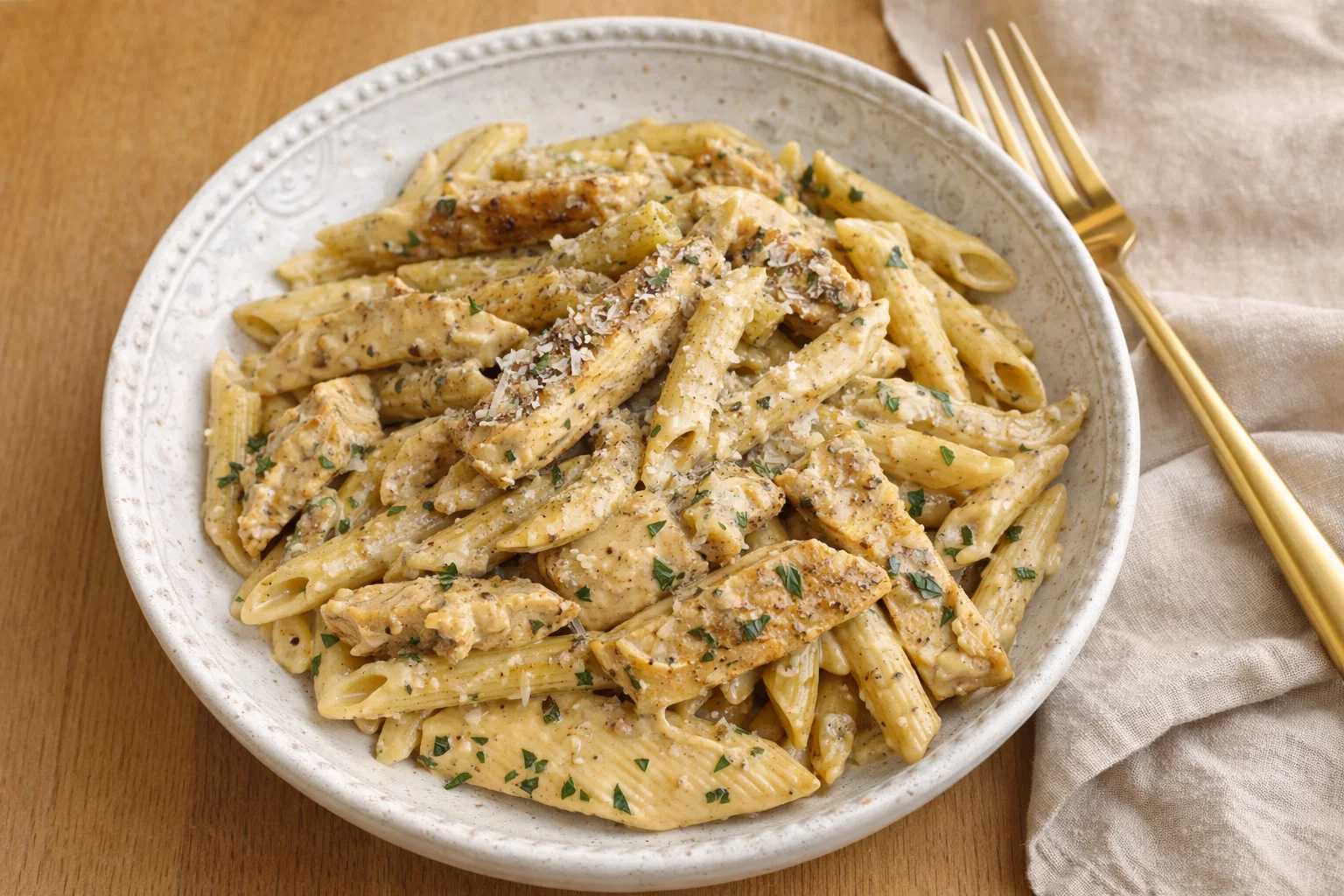
Garlic Parmesan Chicken Pasta
Table of Contents
This Garlic Parmesan Chicken Pasta brings restaurant-quality flavor to your kitchen in a single pan — seared seasoned chicken, penne pasta cooked directly in chicken broth, and a silky garlic parmesan cream sauce that comes together in 30 minutes with minimal cleanup.
Thank you for reading this post, don't forget to subscribe!I. The One-Pan Dinner That Belongs on Every Table
There is a specific kind of dinner that occupies a rare and valuable category in the home cook’s repertoire: special enough to feel like an occasion, simple enough to make on a Wednesday. Garlic Parmesan Chicken Pasta is precisely that recipe — developed originally as part of a Valentine’s Day menu series, where the goal was a dish romantic enough for an anniversary dinner but honest enough to become a genuine weeknight staple.
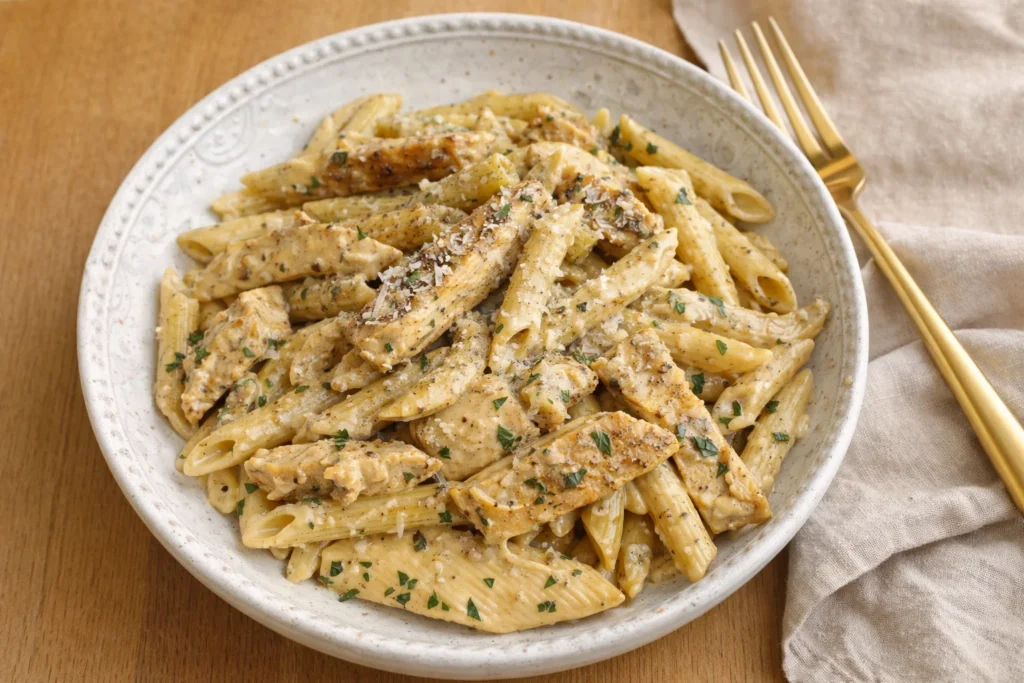
It succeeded on both counts. This Garlic Parmesan Chicken Pasta is the kind of meal that makes people put down their phones at the table. The sauce is rich and creamy with a deep garlic and Parmesan backbone. The chicken is golden and perfectly seared, sliced and tossed back through the pasta just before serving. The penne has cooked directly in seasoned chicken broth, absorbing flavor into every tube rather than sitting in a pool of the sauce as an afterthought.
And it all happens in one pan in 30 minutes.
Why You Will Love This Garlic Parmesan Chicken Pasta
Minimal cleanup is the first and most practically significant reason. One pan means one pan to wash — not a pot for the pasta, a skillet for the chicken, a saucepan for the sauce, and a colander to drain. One pan. The entire recipe, start to finish, in a single vessel.
A rich, creamy garlic parmesan sauce that tastes like it took considerably longer than it did is the second reason. The combination of butter-sautéed garlic, chicken broth reduced with the pasta’s starch, heavy cream, and freshly grated Parmesan produces a sauce that is silky, coating, and deeply savory — the kind that makes you drag the last piece of bread through the pan before anyone else can.
A genuinely balanced meal — protein from the chicken, carbohydrates from the penne, and satisfying fats from the cream and Parmesan — means this is not just a delicious dinner but a complete one. No side dish required, though several are suggested.
Accessible ingredients available at any grocery store round out the appeal. Nothing here requires a specialty store, an online order, or advance planning. Everything is on the regular weekly shopping list.
II. Ingredient Breakdown: What Goes Into This Garlic Parmesan Chicken Pasta
Every ingredient in this recipe earns its place. Here is exactly what you need and why each component matters.
The Chicken: Butterflied or Beaten to ½-Inch Thickness
Boneless, skinless chicken breasts are the protein base for this Garlic Parmesan Chicken Pasta. The most important preparation step — before any seasoning, before any cooking — is ensuring the chicken is ½ inch thick throughout. Chicken breasts as sold in most grocery stores are thicker at one end than the other, which means one half overcooks before the other half reaches temperature.
There are two ways to achieve uniform ½-inch thickness: butterfly the chicken (slice horizontally through the thickest part of the breast, opening it like a book) or place it between sheets of plastic wrap and beat it with a meat mallet or the bottom of a heavy pan until it reaches an even thickness throughout. Either method produces chicken that cooks evenly across its entire surface in the same amount of time — the foundational technique that ensures juicy, perfectly cooked chicken rather than dry, uneven results.
The Seasoning Blend: Building Flavor Into the Chicken
The spice rub for this Garlic Parmesan Chicken Pasta is built from four components that work together to create a well-rounded, deeply flavored crust on the seared chicken: Italian seasoning, paprika, salt, and black pepper. Italian seasoning provides the herbal baseline. Paprika adds color, mild earthiness, and a subtle warmth. Salt and pepper do what they always do — sharpen every other flavor and season the protein throughout.
Rub the blend generously onto both sides of the butterflied or beaten chicken, pressing firmly to adhere. The seasoning that forms a crust during searing becomes part of the pan’s fond — the browned bits that are deglazed with chicken broth and become part of the sauce.
The Pasta Base: Penne, Onion, and Lots of Garlic
Penne pasta is the specifically preferred choice for this Garlic Parmesan Chicken Pasta recipe, and the reason is structural. Penne’s tubular shape with ridged exterior is engineered — not accidentally — to trap and hold sauce. During the one-pan cooking method, where the pasta simmers directly in chicken broth and absorbs the cooking liquid, the tubes fill with the broth and later with the cream sauce. Every bite of penne in this dish contains sauce both on the outside and inside the tube. Linguine or spaghetti coat only on the outside. Penne delivers twice the sauce per bite.
Yellow onion, finely diced, sautéed until soft and lightly golden in butter and oil, creates the aromatic sweetness that forms the flavor foundation of the sauce. It dissolves into the background of the finished dish — you do not taste onion specifically, but you would immediately notice its absence.
Garlic — and the recipe calls for a generous, unreserved quantity of it — is the dominant flavor note in the sauce that makes this Garlic Parmesan Chicken Pasta as distinctive and craveable as it is. Use fresh garlic, minced or finely grated, and use more than you initially think you need. Four to six cloves is the recommended starting point. Eight is not unreasonable for garlic enthusiasts.
The Liquid Base: Chicken Broth Instead of Water
The pasta in this recipe cooks in chicken broth rather than plain water — and this single substitution is responsible for a significant portion of the recipe’s flavor advantage over standard pasta dishes. As the penne simmers in seasoned broth, it absorbs the stock’s savory depth directly into the pasta itself. By the time the broth has been mostly absorbed and the cream and Parmesan are added, the pasta is already seasoned from the inside. No amount of sauce applied to water-cooked pasta can replicate this effect.
Heavy cream is the dairy component that creates the signature silky richness of the garlic parmesan sauce. Its role is discussed in detail in the technical tips section — but the short version is that heavy cream provides the fat content necessary to create a stable, thick, coating sauce. It is not optional and it is not replaceable with a lower-fat alternative without significant quality loss.
Fresh flat-leaf parsley, added at the end with the cream and Parmesan, provides a burst of bright, herbal freshness that cuts through the richness of the sauce and gives the finished Garlic Parmesan Chicken Pasta a clean, vibrant finish.
The Non-Negotiable: Freshly Grated Parmesan
This point bears its own dedicated section because it is the single most common source of disappointment in homemade cream sauces: use freshly, finely grated Parmesan cheese. Not pre-shredded. Not the shelf-stable powder from a green shaker. Freshly grated from a block of real Parmigiano-Reggiano or Grana Padano.
Pre-shredded cheese is coated with anti-caking agents — typically cellulose derived from wood pulp — that prevent the shreds from clumping in the bag. These same agents also prevent the cheese from melting smoothly into a sauce, producing a grainy, separated, clumpy result rather than the silky emulsion that freshly grated cheese creates. The 90 seconds it takes to grate Parmesan fresh at the moment you need it is the difference between a great Garlic Parmesan Chicken Pasta and a mediocre one.
III. Step-by-Step Instructions: The One-Pan Method
Step 1 — Prep and Season the Chicken
Butterfly or beat the chicken breasts to an even ½-inch thickness throughout. Combine the Italian seasoning, paprika, salt, and black pepper in a small bowl. Rub the seasoning blend generously over both sides of each chicken piece, pressing firmly to ensure the spices adhere.
Step 2 — Sear the Chicken in Avocado Oil
Heat a large pan with a lid (stainless steel is the preferred choice — see Section IV for technique details) over medium-high heat. Add avocado oil — chosen for its high smoke point and neutral flavor — and allow it to come to temperature. Using the water dance test described in Section IV, confirm the pan is properly preheated before adding the chicken.
Place the seasoned chicken in the hot pan and cook without moving for 4 to 5 minutes per side until a deeply golden crust has formed and the internal temperature reaches 165°F at the thickest point. Remove from the pan and set aside to rest. Do not clean the pan — the browned fond left behind is flavor that will become part of the sauce.
Step 3 — Sauté the Aromatics
Reduce the heat to medium. Add a knob of butter and a small amount of oil to the same pan — the butter provides flavor and the oil raises the smoke point. Add the finely diced yellow onion and cook for 3 to 4 minutes until softened and translucent. Add the minced garlic and cook for 60 seconds, stirring constantly, until fragrant. Do not allow the garlic to brown — at this stage, golden-brown garlic is acceptable but dark brown garlic is bitter and will harm the sauce.
Step 4 — Deglaze and Simmer the Pasta
Pour the chicken broth into the pan all at once. Use a wooden spoon or spatula to scrape up all the browned bits from the bottom of the pan — this deglazing step dissolves the fond into the broth and adds its full flavor to the sauce base. Add the penne pasta directly to the broth, ensuring all pieces are as submerged as possible. The liquid level will be lower than you are accustomed to in traditional pasta boiling — this is intentional and correct.
Cover the pan with the lid and cook over medium heat for approximately 10 minutes, stirring every 2 to 3 minutes to prevent sticking and to check the liquid level. Add small splashes of additional broth if the liquid absorbs completely before the pasta is tender. Cook until the pasta is al dente — cooked through but with a slight firmness at the center.
Step 5 — The Creamy Finish: Heat Off First
Turn off the heat entirely before adding the dairy. This is the most critical technical instruction in the entire Garlic Parmesan Chicken Pasta recipe — adding heavy cream and Parmesan to a pan that is still at high heat causes the dairy to break, producing a separated, greasy, curdled result rather than a smooth, silky emulsion. With the heat off, stir in the heavy cream, freshly grated Parmesan, and fresh parsley in one addition, stirring continuously until the cheese is fully melted and the sauce is thick, glossy, and coats the back of a spoon.
Step 6 — Slice, Combine, and Serve
Slice the rested chicken into strips or bite-sized pieces at a slight diagonal — the angled cut produces a more attractive cross-section and a larger surface area that allows more sauce to adhere to each piece. Toss the sliced chicken back into the pan with the pasta and sauce, turning to coat everything evenly. Serve immediately from the pan, garnished with additional fresh parsley and a final grating of Parmesan.
IV. Technical Guide: Mastering the Stainless Steel Pan
The Preheating Secret: The Water Dance Test
A stainless steel pan requires proper preheating to prevent food from sticking — the primary reason many home cooks avoid stainless and default to non-stick. The water dance test is the reliable, foolproof way to confirm your stainless pan is ready before adding oil or food.
With the empty pan over medium-high heat, flick a few drops of cold water onto the surface. If the water immediately sputters, splatters, and evaporates, the pan is not yet hot enough. Continue heating. When the pan is at the correct temperature, the water droplets will form perfect spheres that skitter across the surface almost without touching it — this is the Leidenfrost effect, where the water droplets float on a thin cushion of steam. When you see this behavior, the pan is ready. Add your oil, allow it to shimmer for 30 seconds, and add the chicken.
Why the Chicken Releases When It Is Ready
This is perhaps the most useful piece of cooking knowledge for working with stainless steel: a properly preheated stainless pan will naturally release the food when it is ready to flip. If you try to flip the chicken and it resists, sticks, or tears — it is not ready. Leave it for another 30 to 60 seconds and try again. When the sear is complete and the Maillard reaction has formed a proper crust, the chicken will release cleanly from the pan surface with no resistance. Patience at this stage produces the deep, golden, crackling crust that defines this Garlic Parmesan Chicken Pasta recipe. Forcing the flip too early produces torn, pale, unevenly cooked chicken.
V. Dietary Modifications and FAQs
Gluten-Free Garlic Parmesan Chicken Pasta
This recipe adapts to a gluten-free diet with one straightforward substitution: replace the standard penne with a gluten-free pasta alternative. Banza (chickpea-based) and Jovial (brown rice-based) are the two most recommended brands for this recipe specifically because of their texture, which holds up well in one-pan cooking methods without becoming mushy. Both brands produce pasta that maintains its structure when cooked in broth rather than boiling water.
Important adjustment: Gluten-free pastas typically cook faster than wheat pasta and absorb liquid differently. Start checking for doneness 2 to 3 minutes earlier than the standard 10-minute simmering time and add extra broth as needed to prevent the pasta from absorbing all the liquid before it is tender.
Dairy-Free Garlic Parmesan Chicken Pasta
A fully dairy-free version of this Garlic Parmesan Chicken Pasta is achievable with three targeted swaps: replace the butter with vegan butter (Miyoko’s or Earth Balance both perform well in sautéing applications), replace the heavy cream with plant-based cooking cream (Country Crock Plant Cream is the specifically recommended option for its fat content and behavior in sauce applications), and replace the Parmesan with a vegan Parmesan alternative (many are now available made from cashews or nutritional yeast). The flavor profile will differ slightly from the dairy original — plant-based cream has a milder richness — but the sauce will be creamy, coating, and genuinely satisfying.
Milk vs. Heavy Cream: Why the Fat Content Matters
The question of substituting whole milk for heavy cream in this Garlic Parmesan Chicken Pasta comes up frequently — and the answer requires understanding why heavy cream behaves the way it does in a pan sauce. Heavy cream contains approximately 36% milk fat, which is what allows it to emulsify stably with the Parmesan and the starchy cooking liquid, producing a sauce that is thick, glossy, and cohesive. Milk contains 3 to 4% milk fat — far too little to create a stable emulsion. A milk-based sauce will be significantly thinner, more likely to separate, and noticeably less satisfying on the palate.
Whole milk is the only acceptable alternative if heavy cream is unavailable — but the finished sauce will be thinner and less indulgent. Half-and-half (approximately 12% fat) performs better than whole milk but still cannot fully replicate the sauce quality that heavy cream produces. For the best result, use heavy cream as the recipe intends.
VI. Serving Suggestions and Customizations
Perfect Side Dishes
This Garlic Parmesan Chicken Pasta is a complete meal on its own, but the right side dish elevates it into something more elaborate without meaningful additional effort. Roasted broccoli — tossed in olive oil, salt, and pepper and roasted at 425°F until the florets are caramelized and slightly crispy at the edges — is the natural companion, its slight bitterness balancing the richness of the cream sauce. Roasted asparagus with a squeeze of lemon achieves the same balance with a more elegant presentation. A simple side salad with a sharp vinaigrette provides the acidic contrast that the creamy pasta benefits from most.
Vegetable Add-Ins: Make It a One-Pan Complete Meal
For a vegetable-forward version of this Garlic Parmesan Chicken Pasta, add vegetables directly to the pan during the final stages of cooking:
Baby spinach wilted directly into the finished sauce — added off-heat alongside the cream and Parmesan — cooks perfectly in the residual heat within 60 seconds and adds color, nutrition, and a mild earthiness without disrupting the garlic parmesan flavor profile.
Sliced cremini mushrooms, sautéed in the butter alongside the onions during Step 3, add a meaty, umami-rich depth that makes the dish noticeably more complex and satisfying.
Frozen peas, added to the broth during the final 2 minutes of pasta cooking, provide sweet pops of freshness and color that contrast pleasantly with the creamy, savory sauce.
Flavor Boosts That Change the Character of the Dish
Red pepper flakes added with the garlic during the sauté stage introduce a gradual, building heat that plays beautifully against the richness of the cream and Parmesan. Start with ¼ teaspoon and adjust to your heat preference.
Sun-dried tomatoes — oil-packed, drained and roughly chopped — added to the sauce with the cream introduce a sweet, intensely concentrated tomato tang that cuts through the richness of the garlic parmesan sauce and adds a Mediterranean character to the finished Garlic Parmesan Chicken Pasta that is unexpected and completely wonderful.
VII. Expert Tips for Guaranteed Success
Temperature Control: The Dairy Rule
Adding heavy cream and Parmesan to an actively boiling or even simmering pan is the single most reliable way to produce a broken, separated, greasy sauce in this Garlic Parmesan Chicken Pasta recipe. The high heat causes the fat in the cream to separate from the water and the proteins in the Parmesan to seize and clump rather than melt smoothly. Turn the heat off completely before adding any dairy component. The residual heat in the pan and pasta is sufficient to melt the cheese and bring the sauce together without any risk of breaking. This is not optional — it is the technique that separates a professional-quality sauce from an amateur result.
Liquid Levels: Trust the Process
First-time makers of this Garlic Parmesan Chicken Pasta are often alarmed by how little liquid is in the pan when the pasta goes in. Traditional pasta cooking uses a large pot filled with water specifically to maintain consistent temperature and prevent sticking. The one-pan method uses the minimum liquid necessary — enough broth to cook the pasta through while concentrating the flavor and creating the starchy, savory base for the cream sauce. The pasta will not be fully submerged. This is correct and intentional. Stir every 2 to 3 minutes to prevent sticking and add small splashes of extra broth if the liquid absorbs before the pasta is tender. Trust the process.
Freshness Matters: Grate Your Own Cheese
This point has been made in the ingredient breakdown and it bears repeating here because it is that important: pre-shredded and powdered Parmesan will not produce a smooth sauce. The anti-caking agents prevent proper melting. Buy a block of Parmigiano-Reggiano or Grana Padano and grate it freshly at the moment you need it. A fine grater or microplane produces the best result — finely grated cheese melts faster and more completely than coarsely shredded, integrating more smoothly into the sauce.
VIII. Storage and Reheating Instructions
Storing Leftovers
Allow the Garlic Parmesan Chicken Pasta to cool to room temperature before transferring to an airtight container. Refrigerate for up to 3 days. The sauce will thicken significantly as it chills — this is normal and expected behavior from a cream and cheese-based sauce. The pasta will also continue to absorb some of the sauce during storage.
Reheating for Best Results
For the best reheating result that preserves the texture of both the pasta and the chicken, use the oven rather than the microwave. Transfer the leftovers to an oven-safe dish, add a small splash of chicken broth or water to loosen the thickened sauce, cover with aluminum foil, and reheat at 325°F until the internal temperature reaches 165°F throughout — approximately 15 to 20 minutes depending on the portion size. The covered oven reheat keeps the pasta from drying out and the chicken from toughening, producing a result that is genuinely close to the freshly made version.
IX. Official Garlic Parmesan Chicken Pasta Recipe Card
Prep Time: 5 minutes Cook Time: 30 minutes Total Time: 35 minutes Yield: 4 servings
Equipment
- Large pan with a tight-fitting lid (12-inch stainless steel preferred)
- Tongs (for turning chicken)
- Spatula or wooden spoon (for deglazing and stirring)
- Meat mallet or rolling pin (for beating chicken to ½-inch thickness)
- Instant-read thermometer (for verifying 165°F internal temperature)
- Fine grater or microplane (for freshly grating Parmesan)
- Cutting board and chef’s knife (for slicing rested chicken)
Ingredients
The Chicken:
- 2 large boneless skinless chicken breasts,
  butterflied or beaten to ½-inch thickness
- 1 tsp Italian seasoning
- 1 tsp paprika
- ½ tsp salt
- ½ tsp black pepper
- 1 tbsp avocado oil (for searing)

The Pasta and Aromatics:
- 8 oz penne pasta (or gluten-free alternative)
- 1 small yellow onion, finely diced
- 4–6 cloves fresh garlic, minced
- 1 tbsp unsalted butter
- 1 tsp olive oil

The Sauce:
- 2½ cups chicken broth (low-sodium preferred)
- ½ cup heavy cream
- ¾ cup freshly grated Parmesan cheese
  (Parmigiano-Reggiano or Grana Padano)
- ¼ cup fresh flat-leaf parsley, chopped
- Salt and black pepper to taste

Optional Add-ins:
- ¼ tsp red pepper flakes
- ½ cup oil-packed sun-dried tomatoes,
  drained and roughly chopped
- 2 cups baby spinach (added off-heat)
- 1 cup sliced cremini mushrooms
  (sautéed with onions)
- ½ cup frozen peas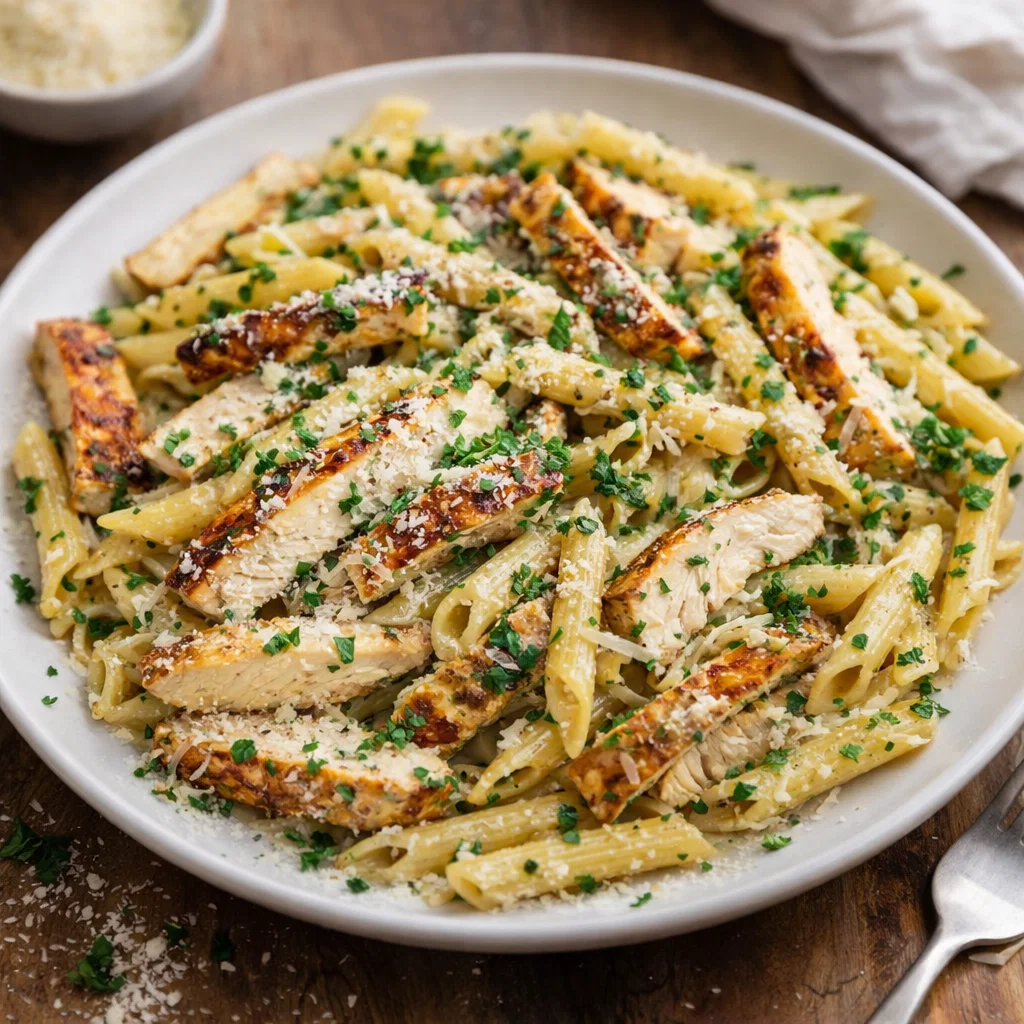
Instructions
Step 1 — Prep and Season the Chicken: Butterfly or beat chicken breasts to an even ½-inch thickness. Combine Italian seasoning, paprika, salt, and pepper. Rub evenly over both sides of chicken, pressing to adhere.
Step 2 — Sear the Chicken: Heat a large pan over medium-high heat. Use the water dance test to confirm readiness. Add avocado oil and heat until shimmering. Add chicken and cook undisturbed for 4 to 5 minutes per side until golden and internal temperature reaches 165°F. Remove and rest. Do not clean the pan.
Step 3 — Sauté the Aromatics: Reduce heat to medium. Add butter and olive oil to the same pan. Add diced onion and cook 3 to 4 minutes until softened. Add minced garlic and cook 60 seconds until fragrant. Add red pepper flakes or mushrooms here if using.
Step 4 — Deglaze and Cook the Pasta: Pour chicken broth into the pan and scrape up all browned bits from the bottom. Add penne pasta, pressing down to submerge as much as possible. Cover and cook over medium heat for 10 minutes, stirring every 2 to 3 minutes, adding extra broth as needed, until pasta is al dente.
Step 5 — Add the Creamy Finish: Turn off the heat completely. Stir in heavy cream, freshly grated Parmesan, and fresh parsley until the cheese is melted and the sauce is smooth and coating. Add spinach or peas here if using. Taste and adjust seasoning.
Step 6 — Slice, Combine, and Serve: Slice rested chicken diagonally into strips. Toss back into the pan with the pasta and sauce. Serve immediately, garnished with additional parsley and freshly grated Parmesan.
📊 Nutrition Facts (Per Serving)
| Nutrient | Amount |
|---|---|
| Calories | (Add via nutrition calculator) |
| Protein | High — chicken + Parmesan + penne |
| Total Fat | From heavy cream, butter, avocado oil |
| Carbohydrates | From penne pasta |
| Fiber | From pasta and any vegetable add-ins |
| Sodium | Variable — use low-sodium broth to control |
For precise calorie and macronutrient data, enter your specific brands and quantities into a nutrition calculator such as Cronometer or MyFitnessPal.
Special enough for a Valentine’s Day dinner. Simple enough for a Wednesday. This Garlic Parmesan Chicken Pasta is the one-pan, 30-minute recipe that earns a permanent spot in the weekly rotation the very first time you make it — rich, creamy, deeply garlicky, and completely impossible to stop eating.