
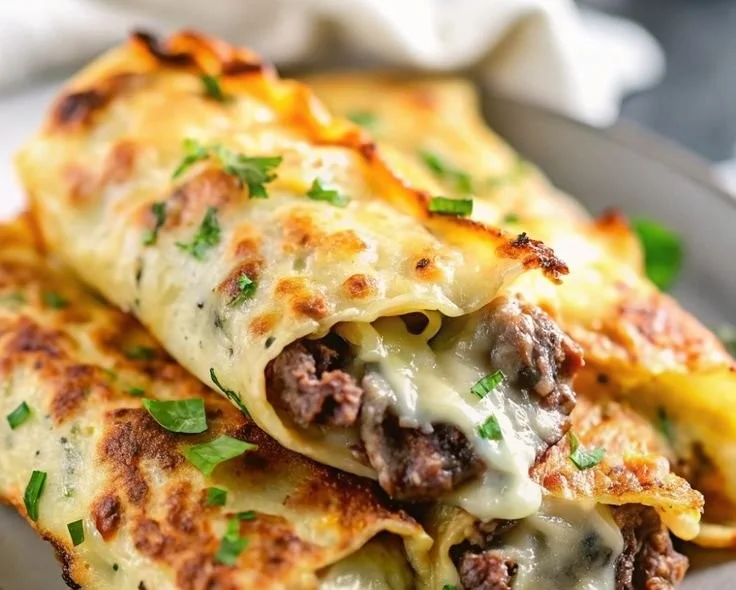
Philly Cheesesteak Egg Rolls
Table of Contents
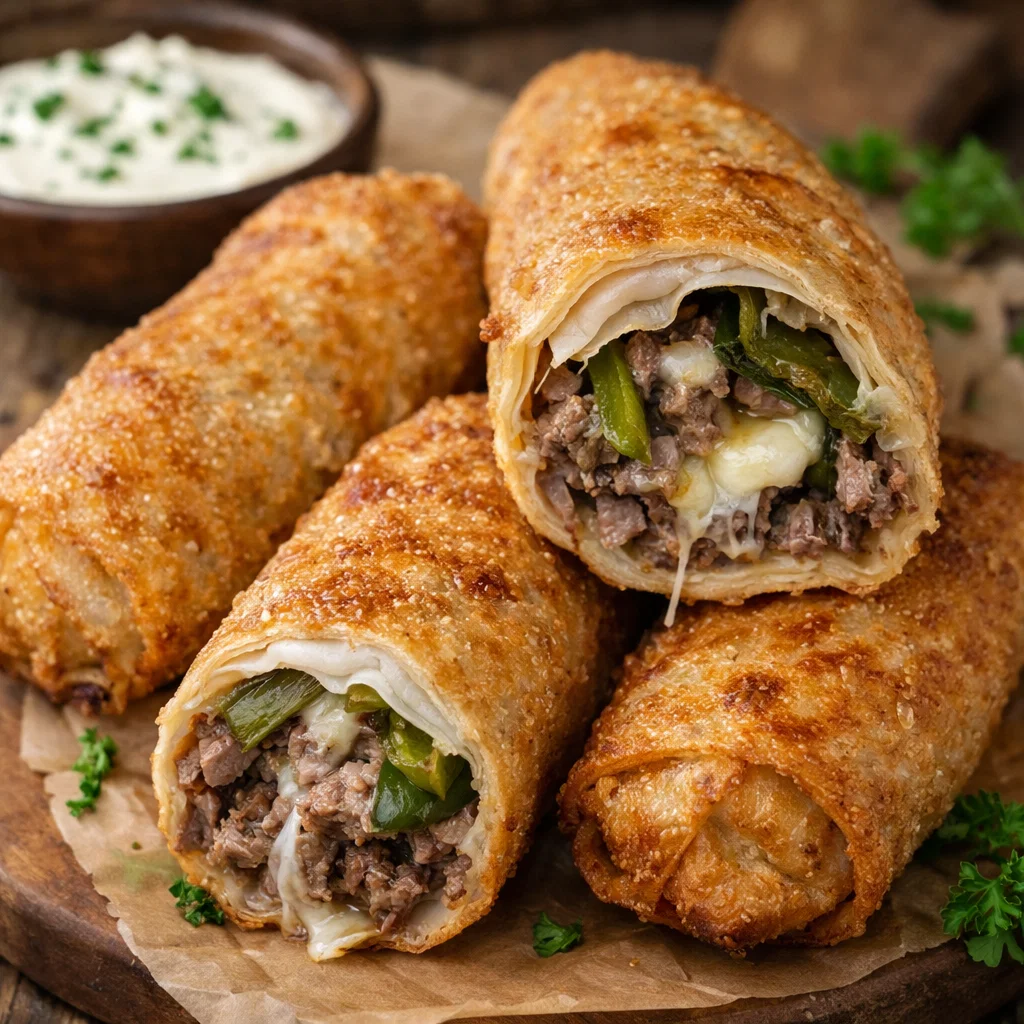
Crispy, golden egg roll wrappers stuffed with marinated ribeye steak, sautéed peppers and onions, and melted provolone cheese — these Philly Cheesesteak Egg Rolls are the fusion appetizer that stops every party in its tracks.
Thank you for reading this post, don't forget to subscribe!I. The Ultimate Fusion Appetizer: Two Classics, One Extraordinary Bite
Some food ideas are clever. Some are genuinely brilliant. Philly Cheesesteak Egg Rolls fall into that second category — the kind of recipe that makes you wonder why it took this long for someone to put these two things together.
The concept is as simple as it is spectacular. Take the crackling, golden, impossibly crispy outer shell of a Chinese-style egg roll — that satisfying crunch that echoes across the room when you bite into it — and fill it with a center that tastes exactly like a classic Philly cheesesteak sandwich. Tender, marinated ribeye steak. Sweet sautéed peppers and onions. Diced provolone cheese that melts into the hot filling and binds everything together in a warm, savory, deeply satisfying pocket of flavor.
Each Philly Cheesesteak Egg Roll delivers both experiences simultaneously — the textural joy of a perfectly fried egg roll and the nostalgic, hearty satisfaction of a great cheesesteak — in a single handheld bite. It is a mashup that should not work as well as it does, and yet it works extraordinarily well.
The Perfect Appetizer for Every Occasion
These Philly Cheesesteak Egg Rolls are one of those rare appetizer recipes that genuinely fits every occasion without modification. They are the epic starter that disappears within minutes at a Super Bowl party — passed on a platter as the game starts, gone before halftime. They are the impressive, conversation-starting appetizer at a New Year’s Eve celebration that makes guests think you spent far more time in the kitchen than you actually did. They are perfect for weekend parties, casual gatherings, and hearty winter nights when the living room is full of people and something crispy and warm needs to be coming out of the kitchen at regular intervals.
Make a double batch. You will need it.
II. Expert Tips for Perfect Philly Cheesesteak Egg Rolls Every Time
The Power of the Marinade: Time Is Flavor
The single most impactful step you can take to elevate your Philly Cheesesteak Egg Rolls from good to genuinely great is allowing adequate time for the steak to marinate. The marinade — built around Worcestershire sauce and seasonings — does not just add flavor to the surface of the meat. Given time, it penetrates into the muscle fibers of the ribeye, tenderizing the steak and infusing it with depth that you will taste in every bite of the finished egg roll.
Marinate for at least 30 minutes before cooking. If your schedule allows, one hour is the recommended target — the difference between 30 minutes and 60 minutes of marinating time is noticeable in the finished filling, particularly in the tenderness of the chopped steak and the depth of the savory flavor that comes through the fried wrapper. If you are preparing these for an event, marinate the steak the night before and let it sit in the refrigerator overnight for the most fully developed flavor of all.
Securing the Seal: The Step That Keeps Everything Together
There is nothing more frustrating — or more wasteful — than watching a perfectly assembled egg roll come apart in the hot oil, releasing its filling into the frying pan and producing a soggy, disintegrated result instead of the crispy, intact roll you were expecting. The cause is almost always an insufficient seal on the wrapper edges.
Before rolling each Philly Cheesesteak Egg Roll, moisten the outer edges of the egg roll wrapper with water applied with your fingertip or a small pastry brush. Use enough moisture to make the wrapper tacky and adhesive — not soaking wet, which can tear the wrapper, but thoroughly damp along every edge that will fold and overlap. Press each fold firmly and hold it for a moment to allow the moisture to create a bond. A properly sealed egg roll will hold together through every second of frying without opening, splitting, or losing any of its filling to the oil.
Time-Saving Make-Ahead Strategy
Here is the tip that will preserve your sanity on the day of a big event: prepare and cook the steak and vegetable filling completely in advance. The cooked filling stores beautifully in the refrigerator for up to two days, meaning you can do all the time-consuming work — marinating, searing, oven-finishing, chopping, sautéing the peppers and onions, combining the filling — on the day before your party or gathering.
When the day of your event arrives, the filling is ready and waiting in the refrigerator. All that remains is assembling the Philly Cheesesteak Egg Rolls and frying them — a process that takes 20 to 25 minutes even for a full batch of 16. This approach turns a recipe that might otherwise feel ambitious for a party day into something genuinely manageable without any compromise in quality.
III. The Dipping Sauce Experience: Choose Before You Cook
Dipping sauce is not an afterthought for Philly Cheesesteak Egg Rolls — it is a fundamental part of the eating experience. The crispy egg roll wrapper and the savory, cheesy filling are excellent on their own, but the right dipping sauce adds a dimension of flavor contrast that takes each bite from great to unforgettable.
Versatile Sauce Options
Ranch dressing is the classic, universally beloved choice — its cool, herby, slightly tangy creaminess is the perfect counterpoint to the hot, crispy, savory egg roll. It is the safe bet that will please every palate at the table.
Chipotle dressing takes the pairing in a smokier, slightly spicier direction that pairs beautifully with the Worcestershire-marinated ribeye filling. The smokiness of the chipotle echoes the charred edges of the seared steak in a way that feels intentional and sophisticated.
Sour cream — straight or dressed with a squeeze of lime and a pinch of salt — provides a clean, cool, slightly acidic contrast that cuts through the richness of the provolone cheese and fried wrapper without overwhelming the other flavors.
Fresh salsa brings brightness, acidity, and a completely different flavor dimension to the table — particularly tomato-based pico de gallo, whose fresh vegetal flavors play against the savory, meaty filling in a surprisingly complementary way.
Plan Your Sauce Before You Start Cooking
Selecting your dipping sauce before you begin the cooking process is a small act of foresight that pays genuine dividends. Knowing what you will be dipping into builds anticipation for the finished dish, ensures the sauce is prepared and ready when the Philly Cheesesteak Egg Rolls come out of the oil, and prevents the frantic last-minute scramble of assembling a dipping sauce while hot egg rolls are sitting and losing their crispiness on a paper towel.
IV. Ingredients & Step-by-Step Cooking Instructions
Core Ingredients
The Cheesesteak Filling:
- 2 lbs ribeye steak
- 2 tbsp Worcestershire sauce (for marinade)
- Salt, black pepper, garlic powder (to season)
- 1 large green bell pepper, finely diced
- 1 large yellow or white onion, finely diced
- 6 oz provolone cheese, diced
- 1 tbsp olive or vegetable oil (for sautéing)

For Assembly and Frying:
- 16 egg roll wrappers
- Water (for sealing wrapper edges)
- Vegetable oil for frying (enough for
  2–3 inches of depth in your pot or skillet)
  Heat to 350°F

Dipping Sauce (choose one or several):
- Ranch dressing
- Chipotle dressing
- Sour cream
- Fresh salsa or pico de gallo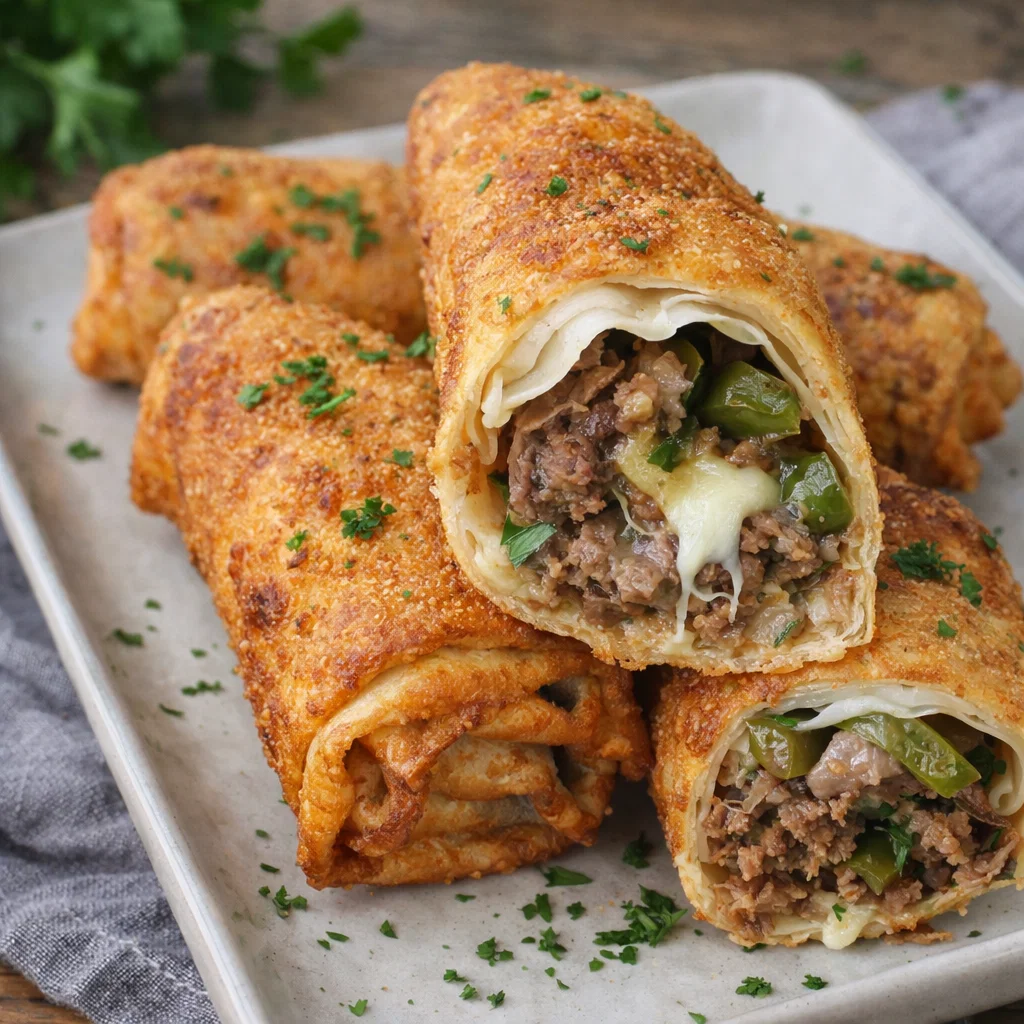
Steak Preparation: Season, Marinate, and Sear
Begin by seasoning the ribeye steak generously on both sides with salt, black pepper, and garlic powder. Place the seasoned steak in a shallow dish or zip-lock bag and add the Worcestershire sauce, turning to coat the steak evenly. Cover and marinate in the refrigerator for a minimum of 30 minutes — one hour is ideal.
When ready to cook, bring the marinated ribeye to room temperature for 15 minutes. Heat a cast iron skillet over high heat until very hot. Add a thin film of oil and sear the steak for 4 minutes per side without moving — developing a deep, dark, well-caramelized crust on each surface. A cast iron skillet is the recommended tool for this step specifically because of its ability to reach and maintain the extremely high temperatures needed to create a proper sear.
The Oven-Finishing Step: Ensuring the Perfect Cook-Through
After searing, transfer the cast iron skillet directly to a 400°F oven and finish the ribeye for 15 minutes. This two-stage cooking method — high-heat sear followed by oven finish — produces a steak that has the deeply flavored, caramelized exterior developed by direct contact with the scorching skillet, combined with an evenly cooked interior that a pan sear alone cannot always guarantee for a 2-pound ribeye.
Remove from the oven and allow the steak to rest for 5 minutes before chopping. Resting allows the juices to redistribute through the meat so they stay in the steak when it is chopped rather than running out onto the cutting board. After resting, chop the ribeye into small, bite-sized pieces — approximately ½ inch — that will distribute evenly through the egg roll filling.
Vegetable Sauté: Building the Filling
In a large skillet over medium heat, sauté the diced onions in oil for 4 to 5 minutes until translucent and lightly golden. Add the diced green bell peppers and continue cooking for an additional 3 to 4 minutes until the peppers are softened but retain a slight bite. The vegetables should be cooked through without being mushy — they will continue to cook briefly inside the egg roll during frying.
Add the chopped ribeye steak to the skillet and stir to combine with the peppers and onions. Remove from heat and fold in the diced provolone cheese. The residual heat from the filling will begin to melt the cheese, which acts as a binder — holding the filling together and ensuring that every Philly Cheesesteak Egg Roll is packed with that melty, cheesy, savory filling from end to end. Allow the filling to cool slightly before assembly.
Assembly: Rolling Like a Pro
Lay one egg roll wrapper on a clean, flat surface in a diagonal orientation — like a diamond with a point toward you. Place a heaping tablespoon of the cheesesteak filling in the center of the wrapper. Do not overfill — too much filling prevents the wrapper from sealing properly and creates egg rolls that burst open during frying.
Fold the bottom corner of the wrapper up over the filling. Fold the left and right corners inward toward the center, like an envelope. Moisten the top corner and side edges with water. Roll the wrapper tightly upward from the bottom, pressing firmly to seal the top corner against the roll. The finished Philly Cheesesteak Egg Roll should be compact, tightly sealed, and seam-side down. Repeat with remaining wrappers and filling.
The Fry: Achieving the Golden Crust
Pour vegetable oil into a heavy-bottomed pot or deep skillet to a depth of 2 to 3 inches. Heat the oil to 350°F — use a cooking thermometer for accuracy. Oil that is too cool produces greasy egg rolls that absorb oil rather than crisping. Oil that is too hot burns the wrapper before the filling has time to heat through.
Working in batches of 3 to 4 at a time to maintain the oil temperature, carefully lower the assembled Philly Cheesesteak Egg Rolls into the hot oil. Fry for 3 to 4 minutes, turning occasionally, until golden brown on all sides. Remove with tongs or a slotted spoon and drain on a paper towel-lined plate. Serve immediately with your chosen dipping sauce.
V. Storage & Leftover Instructions
Refrigeration
Store leftover Philly Cheesesteak Egg Rolls in a lidded airtight container in the refrigerator. Properly stored, they will stay fresh and safe to eat for up to 3 days. To reheat and restore the crispy texture, use an air fryer at 375°F for 3 to 4 minutes or a conventional oven at 400°F for 8 to 10 minutes. Avoid the microwave for reheating — it softens the wrapper and destroys the crispy exterior that makes these egg rolls worth eating. A few minutes in the air fryer restores the crunch almost completely.
Freezing for Long-Term Storage
These Philly Cheesesteak Egg Rolls freeze exceptionally well, making them one of the best make-ahead party foods available. For freezing before frying — the recommended approach for the best post-freeze quality — assemble the egg rolls completely, place them on a parchment-lined baking sheet, and freeze until solid (about 2 hours). Transfer the frozen rolls to freezer-proof bags or airtight containers and freeze for up to 3 months. Fry directly from frozen, adding 2 to 3 minutes to the frying time. For freezing after frying, allow the fried egg rolls to cool completely, freeze on a baking sheet until solid, then transfer to freezer bags and store for up to 2 months.
VI. More Appetizer Inspiration: Keep the Party Going
If these Philly Cheesesteak Egg Rolls have confirmed your enthusiasm for creative, crowd-pleasing finger food, here are three more appetizer recipes worth adding to your rotation:
Chicken Fried Steak Bites bring the same deep-fried, golden comfort energy as these egg rolls in a different format — crispy, bite-sized pieces of seasoned, battered steak served with a creamy gravy dipping sauce that is impossible to stop eating.
Cream Cheese Avocado Bacon Bites are the creamy, indulgent counterpoint to the savory, meaty energy of the cheesesteak egg roll — rich cream cheese and fresh avocado wrapped in crispy bacon and baked or fried until irresistible.
Cheesy Jalapeño Bacon Dip is the warm, bubbling, crowd-satisfying dip that belongs on every party spread alongside Philly Cheesesteak Egg Rolls — thick, creamy, spiced with fresh jalapeño heat, and loaded with crispy bacon and melted cheese.
Together, these four recipes build a party appetizer spread that will have guests talking about your hosting long after the event is over.
The first time you serve Philly Cheesesteak Egg Rolls at a party, watch what happens to the platter. It will be the fastest-emptying dish on the table — and the recipe people will be texting you about before they have even driven home.