
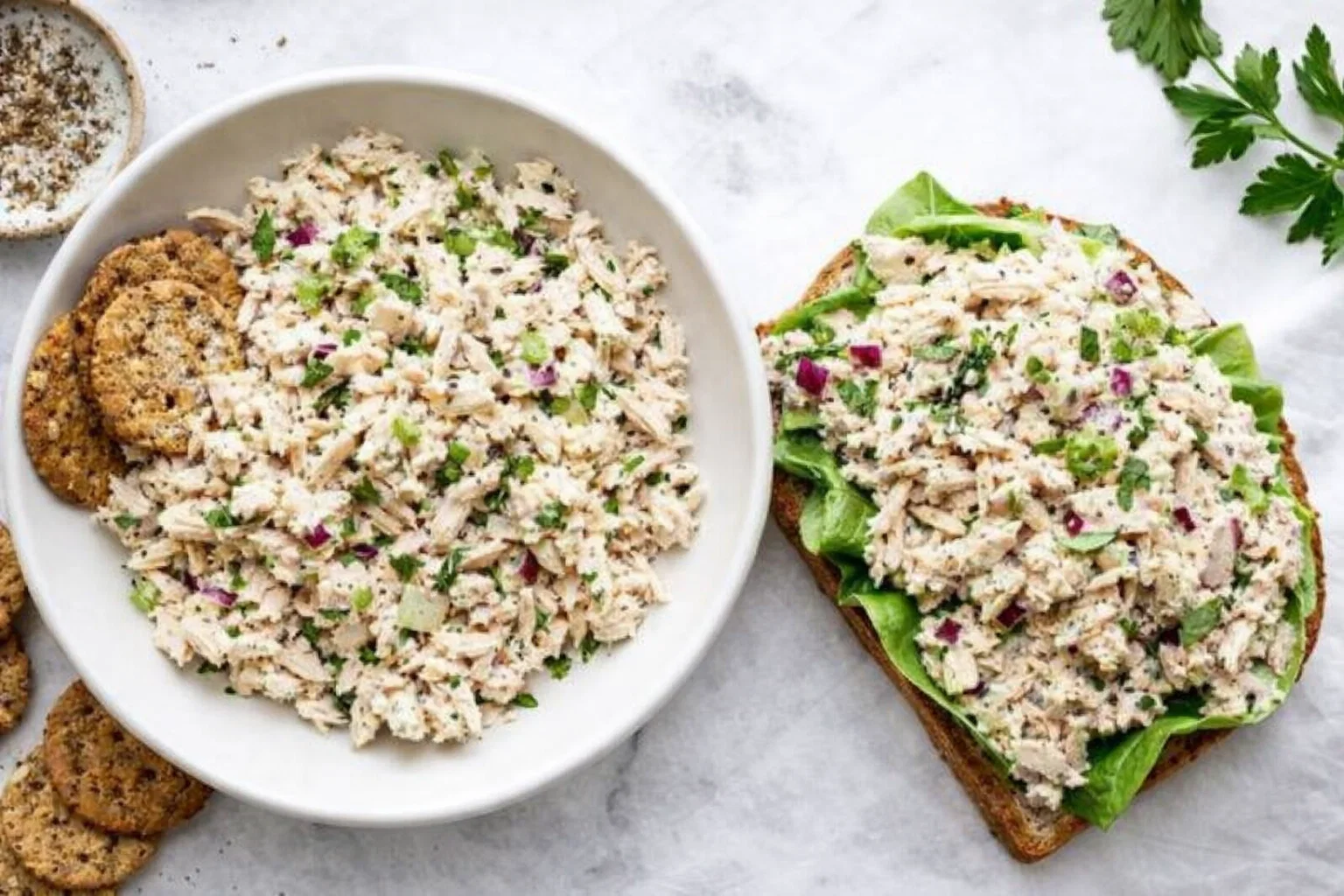
Tuna Salad Recipe
Table of Contents
There is a category of recipes that earns its place in the permanent rotation not through novelty or complexity but through consistent, reliable excellence — the kind of dish that takes 15 minutes, uses ingredients that are almost always already in the kitchen, tastes genuinely good every single time, and covers multiple meal occasions across the week without any modification required. This tuna salad recipe belongs emphatically in that category and has for decades.
Thank you for reading this post, don't forget to subscribe!The case for keeping a great homemade tuna salad recipe in regular rotation is practical and nutritional simultaneously. A single can of quality tuna contains approximately 26 grams of protein — a figure that rivals chicken breast and far exceeds most other quick-prep protein sources available in a pantry. Combined with the 15-minute preparation time, the minimal equipment required, and the exceptional versatility of the finished salad across sandwiches, wraps, salad bowls, and appetizer formats, this is one of the most efficient high-protein meals a home cook can produce.
The dietary profile is equally compelling. This easy tuna salad recipe is naturally gluten-free, low-carbohydrate, and dairy-free — satisfying the three most common dietary restriction categories simultaneously without any substitutions or modifications to the base recipe. Served on a low-carb vehicle — lettuce wraps, stuffed avocado, cucumber rounds — it maintains all three of those qualities through the complete meal.
The Foundation: Essential Ingredients and Why They Work
The Best Tuna: Quality Changes Everything
The single most impactful ingredient decision in any tuna salad recipe is the quality and variety of the tuna itself — and the difference between commodity canned tuna and a genuinely good product is significant and immediately detectable in the finished dish. Wild-caught albacore tuna packed in water is the recommended choice — specifically Wild Planet brand, whose commitment to sustainable fishing practices and minimal processing produces a tuna that is noticeably milder in flavor, firmer in texture, and completely free of the “fishiness” that makes lesser canned tuna unpleasant to some eaters.
The “packed in water” specification matters for tuna salad specifically: oil-packed tuna, while excellent for certain applications, retains enough oil after draining to interfere with the mayo-based dressing — producing a greasy, looser result. Water-packed tuna drains cleanly and provides a neutral base that accepts the flavors of the other ingredients without competition.
The Secret Tang: Dijon Mustard
The ingredient that separates a good classic tuna salad recipe from a great one — and that most standard recipes omit — is Dijon mustard. Not yellow mustard, whose mild sweetness disappears into the richness of the mayo, but Dijon, whose wine-forward sharpness and clean pungency provides the precise flavor contrast that the creamy, slightly neutral mayo base needs to taste complete rather than flat. A small quantity — 1 teaspoon — is the right calibration: enough to be a meaningful flavor presence that a taster can sense but cannot necessarily identify as mustard specifically.
Freshness and Crunch: The Textural Components
The textural interest of a great fresh tuna salad recipe comes from three fresh components that each contribute something distinct. Celery provides the primary crunch — its fibrous, watery texture contrasts with the soft tuna and the creamy mayo in a way that makes every bite texturally varied and satisfying. Red onion, sliced or diced very finely, adds a sharp, pungent note and a slight bite that prevents the salad from tasting overly mild. Fresh herbs — flat-leaf parsley for clean, slightly peppery freshness or fresh chives for a milder, more delicate onion note — add color and a brightness that lifts the overall flavor profile.
The Master Recipe: Step-by-Step
Tuna Salad Recipe Prep Time: 10 minutes | Total Time: 15 minutes | Yield: 4 servings
Ingredients
- 2 cans (5 oz each) wild albacore tuna packed in water, thoroughly drained
- 3 tablespoons mayonnaise (Duke’s recommended — adjust quantity for preferred creaminess)
- 1 teaspoon Dijon mustard
- 2 stalks celery, finely diced
- 3 tablespoons red onion, finely diced
- 2 tablespoons fresh flat-leaf parsley or fresh chives, finely chopped
- Salt and freshly ground black pepper to taste
- Fresh lemon juice to taste (optional but recommended)
Preparation: Drain and Dice
Draining the tuna is not a step to rush — thoroughly drained tuna produces a cohesive, non-watery tuna salad while inadequately drained tuna produces a loose, diluted mixture that pools liquid at the bottom of the bowl within minutes of mixing. Open each can and press the lid firmly against the tuna while inverting over the sink — hold for a full 30 seconds to allow the maximum amount of liquid to drain. For the most thorough drainage possible transfer the tuna to a fine-mesh strainer and press gently with the back of a spoon.
Dicing the vegetables at a fine, uniform size ensures even distribution throughout the best tuna salad — pieces that are too large create uneven bites where some forkfuls are primarily tuna and others are primarily celery or onion. Aim for a dice of approximately ¼ inch for both the celery and the red onion.
The Mix: Texture by Choice
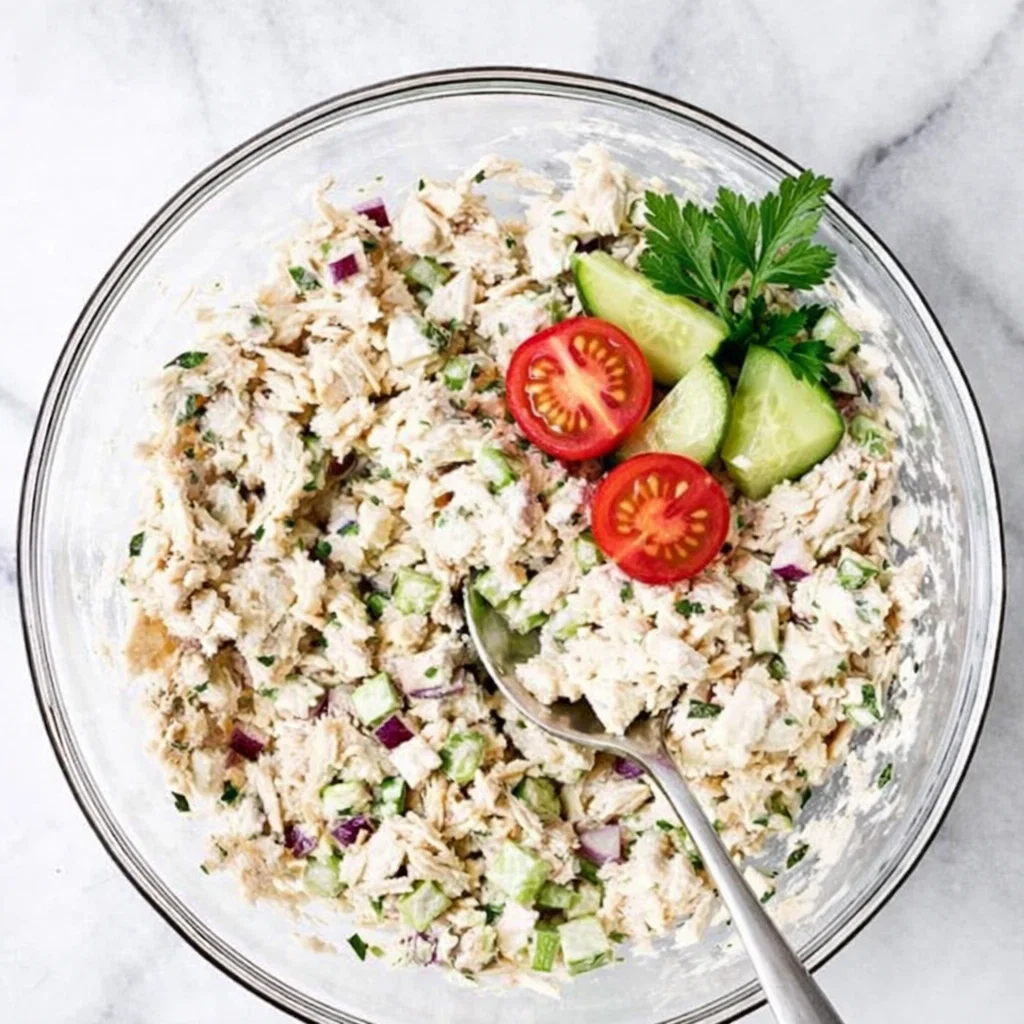
In a medium mixing bowl combine the drained tuna, diced celery, diced red onion, and chopped herbs. Add the mayonnaise and Dijon mustard. Using a fork — not a spoon — mix until all ingredients are combined. The fork allows you to control the texture in a way a spoon does not: light, lifting strokes with a fork produce a chunky tuna salad with visible tuna pieces; more vigorous mixing produces a smoother, more homogeneous consistency. Choose the texture intentionally rather than mixing until a default consistency is achieved.
Lisa’s Pro Tip: Adjusting the Mayo
The 3-tablespoon mayo starting point produces a well-dressed but relatively dry result — the preference this recipe is built around. For those who prefer a creamier tuna salad add additional mayonnaise one teaspoon at a time, mixing and tasting after each addition until the desired consistency is reached. Adjusting in small increments prevents the common overcorrection of adding too much mayo at once and producing a tuna salad that is more dressing than protein.
Community-Tested Upgrades: The Hacks
The Brightness Boost: Celery Salt
The single simplest upgrade to this easy tuna salad recipe is also the most immediately impactful: swap plain kosher salt for celery salt as the primary seasoning. Celery salt — ground celery seed combined with salt — adds a subtle but distinct aromatic complexity that amplifies the flavor of the fresh celery already in the recipe, adds a slight herbal note that makes the overall salad taste more developed, and introduces a brightness that plain salt cannot provide. Use it at the same quantity as you would standard salt — it is not significantly more intense, just more interesting.
The Flavor Bomb Swap: Aioli and Dill
For a significantly more intense, more aromatic version of this homemade tuna salad: replace the standard mayonnaise with garlic aioli — store-bought or homemade — and replace the parsley with dried dill weed. The garlic aioli adds a roasted, pungent richness that transforms the flavor profile from mild and creamy to bold and savory. The dill weed adds a distinctive, slightly anise-adjacent herbal character that is the defining flavor of Scandinavian-inspired tuna preparations and that pairs particularly well with the garlic of the aioli.
The Ultimate Crunch: Bell Pepper and Carrot
For maximum textural variety in a crunchy tuna salad, two additions provide complementary crunch with different flavor profiles. Finely diced sweet bell pepper — red, yellow, or orange, all of which are sweeter than green — adds a juicy, sweet crunch and vivid color contrast. Shredded carrot adds a slightly earthier crunch and a natural sweetness that balances the savory components. Both additions should be diced or shredded finely enough to distribute evenly rather than dominating any single bite.
Briny Additions: Pickles, Capers, and Relish
The briny tuna salad variation beloved by pickle enthusiasts involves one or more of three additions that add sharp, acidic, fermented depth. Diced kosher dill pickles — or bread and butter pickles for a sweeter variation — add crunch and a direct, bright brine. Capers, rinsed and roughly chopped, add a more subtle, complex brininess with a slightly floral quality that pickles don’t provide. Sweet relish adds sweetness alongside the brine — the classic addition that produces the specific flavor profile of old-school diner tuna salad.
A Hint of Heat: Pepper and Hot Sauce
For a spicy tuna salad recipe that delivers genuine heat: finely diced Serrano pepper — seeded for moderate heat or with seeds for full intensity — incorporated during the mixing stage distributes heat evenly throughout every bite. A dash of Tapatío sauce provides a more approachable, more adjustable heat option — its mild garlic-forward chili flavor complements the other ingredients without overwhelming them.
Five Flavor Variations for Variety
Tuscan Tuna Salad (No Mayo)
For a Mediterranean tuna salad that eliminates the mayonnaise entirely: combine well-drained albacore tuna with Kalamata olives (halved), sun-dried tomatoes (oil-packed, drained and roughly chopped), fresh lemon juice, a generous drizzle of extra-virgin olive oil, fresh basil, and capers. Season with salt and black pepper. The olive oil and lemon juice replace the mayo as the dressing — lighter, more acidic, and completely dairy-free. Serve over arugula or with crusty bread.
Broccoli Tuna Salad
For a high-fiber, high-protein tuna salad: add broccoli rice — fresh broccoli florets processed briefly in a food processor until they reach a rice-like consistency — and extra green onions to the standard base. The broccoli rice adds substantial volume and nutritional density without changing the fundamental flavor profile and makes the salad more filling as a standalone bowl.
Pickle and Caper Tuna Salad
The tangy briny tuna salad variation for maximum acid lovers: combine the base recipe with diced kosher dill pickles, capers (rinsed), pickle brine replacing the lemon juice, and extra Dijon mustard. The result is a sharply flavored, assertively acidic tuna salad that is the furthest possible expression of the briny upgrade direction.
Curry Tuna Salad
The curry tuna salad variation transforms the flavor profile completely with warm, sweet-savory spice: add 1 teaspoon curry powder to the mayo base and incorporate finely diced apple (for sweet crunch), raisins (for sweetness and chew), and a squeeze of lemon juice to the standard ingredients. The curry powder, apple, and raisins together produce a flavor combination that is unusual, genuinely delicious, and completely different from every other variation on this list.
Egg-Boosted Tuna Salad
For the maximum protein tuna salad: incorporate 2 to 3 hard-boiled eggs, coarsely chopped, into the standard base recipe. The eggs add additional protein, contribute their own richness to the mayo base, and create a tuna-egg hybrid that is more substantial and more filling than tuna alone — the ideal choice for post-workout meals or high-protein meal prep targets.
Creative Ways to Serve
The Classic and the Melt
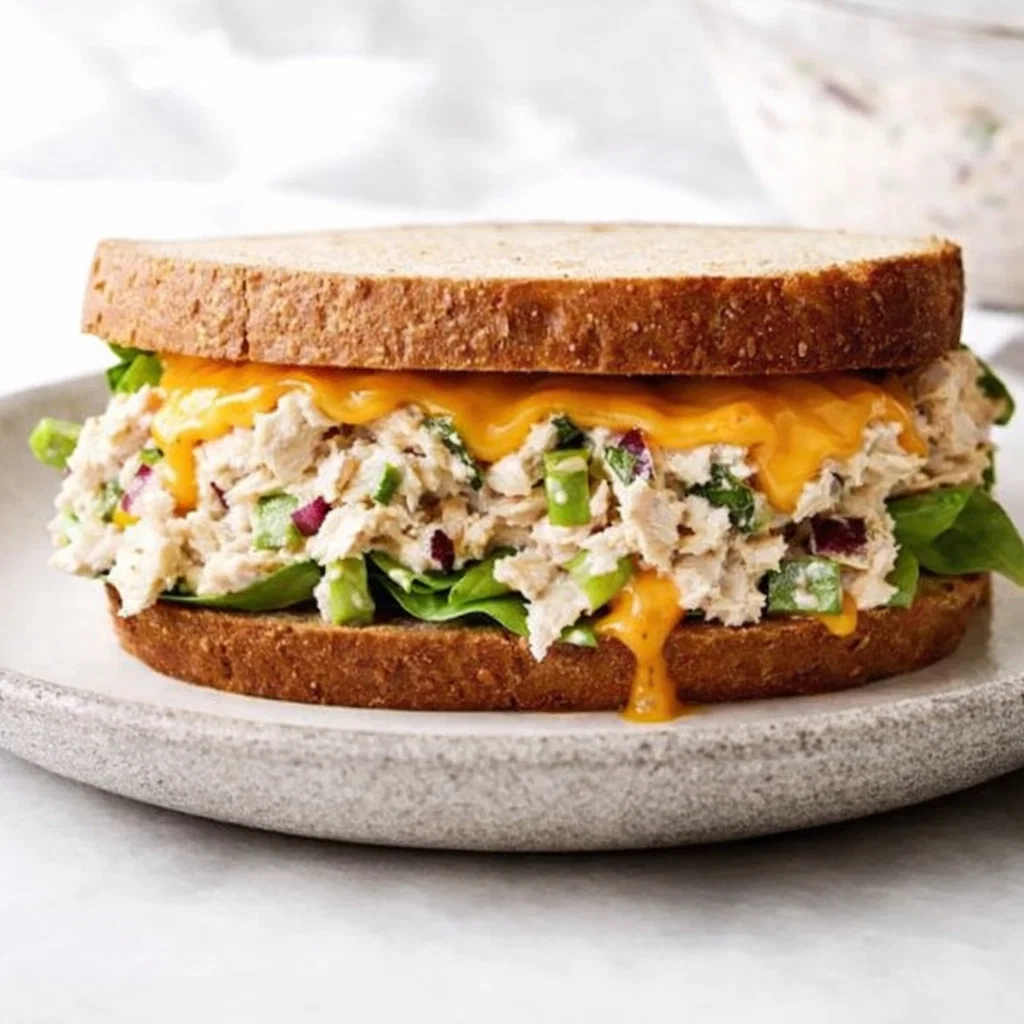
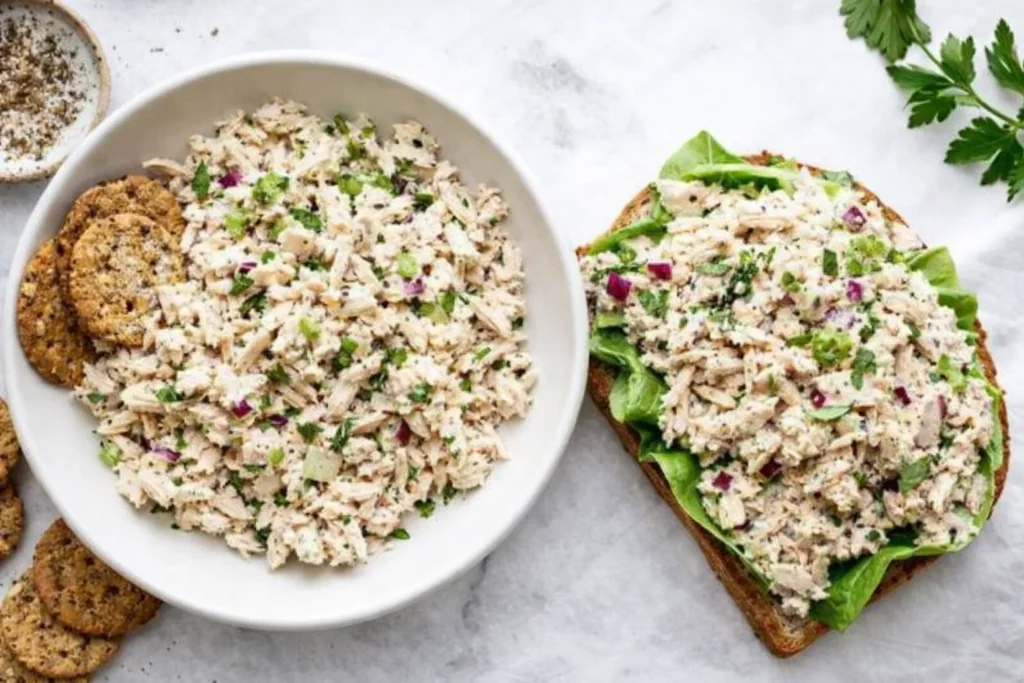
The classic sandwich: Pile the tuna salad generously between two slices of toasted sourdough or on a soft potato roll with crisp lettuce, tomato, and an extra slice of red onion. The tuna melt: Spread the tuna salad on sourdough, top with a thick slice of sharp cheddar or Swiss, and cook in a buttered skillet over medium heat until the bread is golden and the cheese is completely melted — the warm, crispy, cheesy version of the classic sandwich that is arguably better than the original.
Low-Carb Serving Options
For a low-carb tuna salad that maintains all the flavor without the bread: butter lettuce cups or romaine leaves provide a crisp, fresh vessel that holds the salad without adding carbohydrates. Stuffed avocado halves — the pit cavity filled with tuna salad — combine two high-fat, high-satisfaction ingredients in a presentation that looks elegant enough for a dinner party and requires two minutes of assembly. Halved tomatoes with the interior scooped out provide a similar vessel with a more acidic flavor contrast.
The Protein Bed
Serve the healthy tuna salad recipe over a generous bed of mixed greens or baby spinach with a simple dressing of fresh lemon juice and high-quality extra-virgin olive oil. The tuna salad provides the protein element that transforms a simple green salad into a complete, sustaining meal — no croutons, no heavy dressing, no carbohydrate additions required.
The Appetizer Format
Served as an appetizer tuna salad dip with sturdy crackers, pita chips, or vegetable crudités — cucumber rounds, endive leaves, bell pepper strips — this recipe covers the party appetizer category with zero additional preparation beyond what the base recipe requires.
Storage and Food Safety
Refrigerator Life: 3 to 4 Days
Store the completed tuna salad recipe in an airtight container in the refrigerator for 3 to 4 days. The combination of quality tuna and the relatively dry mayo ratio means the salad holds up well across the storage window without significant moisture release or flavor deterioration. Stir before each serving — the dressing may settle slightly but re-incorporates completely with a brief mix.
Temperature Warning: The Non-Negotiable Safety Rule
Never leave tuna salad at room temperature for more than 2 hours — the combination of fish protein and mayonnaise creates conditions that are highly favorable for bacterial growth at temperatures between 40°F and 140°F. At outdoor events or cookouts in warm weather reduce this window to 1 hour maximum. Keep the salad refrigerated until the moment of serving, return it to the refrigerator promptly after serving, and discard any portion that has been at room temperature for longer than the safe window. This is not a precaution to be casual about — it is a genuine food safety requirement specific to mayonnaise and fish-based preparations.