
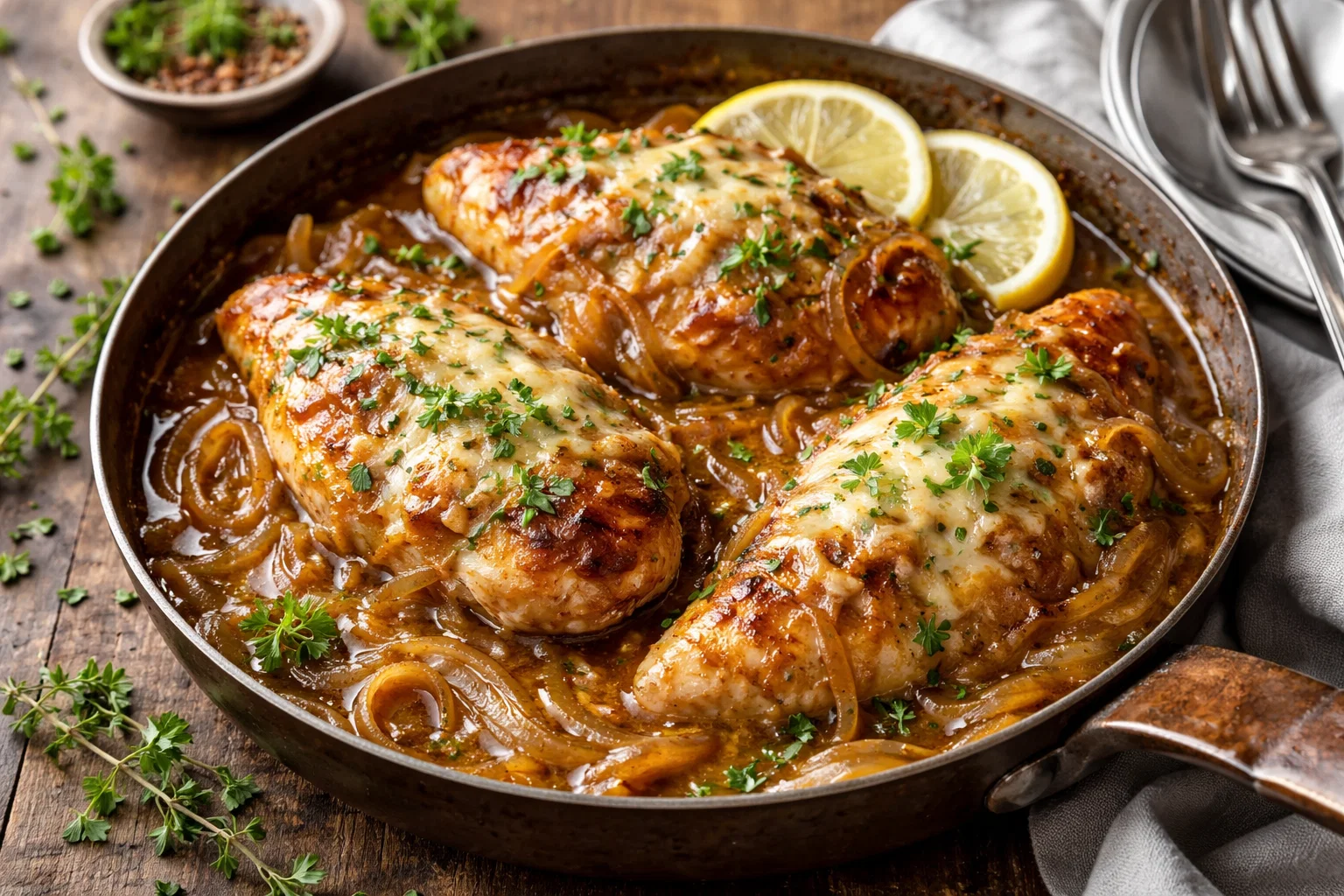
French Onion Chicken
Table of Contents
There is a category of home cooking that exists somewhere between the everyday and the extraordinary — dishes that require more time and patience than a standard weeknight dinner but reward that investment with something so deeply flavored, so genuinely restaurant-quality, that the effort feels not just worthwhile but genuinely pleasurable. This French Onion Chicken lives firmly in that category.
Thank you for reading this post, don't forget to subscribe!Everything that makes classic French onion soup one of the most beloved dishes in the culinary canon — the deeply caramelized, sweet, jammy onions, the rich, savory, wine-enriched broth, the bubbling, golden melted cheese blanketing everything beneath it — is present in every single bite of this dish. The flavor is unmistakably gourmet. The process, despite taking 1 hour and 40 minutes from start to finish, is genuinely low-stress — a Sunday afternoon recipe that moves at its own unhurried pace and rewards patience rather than skill with a result that will make your kitchen smell extraordinary and your family feel genuinely taken care of.
And it all happens in a single large oven-safe skillet. From the initial sear on the stovetop to the final broiled cheese topping in the oven, one pan is all this easy French Onion Chicken recipe requires — which means the cleanup is as undemanding as the cooking process itself.
Mastering the Caramelization: The 40-Minute Process
Setting the Right Expectations
The most important thing to understand before making this French Onion Chicken — the piece of information that separates successful results from frustrating ones — is that genuine caramelization takes time. Forty minutes of time, to be specific. The deep, complex, almost wine-like sweetness that defines authentic French onion flavor cannot be rushed. High heat produces browned, slightly bitter onions that look caramelized but taste sharp and one-dimensional. Only sustained, patient, medium-to-medium-low heat over a full 40 minutes transforms raw onions into the deeply sweet, jammy, mahogany-colored mass that makes this dish taste like something from a Parisian bistro rather than a Tuesday night skillet dinner.
If you encounter a French onion recipe claiming 10 or 15 minutes of caramelization time, understand that it is producing a different and significantly inferior product. This recipe does not make that compromise.
The Slicing Strategy
Slice your onions to an even ¼-inch thickness — measured and consistent, not a rough approximation. This specific thickness is important for two reasons. Slices thinner than ¼ inch will lose most of their volume during the 40-minute cook and nearly disappear into the pan, leaving you with less caramelized onion than the recipe requires for its characteristic richness. Slices thicker than ¼ inch will not cook evenly throughout, leaving some portions undercooked and sharp-tasting while the exterior appears done. A mandoline slicer set to ¼ inch produces perfectly consistent results with no effort; a sharp chef’s knife guided by careful, even strokes achieves the same result with slightly more attention.
The Fond Secret: Liquid Flavor Gold
After searing the chicken and removing it from the skillet, you’ll notice a layer of browned, caramelized bits coating the bottom of the pan. This is the fond — concentrated, deeply flavored residue from the chicken’s surface proteins and the flour-Parmesan crust — and it is one of the most valuable flavor resources in this entire French Onion Chicken recipe. When you add the onions to the same pan, use a silicone spatula to scrape every bit of this fond up from the pan bottom and fold it directly into the onions as they begin to soften and release their moisture. The liquid the onions release will dissolve the fond completely, incorporating its concentrated savory depth into the caramelizing onion base and adding an extra dimension of flavor that makes the finished sauce taste more complex and developed than the ingredient list alone suggests.
The Ultimate Ingredient Substitution Guide
Onion Varieties
Yellow onions are the standard and preferred choice for this French Onion Chicken skillet because their high sugar content and relatively low water content make them ideal for the long caramelization process — they develop the deepest color and the most complex sweetness of any common onion variety. Red onions work as a direct substitute when yellow onions aren’t available, producing a slightly earthier, slightly less sweet caramelized result with a beautiful deep purple-to-mahogany color transformation during cooking. Sweet onions like Vidalia caramelize even faster and sweeter than yellow onions and are an excellent alternative for households that prefer a more overtly sweet flavor profile.
Meat Options
Boneless skinless chicken breasts, pounded thin as described in the pro tips section, are the standard protein for this recipe. Bone-in, skin-on chicken thighs are an outstanding alternative that many experienced cooks prefer for their richer flavor and greater resistance to drying out — add 1 to 2 minutes of additional sear time per side to account for the bone and extra thickness, and extend the oven baking time slightly to ensure the bone-in meat is fully cooked through. The higher fat content of skin-on thighs also contributes additional richness to the sauce as it renders during cooking.
Alcohol-Free Options
The dry white wine in this homemade French Onion Chicken recipe serves two purposes — it deglazes the pan during the sauce-building stage and adds a bright acidity and complexity to the finished broth. For households that don’t cook with alcohol, substitute an equal amount of additional low-sodium chicken broth with a tablespoon of white wine vinegar or apple cider vinegar added to approximate the acidity the wine would have contributed. The result is slightly less complex but still deeply flavorful and fully satisfying.
Salt Control
The multiple salty components in this recipe — chicken broth, soy sauce, Parmesan in the crust, and butter — require careful management to prevent the finished dish from being oversalted. Use low-sodium chicken broth as the baseline. Use low-sodium soy sauce for the umami boost. Use unsalted butter throughout. Season with additional salt only after tasting the finished sauce, and add it gradually rather than in a single seasoning step. This layered approach to sodium management produces a well-seasoned result that can be adjusted to taste rather than a dish that is salty before it ever reaches the table.
The Bouillon Question
Chicken bouillon — whether cubes, powder, or paste — adds concentrated savory depth to the sauce that regular broth alone doesn’t provide. If bouillon isn’t available, omit it and increase the reduction time of the sauce slightly to concentrate the existing broth flavors more fully. Better Than Bouillon chicken base is the recommended substitute for standard bouillon cubes — its paste form dissolves more evenly into hot liquid, its flavor is more nuanced and less artificial than most cube varieties, and it stores indefinitely in the refrigerator making it a versatile pantry staple worth keeping on hand for recipes like this one.
Pro-Tips for Perfect Prep
The Meat Tenderizer Trick
Use the textured, spiky side of a meat tenderizer rather than the flat side when pounding the chicken to the required ¼-inch thickness. The textured side penetrates the muscle fibers as it pounds, breaking them down more efficiently and requiring fewer strikes to reach the target thickness — making the pounding process faster and less physically demanding. It also creates a slightly rougher surface texture on the chicken that helps the flour-Parmesan dredge adhere more completely and evenly.
Why Pounding is Non-Negotiable
Pounding the chicken to ¼-inch thickness is not an optional step that can be skipped when you’re in a hurry — it is the preparation that makes the 3-minute-per-side sear time reliable and the finished texture of the skillet French Onion Chicken so satisfying. Raw chicken breast is not uniform in thickness — it is thicker at the center and significantly thinner at the edges. Without pounding, the thin edges overcook while the thick center is still working toward temperature. More importantly, chicken plumps up significantly during cooking — a ¼-inch cutlet becomes noticeably thicker as the proteins contract and the muscle fibers tighten under heat. Starting at ¼ inch ensures the finished seared chicken is at the ideal thickness for both texture and flavor.
The Soy Sauce Secret
Soy sauce is the ingredient in this French Onion Chicken with cheese recipe that most surprises people when they see it in the list — and the one that makes the most significant impact on the finished flavor profile. Added in small quantities to the sauce, soy sauce contributes a concentrated umami depth — the same fermented, savory complexity that makes French onion soup taste so distinctly rich and satisfying — without contributing any detectable “Asian” flavor character to the finished dish. Used correctly, it enhances and amplifies the existing French onion flavor profile rather than altering or redirecting it. This is the secret weapon that makes this easy French Onion Chicken taste more developed and complex than the cooking time suggests it should.
Integrated Step-by-Step Instructions
Phase 1: Prepare and Sear the Chicken
Pound the chicken breasts to an even ¼-inch thickness using the textured side of a meat tenderizer. Combine all-purpose flour, finely grated Parmesan, salt, pepper, and garlic powder in a shallow dish. Dredge each chicken piece in the flour-Parmesan mixture, pressing firmly on both sides to ensure complete, even coverage. Heat olive oil and butter in a large oven-safe skillet over medium-high heat until the butter is foaming and the pan is properly hot. Sear the coated chicken for exactly 3 minutes per side without moving — the no-movement rule is critical for developing the golden, cohesive crust that defines the dish. Remove the seared chicken to a plate and set aside.
Phase 2: The Caramelization Stage
Without wiping the pan or removing the fond, reduce heat to medium and add additional butter. Add the sliced onions and stir to coat with the butter and dissolved fond. Cook covered for 30 minutes, stirring every 8 to 10 minutes — the covered stage steams the onions and accelerates initial softening. Remove the lid and continue cooking uncovered for 10 minutes, stirring more frequently, until the onions are deeply golden, jammy, and reduced to a fraction of their original volume. This is when true caramelization is achieved.
Phase 3: Building the Sauce
Add the minced garlic to the caramelized onions and cook stirring for 60 seconds until fragrant. Add the dry white wine or additional broth and use the silicone spatula to scrape up any remaining fond. Allow the wine to reduce by half — approximately 2 to 3 minutes. Add the chicken broth, soy sauce, and bouillon, stirring to combine. Bring to a simmer and cook for 3 to 5 minutes until the sauce has thickened slightly and the flavors have melded. Taste and adjust seasoning carefully.
Phase 4: The Bake
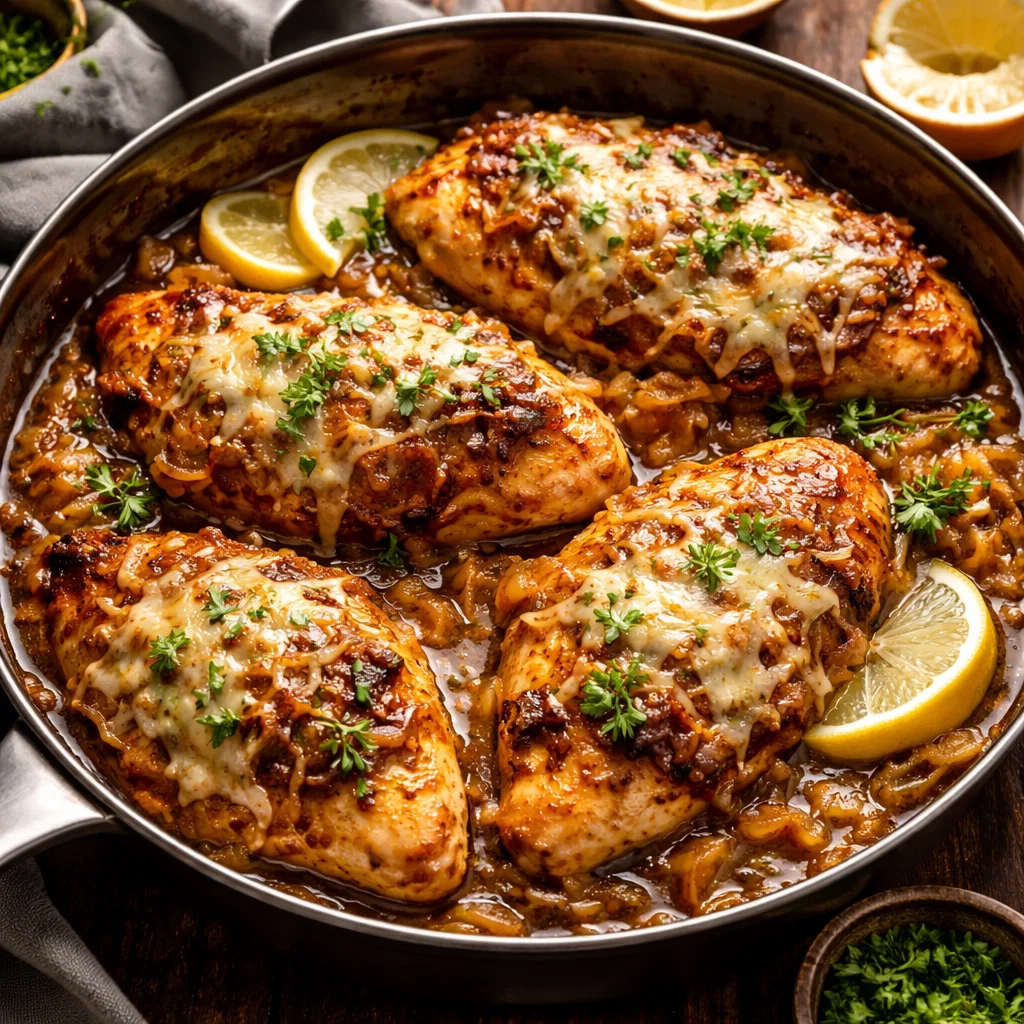
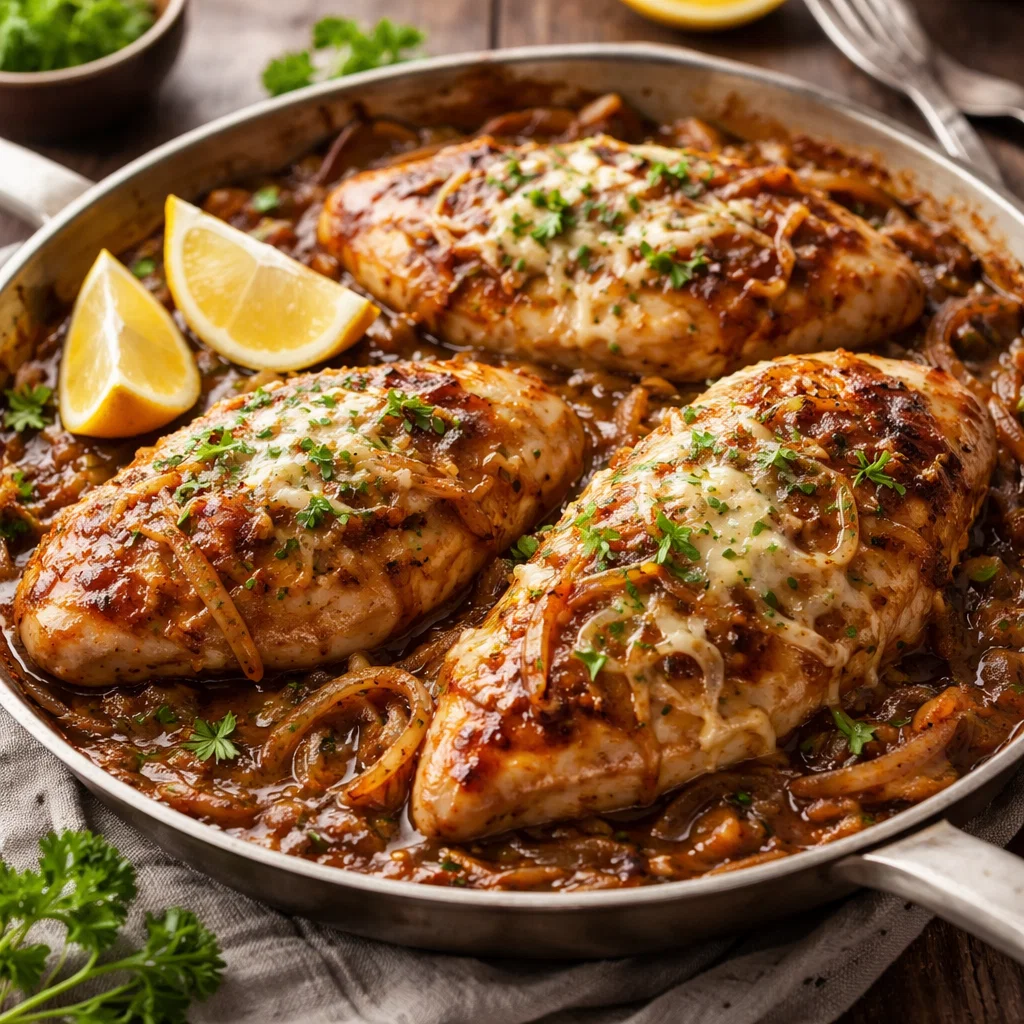
Return the seared chicken to the skillet, nestling each piece into the caramelized onion sauce. Spoon onions over the top of each chicken piece. Top each piece generously with your cheese of choice — Mozzarella for classic meltability, Provolone for a slightly sharper flavor, Swiss for a nutty, traditional French onion profile, or Gruyère for the most authentic and most luxurious result. Transfer the skillet to an oven preheated to 475°F and bake for 10 to 12 minutes until the cheese is completely melted, bubbling, and beginning to develop golden-brown spots. Rest for 5 minutes before serving.
Perfect Side Dish Pairings
Classic Comfort Sides
The rich, deeply savory onion gravy that surrounds the chicken in this French Onion Chicken skillet needs something absorbent and neutral to soak it up — and few things perform this role better than creamy mashed potatoes. The sauce pools into the mashed potatoes and transforms each forkful into something extraordinary. Buttered egg noodles are an equally classic pairing — their slightly chewy, buttery character complements the richness of the sauce and makes the overall meal feel hearty and deeply satisfying.
Adding a Green
The richness of this French onion chicken with cheese dish benefits from a simple, fresh green vegetable alongside to provide balance and nutritional contrast. Green beans — whether steamed simply with salt and butter, roasted with garlic, or blanched and dressed with a bright lemon vinaigrette — are the most complementary vegetable pairing. Their slight bitterness and crisp texture cut through the richness of the cheese and onion gravy and make the overall plate feel complete rather than overwhelming.
Storage and Make-Ahead Directions
Refrigeration
Allow the finished French Onion Chicken to cool to room temperature before transferring to an airtight container. The onion gravy, melted cheese, and chicken store beautifully together — refrigerate for up to 3 days. Reheat gently on the stovetop over medium-low heat, adding a small splash of chicken broth to restore the sauce consistency if it has thickened during refrigeration. The flavor improves notably after 24 hours as the caramelized onion, wine, and soy sauce components continue to meld.
Freezer Friendly
This easy French Onion Chicken freezes well for up to 3 months. Portion into airtight freezer-safe containers, ensuring each portion has adequate sauce to protect the chicken from freezer burn. Thaw overnight in the refrigerator before reheating. For the best cheese texture after freezing, consider reheating on the stovetop and adding a fresh layer of cheese during the final minutes — briefly placed under the broiler — rather than relying on the frozen and reheated original cheese layer.
Community Q&A and Related Recipes
Scaling the Recipe for Larger Families
This French Onion Chicken skillet recipe doubles successfully with one important equipment consideration: you will need either a very large oven-safe skillet — 14 inches minimum — or two separate skillets to accommodate the doubled quantity of onions and chicken without crowding. Crowding the onions during caramelization causes them to steam rather than caramelize, and crowding the chicken during searing prevents browning. If two pans are required, caramelize the onions from both batches together in the larger pan for the sauce-building stage.
Try These Next
If this French Onion Chicken has inspired enthusiasm for the deeply caramelized, wine-enriched French onion flavor profile in new formats, French Onion Pasta applies the same foundational technique — patient caramelization, wine reduction, rich broth, melted Gruyère — to a pasta format that is equally soul-satisfying and arguably even more weeknight-practical. Mushroom Chicken Pasta extends the same one-pan philosophy into an earthy, cream-enriched direction that shares the same leisurely cooking pace and deeply satisfying finished result.
Looking for more chicken inspiration?
- Healthy Crockpot Chicken Recipes for Meal Prep
- Easy Crock Pot Chicken Tortilla Soup
- Creamy Chicken Pasta – The Cozy Cook
- The Best Garlic Parmesan Chicken Meatloaf (Juicy & Easy!)
- Easy Creamy Cajun Chicken Pasta (Chili’s Copycat) – 30 Mins
- Honey Garlic Chicken – Easy 15-Minute Weeknight Dinner
- Longhorn Parmesan Crusted Chicken: The Ultimate Copycat
- Creamy White Chicken Enchiladas