
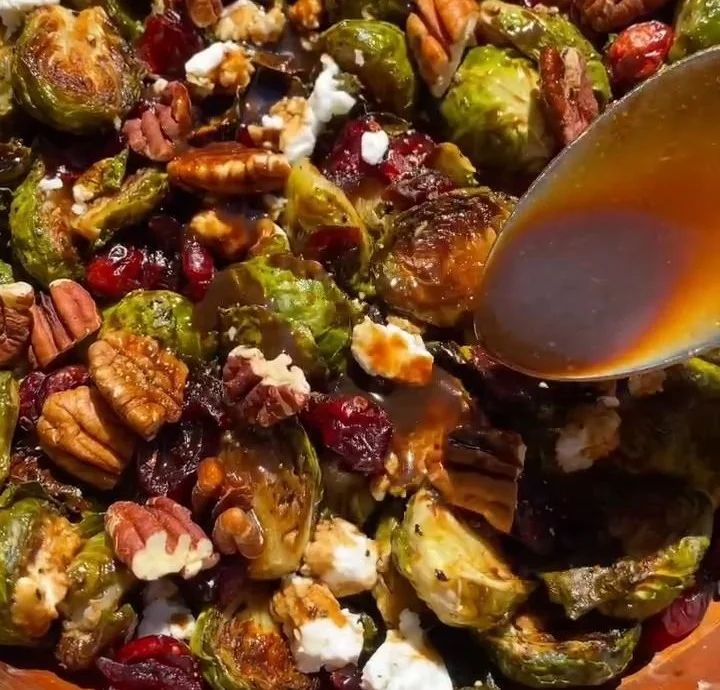
Roasted Brussels Sprouts with Balsamic Vinegar and Honey
Table of Contents
There are countless ways to roast Brussels sprouts. Olive oil and salt is the classic. Garlic butter is reliably delicious. Parmesan and lemon is bright and crowd-pleasing. But the combination of balsamic vinegar and honey is something different — something that feels less like a recipe and more like a discovery. Once you understand why it works so well, you’ll find it difficult to go back to anything simpler.
Thank you for reading this post, don't forget to subscribe!Here’s the flavor science behind it. Brussels sprouts contain natural compounds called glucosinolates that produce a bitter, slightly sulfurous note — particularly when exposed to heat. This bitterness is what gives roasted Brussels sprouts with balsamic their savory depth, but left unbalanced, it can be the reason people push them to the edge of the plate. Balsamic vinegar enters the equation as the sharpening agent — its rich, wine-based acidity cuts through the natural earthiness of the sprout and adds a bright, complex zing that makes each bite feel dynamic rather than flat.
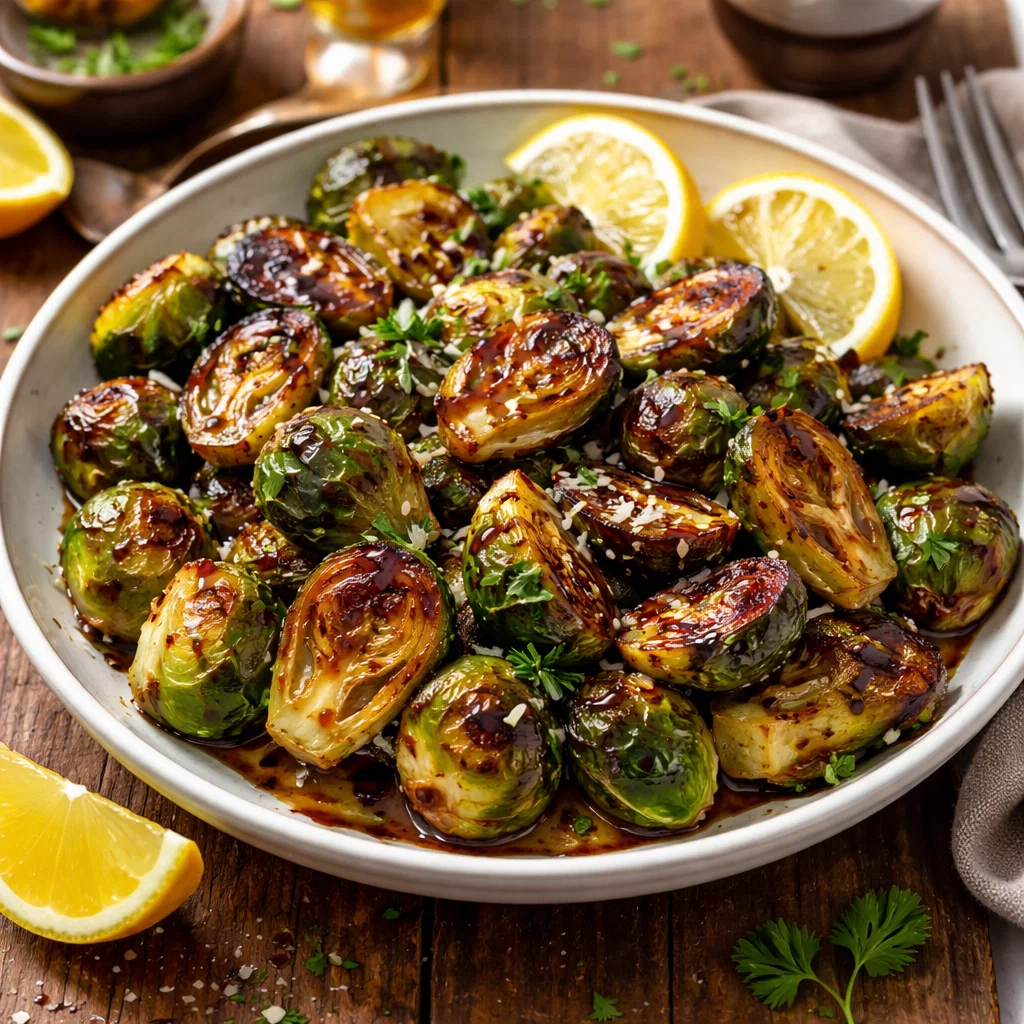
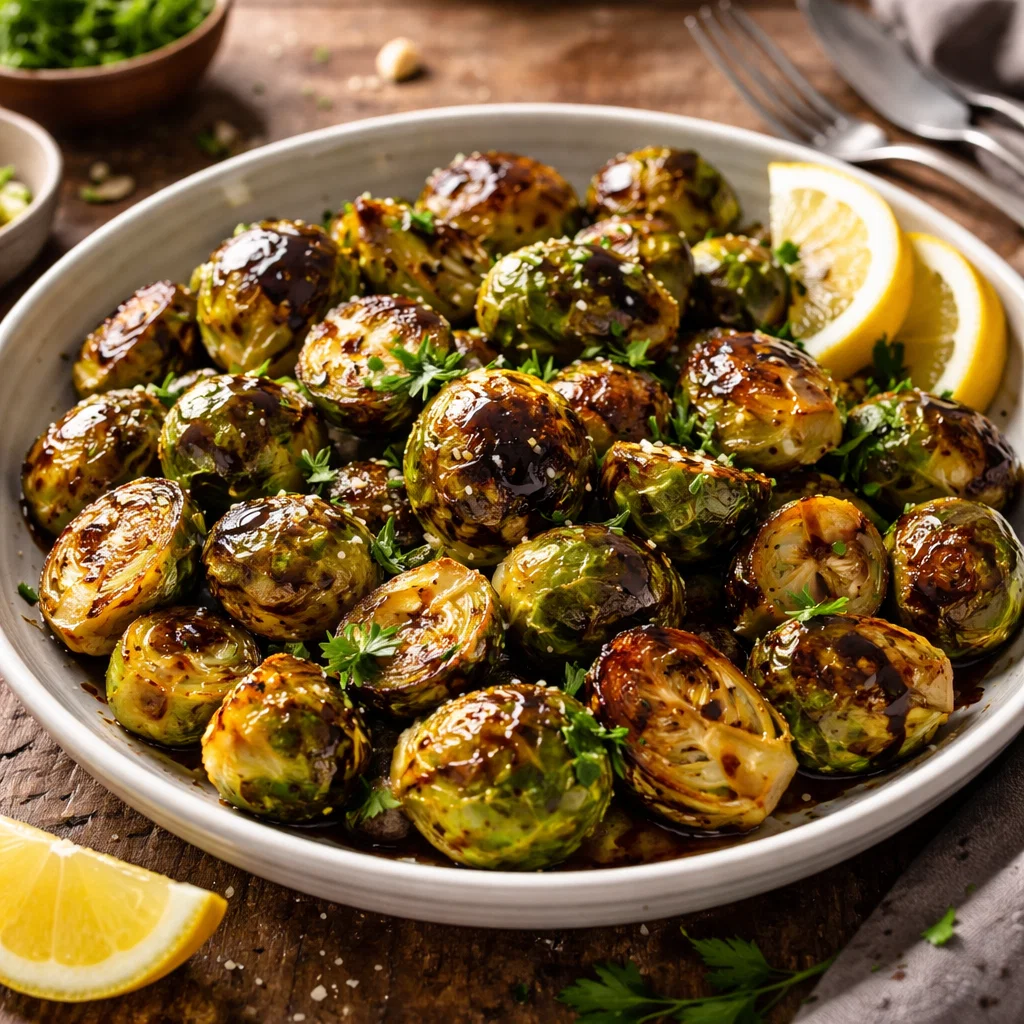
Honey does the opposite and the complementary work simultaneously. Its natural sweetness softens the bitter edge of the sprout while its viscosity helps the glaze cling to every caramelized surface. Under the high heat of a properly set oven, honey caramelizes against the cut faces of the sprouts, creating a sticky, lacquered finish that is both visually beautiful and intensely flavorful. The acidity of the balsamic prevents the sweetness from becoming cloying. The sweetness of the honey prevents the acidity from becoming sharp.
The result is roasted Brussels sprouts with balsamic and honey that are perfectly balanced — sweet, tangy, bitter, caramelized, and deeply savory all at once. This is the combination that converts people who think they don’t like Brussels sprouts. And once you’ve made them this way, you’ll understand exactly why.
Selection and Preparation Secrets
The quality of your finished roasted Brussels sprouts with balsamic is determined significantly before the oven ever turns on. Selection and preparation are where most home cooks leave results on the table — and where a few deliberate choices make a genuinely meaningful difference.
Size Matters: Go Bigger
When you’re standing at the produce display choosing your sprouts, reach for the larger ones. This runs counter to the instinct many cooks have — smaller often feels more tender and delicate — but for high-heat roasting, larger Brussels sprouts are decisively superior. Their greater mass means more interior moisture, which produces a creamier, more substantial center even after the exterior has fully caramelized. More surface area on a larger sprout means more cut face in contact with the hot pan, which translates directly to more of the deep golden-brown browning that makes roasted Brussels sprouts with balsamic vinegar so irresistible. Larger sprouts also hold their structure better through the full roasting time, giving you distinct, individually caramelized pieces rather than a pan of soft, collapsed quarters.
The Ragged Leaf Rule
Before you cut a single sprout, take the time to properly clean and trim each one. Slice off the dry, woody stem end at the base — just enough to remove the tough portion without destabilizing the sprout’s structure. Then peel away any outer leaves that are yellowed, damaged, wilted, or ragged-looking. These compromised leaves don’t caramelize the way healthy leaves do; instead they tend to burn at the edges while the interior of the sprout is still cooking. Removing them takes an extra minute per batch and produces a noticeably cleaner, more evenly textured final dish.
The loose leaves that fall away during trimming are worth keeping — spread across the pan alongside the halved sprouts, they turn into thin, lightly charred, crispy wisps that are one of the best parts of the entire dish. Set them aside rather than discarding them.
Uniformity is Non-Negotiable
For roasted Brussels sprouts with balsamic, every piece on the pan needs to finish cooking at the same time. That only happens if every piece is the same size. For most larger sprouts, halving through the stem is the right cut — it creates a flat face for maximum contact with the pan and exposes the interior to direct heat. For any particularly large sprouts in the batch, quartering is the better choice. The goal is that when you look at your prepared sprouts before they go into the oven, every piece looks roughly the same — same thickness, same mass, same exposed surface area. This single preparation discipline is the difference between a pan where everything finishes together and a pan where half the sprouts are perfect and half are either underdone or overdone.
The Professional Roasting Method
Getting roasted Brussels sprouts with balsamic glaze right is as much about technique as it is about ingredients. These three professional methods address the most common failure points in home roasting and ensure consistently excellent results every time.
Oven Setup: Position and Temperature
Preheat your oven to 425°F (220°C) and position your rack in the middle of the oven. The middle rack provides the most even heat distribution — the top rack runs hotter and risks burning the honey glaze before the sprouts are fully tender, while the bottom rack can produce uneven browning from reflected heat off the oven floor. Middle rack, 425°F, fully preheated before the pan goes in. These are the non-negotiable starting conditions for properly caramelized balsamic Brussels sprouts.
The Anti-Steam Strategy
Steam is the enemy of crispy roasted Brussels sprouts with balsamic vinegar and honey. Moisture trapped against the surface of the sprouts during cooking produces soft, yielding exteriors instead of the caramelized crust you’re after. Two specific techniques eliminate this problem.
First, line your baking sheet with heavy-duty aluminum foil. Standard foil can tear under the weight of the sprouts and the heat of the oven, allowing liquid to pool underneath and steam the bottom of the sprouts. Heavy-duty foil holds its integrity through the full roasting time and conducts heat efficiently for better browning.
Second — and this is critical if you’re cooking for a crowd — never double the recipe on a single baking sheet. If you need 3 pounds of balsamic honey Brussels sprouts instead of 1.5, use two separate baking sheets rather than crowding everything onto one. Overlapping sprouts trap steam between them and prevent the surface moisture from evaporating efficiently. The result is soft, pale sprouts with none of the caramelization that makes this dish so good. Two pans, single layers, space between pieces — always.
The Double Toss Technique
This is the professional detail that separates good roasted Brussels sprouts with balsamic from great ones, and it’s simple enough to execute every time once you understand the logic behind it.
The initial toss uses 2 tablespoons of olive oil combined with salt and freshly cracked black pepper. Toss the prepared sprouts in this mixture until every surface is lightly and evenly coated, then arrange cut-side down on the prepared baking sheet and roast for the full cooking time. The purpose of this toss is to facilitate even browning and seasoning during the roasting phase — before the glaze is introduced.
The final toss is where the magic happens. Reserve the remaining 1 tablespoon of olive oil and whisk it together with the balsamic vinegar and honey in a small bowl. This oil-glaze mixture is applied to the sprouts in the final minutes of cooking — or immediately after they come out of the oven — and tossed to coat every caramelized surface. The reserved oil in the glaze serves a specific purpose: it emulsifies the balsamic and honey, helping the mixture coat evenly rather than pooling at the bottom of the bowl, and it adds a final layer of richness that makes the finished roasted Brussels sprouts with balsamic glossy, cling-coated, and deeply flavorful.
Flavor Enhancements and Variations
The base recipe for roasted Brussels sprouts with balsamic vinegar and honey is excellent on its own — but these reader-tested and professionally validated additions take it further for occasions that call for something extra.
Savory Depth: The Garlic and Onion Upgrade
One of the most consistently praised reader suggestions for this recipe is the addition of ½ teaspoon of garlic powder and ½ teaspoon of onion powder to the initial oil, salt, and pepper toss. These two powdered aromatics integrate into the olive oil coating and caramelize against the cut faces of the sprouts during roasting, adding a savory, slightly sweet depth that complements the balsamic and honey beautifully without competing with them. This is not the same as using fresh garlic — fresh garlic burns at 425°F before the sprouts are done, while garlic powder caramelizes evenly alongside the sprout surfaces. Add both to your initial seasoning toss and you’ll notice a rounder, more complex flavor in the finished dish that makes the balsamic honey Brussels sprouts taste more deeply developed.
Texture and Color Add-ins
The finishing moment — right after the glaze is applied and the final toss is complete — is the ideal time to fold in additional elements that add texture, color, and complementary flavor. Crispy bacon pieces bring smoky, salty richness that plays beautifully against the sweet-tangy balsamic glaze. Toasted pecans add a buttery crunch and a nutty warmth that makes the dish feel more substantial and autumn-appropriate. Craisins (dried cranberries) introduce a chewy, tart-sweet element that creates beautiful color contrast against the golden-brown sprouts and echoes the sweetness of the honey in the glaze.
Any one of these additions works on its own. All three together create a balsamic Brussels sprouts dish that functions convincingly as a centerpiece side at a holiday table.
If you love roasting vegetables at high heat, this same double-toss technique works beautifully with balsamic roasted broccoli — the florets caramelize in a remarkably similar way and absorb the glaze with equal enthusiasm. Honey roasted carrots with a balsamic finish are another natural extension of this flavor profile, and they pair wonderfully alongside these sprouts on the same holiday spread.
Serving and Timing: The “Do Not” List
A dish this good deserves to be served at its best — and that requires understanding the two rules that protect the quality of your roasted Brussels sprouts with balsamic vinegar from prep to plate.
Do Not Make These the Night Before
Balsamic glazed Brussels sprouts are a dish that must be served immediately after cooking. The caramelized, slightly crispy exterior that makes them so compelling begins softening within 20 to 30 minutes of leaving the oven as residual steam from the interior migrates outward. By the next morning, even properly stored leftovers have lost the textural contrast between crispy outer leaves and tender centers that defines the dish at its best. If you’re serving these for a dinner party or holiday meal, roast them as close to serving time as possible — they can be prepped and ready to go into the oven hours in advance, but the roasting itself should happen last.
The Final Taste Adjustment
Before the dish goes to the table, always perform a final taste test after the glaze has been applied. The balsamic vinegar and honey change the flavor profile of the sprouts significantly — the glaze adds sweetness and acidity that can make under-seasoned sprouts taste sharp and one-dimensional, or can balance perfectly-seasoned sprouts into something outstanding. After tossing with the glaze, taste one sprout and adjust salt and pepper as needed. This final adjustment takes ten seconds and is consistently the difference between good roasted Brussels sprouts with balsamic and ones that people ask about for weeks afterward.
Official Recipe Card
Roasted Brussels Sprouts with Balsamic Vinegar and Honey Prep Time: 10 minutes | Cook Time: 25 minutes | Total Time: 35 minutes | Yield: 4 servings
Ingredients
- 1.5 lbs fresh Brussels sprouts, trimmed and halved
- 3 tablespoons olive oil, divided (2 tbsp for initial toss, 1 tbsp reserved for glaze)
- ½ teaspoon sea salt
- ¼ teaspoon freshly cracked black pepper
- ½ teaspoon garlic powder (optional but recommended)
- ½ teaspoon onion powder (optional but recommended)
- 2 tablespoons balsamic vinegar
- 1 tablespoon honey
Instructions
- Preheat oven to 425°F (220°C) and position rack in the middle. Line a large rimmed baking sheet with heavy-duty aluminum foil.
- Trim stems and remove damaged outer leaves from Brussels sprouts. Halve larger sprouts and quarter any extra-large ones for uniform sizing.
- In a large bowl toss the prepared sprouts with 2 tablespoons of olive oil, salt, pepper, and garlic and onion powder if using. Toss until every surface is evenly coated.
- Arrange sprouts cut-side down in a single even layer on the prepared baking sheet. Do not overlap or crowd. Use a second pan if doubling the recipe.
- Roast for 20 to 25 minutes until cut sides are deeply golden brown and sprouts are tender when pierced with a fork.
- While sprouts roast whisk together the remaining 1 tablespoon of olive oil with the balsamic vinegar and honey in a small bowl.
- Remove sprouts from the oven and immediately pour the balsamic honey glaze over the top. Toss gently to coat every piece evenly.
- Perform a final taste test and adjust salt and pepper as needed. Add any optional toppings such as bacon, pecans, or craisins. Serve immediately.
Nutrition Facts (Per Serving — Estimated)
| Nutrient | Amount |
|---|---|
| Calories | 116 kcal |
| Total Fat | 7g |
| Saturated Fat | 1g |
| Carbohydrates | 13g |
| Dietary Fiber | 4g |
| Total Sugars | 6g |
| Protein | 4g |
| Sodium | 310mg |
Dietary and Legal Notes
Gluten-Free Adaptability
Roasted Brussels sprouts with balsamic vinegar and honey are naturally gluten-free in their base form — Brussels sprouts, olive oil, salt, pepper, and honey contain no gluten. However, balsamic vinegar requires label verification. Most traditional balsamic vinegar is gluten-free, but some commercial balsamic-style condiments and flavored vinegars contain added ingredients — thickeners, colorings, or malt vinegar components — that may introduce gluten. Always check the label for a certified gluten-free designation if you are cooking for someone with celiac disease or a serious gluten sensitivity. The same applies to any optional add-ins like bacon or pre-packaged craisins, which can sometimes contain gluten-containing additives.
Nutritional Disclaimer
All nutrition facts provided for this balsamic glazed roasted Brussels sprouts recipe are estimates only. Actual nutritional values will vary based on the specific brands of ingredients used, the exact weight of your Brussels sprouts, the amount of oil absorbed during roasting, and any optional additions included. These figures are provided for general informational purposes and should not be used as the sole basis for medical or dietary decisions. Always consult a registered dietitian or qualified healthcare professional for personalized nutritional guidance.
Frequently Asked Questions from the Community
Q: Can I use frozen Brussels sprouts? Fresh sprouts are strongly recommended for roasted Brussels sprouts with balsamic. Frozen sprouts contain significantly more moisture, which makes achieving a crispy caramelized exterior very difficult even at high heat. If fresh is unavailable, thaw frozen sprouts completely and pat very thoroughly dry before roasting.
Q: Can I substitute maple syrup for the honey? Yes — maple syrup works beautifully as a honey substitute in this balsamic Brussels sprouts glaze and produces a slightly different but equally delicious flavor profile with a deeper, more complex sweetness. Use the same quantity as a direct substitution.
Q: My sprouts came out soft instead of crispy. What went wrong? The three most common culprits for soft roasted Brussels sprouts with balsamic vinegar are a crowded pan, an oven that wasn’t fully preheated, or sprouts that weren’t dried thoroughly after washing. Address all three and your next batch will be significantly crispier.