
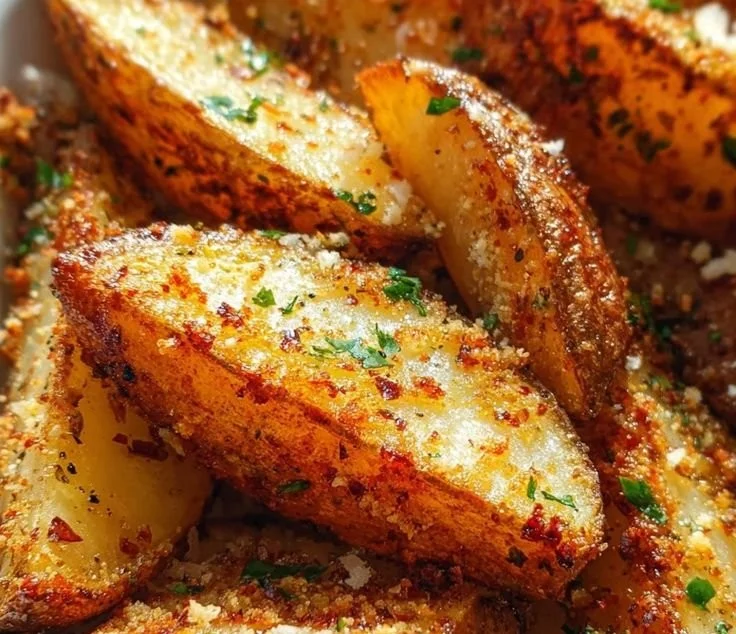
Garlic Parmesan Potato Wedges
Table of Contents
If you’ve been searching for the perfect snack that delivers both crunch and comfort in every single bite, these garlic parmesan potatoes are about to become your new obsession. With a gloriously crispy outer shell and a pillowy, creamy interior, this recipe hits that rare sweet spot that keeps people reaching for more long after the plate should be empty.
Thank you for reading this post, don't forget to subscribe!Whether you’re hosting a game day spread, firing up the backyard barbecue, or simply looking for something impressive to set out alongside cold drinks on a lazy afternoon, these wedges deliver every single time. And here’s the part that makes this recipe genuinely smart: while the potatoes do their thing in the oven, you’re putting together the magic seasoning blend — a fragrant, punchy mix of garlic, parmesan, parsley, and lemon that gets tossed over the wedges the moment they come out. No complicated timing, no babysitting the stove. Just golden, garlicky perfection.
Setting the Foundation for Crispiness
The secret to truly great garlic parmesan potatoes doesn’t begin with the seasoning — it begins with choosing and preparing the right potato. Get this part right and everything else falls into place naturally.
Russet potatoes are the gold standard here. Their high starch content gives you that dreamy creamy interior while still holding their shape through a long, hot bake. Baby potatoes or new potatoes can work in a pinch and will give you a slightly waxier, denser result, but if you want that classic fluffy pulp inside a crispy crust, Russets are your best friend.
When you’re picking your potatoes at the store, pay attention to sizing. Choose potatoes that are roughly the same height and diameter so every wedge spends the same amount of time in contact with the hot pan and finishes cooking at the same rate. One oversized potato in the mix means some wedges are underdone while others are perfectly golden — a small detail that makes a big difference.
The single most important prep step, and the one most people skip, is drying your potatoes thoroughly. Scrub them well under cold water, then pat them completely dry with a clean kitchen towel or paper towels. Surface moisture is the enemy of crispiness. Any water left on the skin will steam in the oven rather than roast, and you’ll end up with soft, soggy wedges instead of the crackling shell you’re after.
The Art of the Wedge: Technique and Texture
How you cut your potato actually determines the character of your final wedge, and it’s worth thinking about before you pick up the knife.
6 wedges per potato are made by cutting the potato in half lengthwise, then cutting each half at a 45-degree angle from the center. These wedges are thicker, with more surface area on the flat side and a generous amount of creamy pulp inside. If you love that soft, fluffy interior as much as you love the crispy exterior, go with six.
8 wedges per potato are made by cutting in half, then in half again, giving you four spears per half. These are thinner and crispier all the way through — more like a thick steak fry than a chunky wedge. If maximum crunch is your priority, eight is the way to go.
As for the skin, leaving it on adds texture, rustic visual appeal, and a slight earthiness that pairs beautifully with the parmesan. If you prefer a smoother wedge or you’re serving guests who might not love potato skin, peel them before cutting. Either approach works — it’s purely a matter of preference.
The Magic Seasoning Breakdown
This is where garlic parmesan potatoes earn their name. The seasoning blend is simple, but each ingredient is pulling serious weight.
Raw garlic, finely chopped rather than minced into a paste, gives you sharp, spicy heat with a little textural presence. It clings to the wedges after baking and mellows just enough from the residual heat without losing its punch entirely.
Pungent parmesan brings the salty, savory backbone that makes this dish feel substantial and satisfying. Use freshly grated rather than the pre-shredded variety if you can — it melts more evenly and has far more flavor. Because parmesan is quite salty on its own, keep this in mind when you season the wedges before baking.
Parsley and lemon are the unsung heroes of this blend. The fresh parsley adds brightness and a grassy herbal note that cuts through the richness of the butter and cheese, while a squeeze of lemon lifts everything and stops the dish from feeling heavy. Don’t skip these two — they’re what makes the whole thing taste fresh and alive rather than just greasy and cheesy.
Feel free to adjust quantities to your taste. Love garlic? Add more. Prefer a stronger citrus note? Squeeze in extra lemon. This seasoning blend is forgiving and genuinely difficult to mess up.
The Baking Process
Preheat your oven to 350ºF (180°C) and line a large baking tray with aluminum foil. The foil isn’t optional if you value your cleanup time — the butter and cheese combination gets sticky and stubborn on an unlined pan.
Coat your wedges in a mixture of olive oil and melted butter. The olive oil raises the smoke point and helps with crisping, while the butter adds richness and that beautiful golden color. Toss the wedges until every surface is well coated, then arrange them cut-side down on the prepared tray in a single layer with a little breathing room between each one. Crowding the pan causes steaming, which is exactly what you’re trying to avoid.
Sprinkle the wedges lightly with salt before they go into the oven, being mindful that the parmesan will add significant saltiness later. You want to season the potato itself, not over-salt the finished dish.
Bake for 30 to 40 minutes, until the wedges are tender all the way through when pierced with a fork and golden brown on the outside. While they bake, combine your finely chopped garlic, grated parmesan, fresh parsley, and a squeeze of lemon in a bowl. The moment the wedges come out of the oven, pour the seasoning mix over the top and toss gently to coat while everything is still hot. The heat from the wedges will slightly mellow the raw garlic and help the parmesan cling to every surface.
Troubleshooting and Serving
If your wedges come out soggy, the culprit is almost always moisture — either from inadequately dried potatoes, a crowded pan, or letting them sit too long before serving. Garlic parmesan potatoes are at their absolute best the moment they come off the tray. The longer they sit, the more the crust softens as steam from the interior escapes. Serve them immediately and serve them hot.
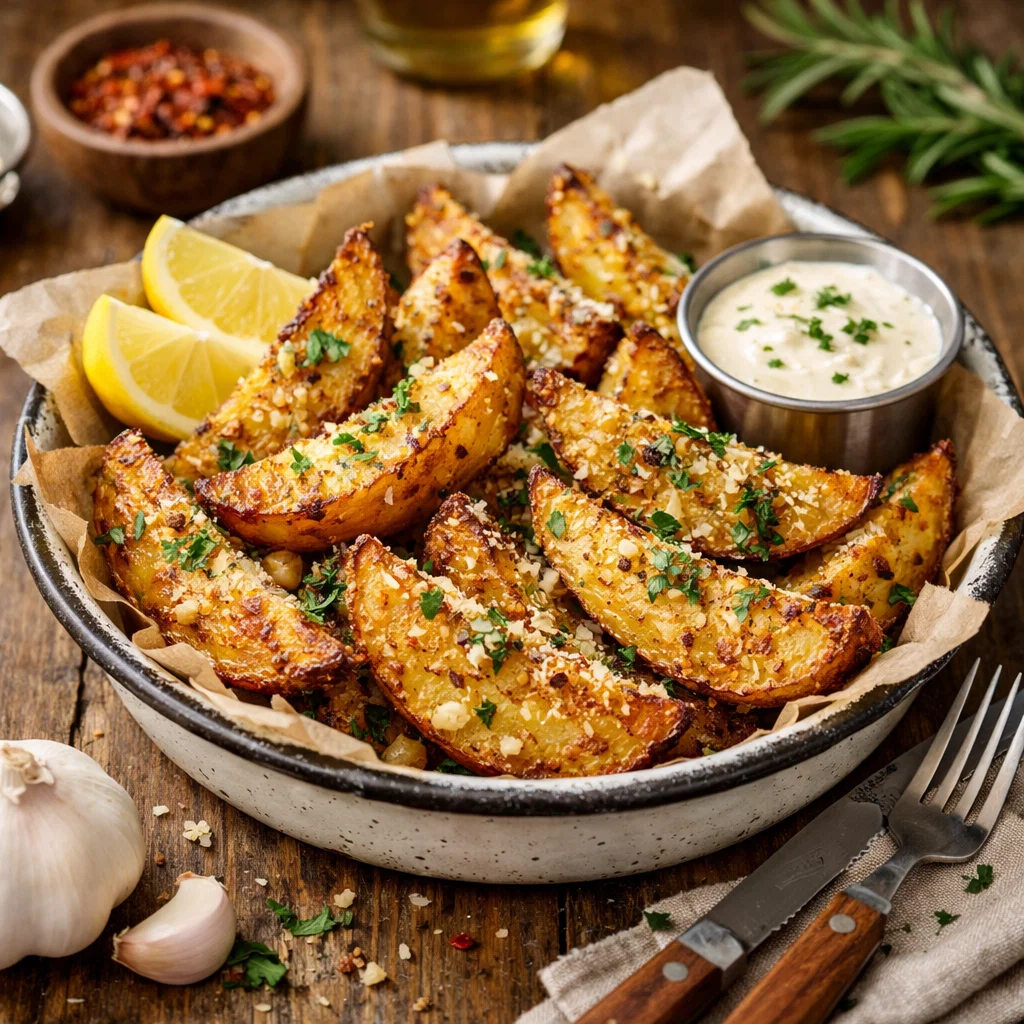
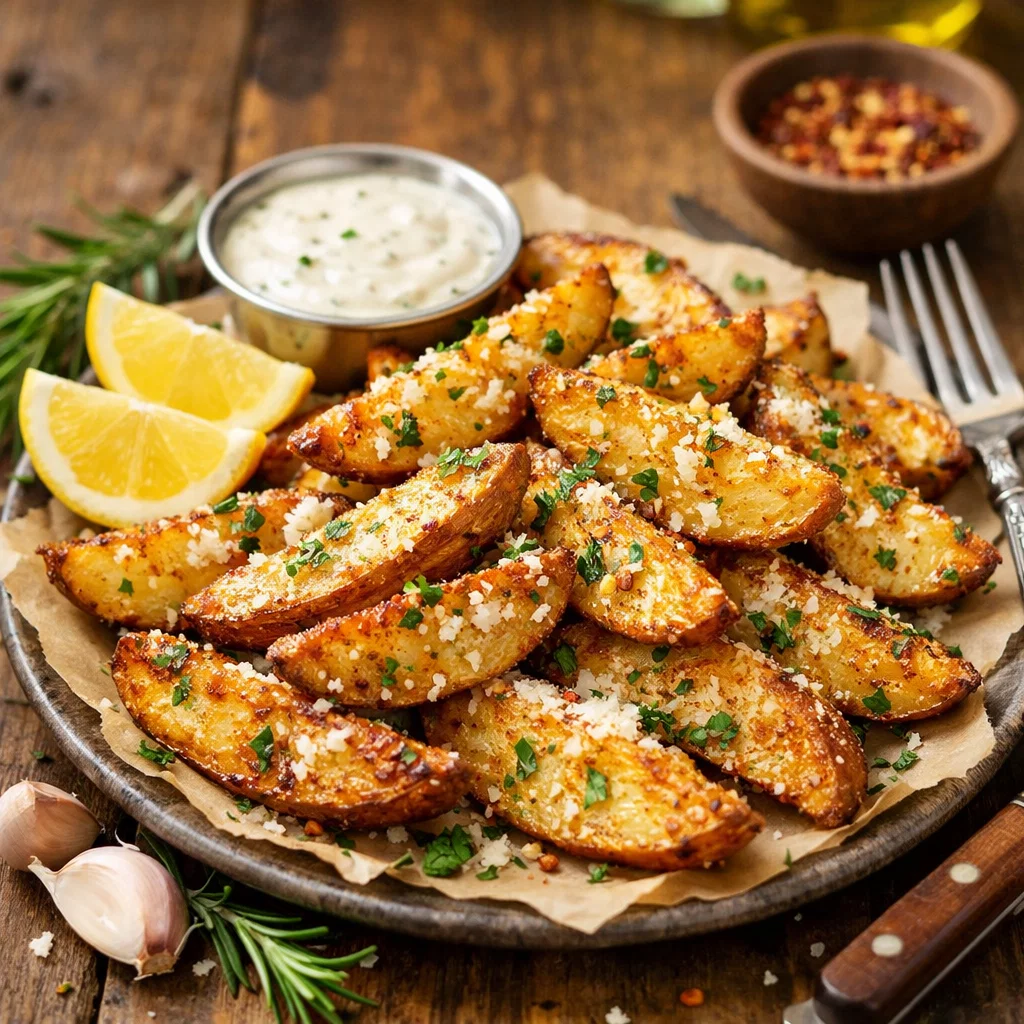
For presentation, a wooden board lined with thick paper napkins is the move. It handles the oil beautifully, looks casual and inviting, and makes the whole setup feel like something you’d find at a great gastropub.
These wedges are incredible on their own, but they shine even brighter alongside baked or barbecued meats — think pulled pork, grilled chicken thighs, or slow-cooked ribs. For dipping, chimichurri sauce adds a bright, herbaceous contrast that works brilliantly with the garlic and cheese. Classic ketchup is always a crowd-pleaser, and the food community has spoken enthusiastically about blue cheese dressing as a dipping option — the creamy tang against the salty parmesan is genuinely outstanding and worth trying at least once.
Recipe Card
Garlic Parmesan Potato Wedges Prep Time: 15 minutes | Cook Time: 35 minutes | Yield: 8 servings
Ingredients
- 4 large Russet potatoes, scrubbed and thoroughly dried
- 3 tablespoons olive oil
- 2 tablespoons melted butter
- Salt, to taste
- 4 cloves garlic, finely chopped
- ½ cup freshly grated parmesan
- 3 tablespoons fresh parsley, roughly chopped
- Juice of half a lemon
Instructions
Preheat your oven to 350ºF (180°C) and line a large baking tray with aluminum foil. Cut each potato into 6 or 8 wedges depending on your preferred texture. In a large bowl, toss the wedges with olive oil, melted butter, and a light pinch of salt until evenly coated. Arrange on the prepared tray in a single layer, cut-side down, with space between each wedge. Bake for 30 to 40 minutes until golden and tender. Meanwhile, combine garlic, parmesan, parsley, and lemon juice in a bowl. Remove wedges from the oven and immediately toss with the seasoning mixture. Serve hot.
Storage Notes: These wedges are best eaten fresh. If you have leftovers, store them in an airtight container in the refrigerator for up to 2 days and reheat in the oven at 375ºF for 10 minutes to restore some of the crispiness. Avoid the microwave — it will make them soft and limp.