
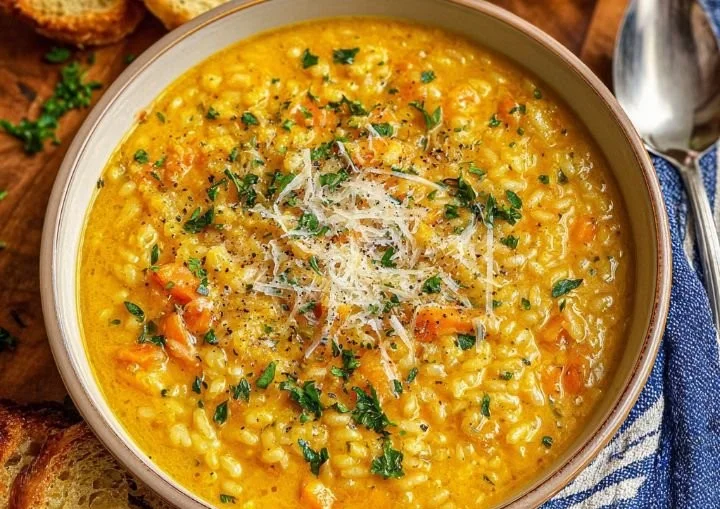
Italian Penicillin Soup: The Ultimate Sick Day Recipe
Table of Contents
Every culture has its version of the soup that heals. The broth that gets made when someone is sick, when the weather turns brutal, when the body needs something warm and deeply nourishing that feels like care in liquid form. In Jewish households it’s chicken soup with matzo balls. In Southeast Asia it’s congee. In Vietnam it’s pho. And in Italian and Italian-American households across generations, it’s this — Italian Penicillin Soup.
Thank you for reading this post, don't forget to subscribe!The name says everything about what this dish is and what it’s expected to do. Affectionately called Sick Day Soup or Chicken Pastina Soup by the families who have made it for generations, this is the bowl that appears on the stovetop when someone has a cold, when a child comes home from school pale and sniffly, when an adult needs something that tastes like being taken care of. The tiny pastina pasta — those miniature star-shaped or round pasta pieces that Italian grandmothers have been cooking in broth for centuries — gives the soup a character that is simultaneously childlike and deeply comforting, familiar in a way that bypasses the rational mind and goes straight to whatever part of us remembers being small and being looked after.
But this Italian Penicillin Soup recipe is more than nostalgia and more than the standard chicken noodle soup tradition it superficially resembles. It’s built around a technique — a genuine culinary insight — that transforms a simple chicken broth into something with remarkable body, depth, and complexity without adding cream, flour, or any of the usual thickening agents. It elevates the humble sick day soup into something that merits making not just when you’re under the weather, but any cold evening when what’s needed is the most comforting bowl of soup imaginable.
The “Genius” Technique: Building Body and Flavor
What separates this Italian Penicillin Soup from every other version of chicken pastina soup — and from most chicken soups generally — is a single technique that fundamentally changes the character of the broth. It’s simple enough to execute in a home kitchen with basic equipment, and the result is dramatic enough that it will permanently change how you think about building flavor in soups.
The Blending Secret
The aromatics — sweet onion, carrots, celery, and smashed garlic cloves — are simmered in the chicken broth until completely tender. So far, standard soup procedure. The departure comes next: rather than leaving those vegetables in the pot, fishing them out to discard, or leaving them as chunky pieces in the finished soup, they are removed, transferred to a blender with approximately one cup of the hot broth, and processed until completely smooth. This vegetable purée is then stirred back into the pot, incorporating seamlessly into the remaining broth.
The effect is transformative. The blended vegetables release all of their natural starches, sugars, and flavor compounds into the broth in a form that disperses completely throughout the liquid rather than sitting in identifiable pieces. The broth becomes thicker, richer, and more golden — with a body and depth that takes the chicken pastina soup from something thin and simple into something that feels substantial and nourishing without being heavy.
Texture Without Heaviness
The closest comparison for what this technique produces is a good butternut squash soup — that velvety, slightly sweet, vegetable-rich body that feels luxurious without any added cream or thickener. The Italian Penicillin Soup broth achieves a similar quality from the combination of blended carrot and onion, but remains distinctly a soup rather than a purée — clear enough to see the pastina and chicken floating in it, thick enough to coat a spoon and feel genuinely nourishing with each sip. It’s the kind of broth that makes you understand, on a physical level, why this soup has the reputation for making people feel better.
The Parmesan Rind Factor
The second technique that elevates this chicken pastina soup recipe into something exceptional is the addition of a Parmigiano-Reggiano cheese rind to the simmering broth. The rind — the hard, wax-sealed exterior of a Parmigiano-Reggiano wheel that accumulates as the cheese is used — is packed with concentrated umami compounds, amino acids, and complex flavor molecules that leach slowly into the surrounding liquid during a long, gentle simmer. The broth develops a savory, slightly nutty depth that is immediately recognizable as Parmesan but subtle enough to seem like the broth’s own intrinsic character rather than an obvious addition. If you’ve never saved your Parmesan rinds in the freezer for exactly this purpose, this recipe is the reason to start.
Ingredients and Preparation
The Essential Components
The Base: The liquid foundation of this Italian Penicillin Soup is lower-sodium chicken broth — the reduced-sodium variety is specified because the Parmesan rind, the pasta, and the rotisserie chicken all contribute salt to the finished soup, and starting with full-sodium broth risks producing something uncomfortably salty by the time everything is combined. Sweet onions (Vidalia or similar) provide a gentler, less pungent sweetness than yellow onions that complements the other vegetables without overpowering them. Carrots add natural sweetness and contribute the beautiful golden color to the blended broth. Celery brings the classic soup aromatics and a subtle earthiness. Smashed garlic cloves — pressed flat with the side of a knife rather than minced — release their flavor into the broth more gently and evenly than minced garlic, contributing warmth and savory depth without sharpness.
The Herbs: Fresh thyme sprigs and bay leaves are the aromatic herbs that give this sick day chicken soup its unmistakably Italian character. Both are added after the blending stage — they infuse the broth during the pasta-cooking simmer and are removed before serving. Fresh thyme is strongly preferred over dried for its brighter, more floral character, though dried works as a substitute when fresh isn’t available.
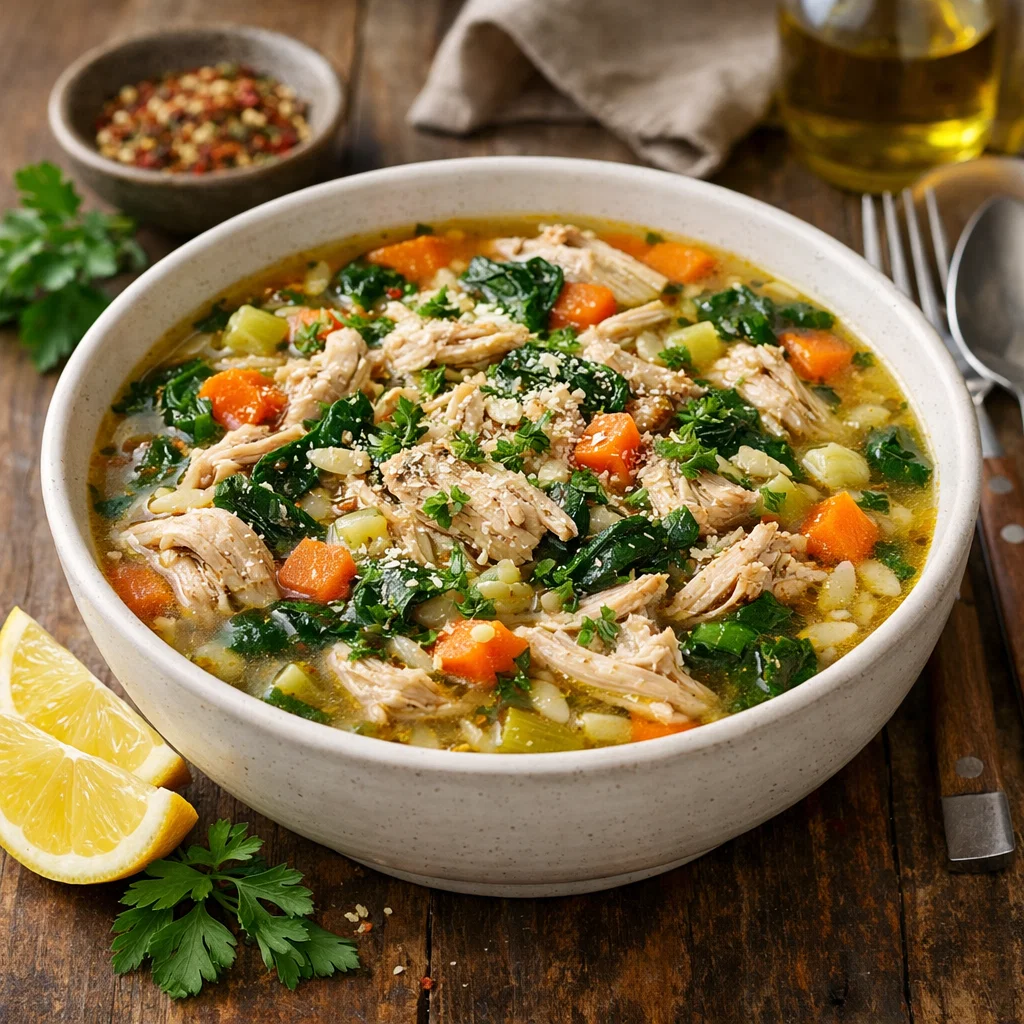
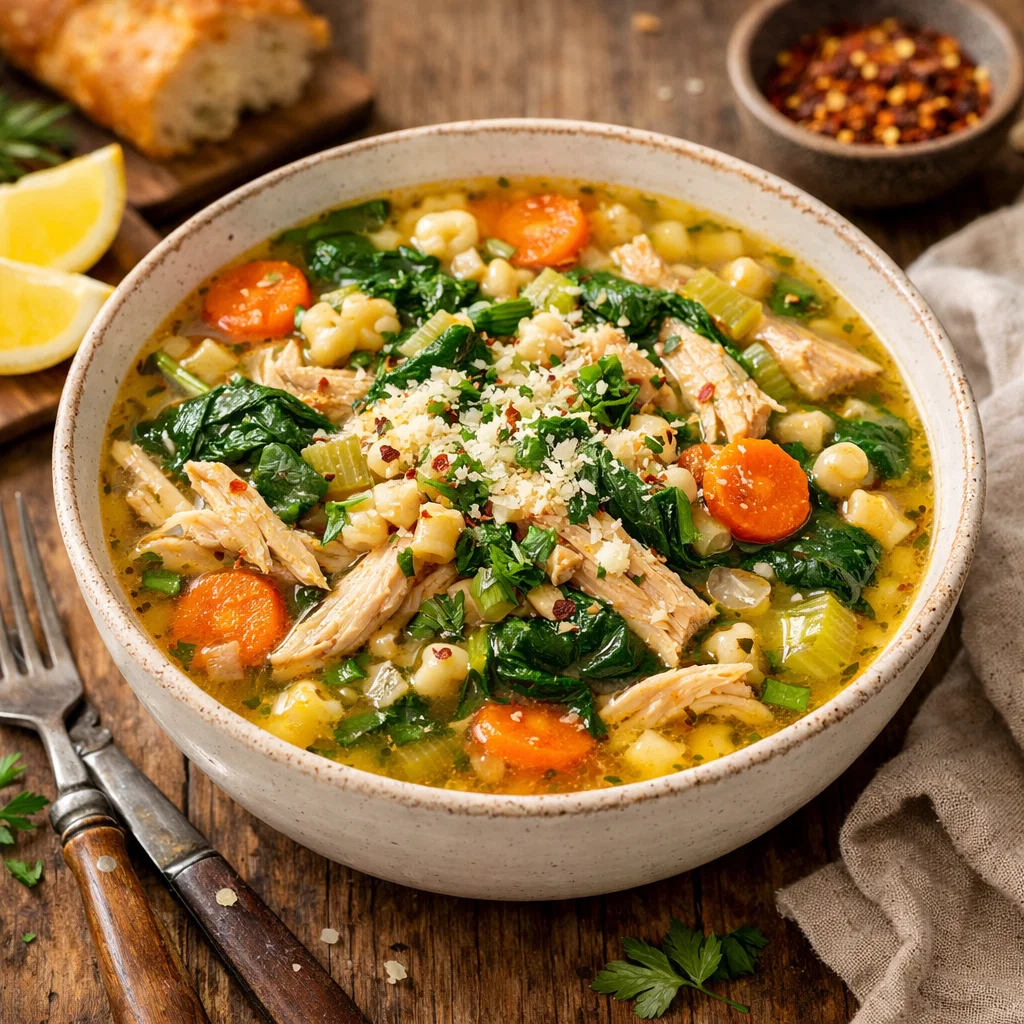
The Protein and Pasta: Shredded rotisserie chicken is the protein shortcut that makes this easy Italian Penicillin Soup practical without sacrificing flavor or texture. Pre-cooked rotisserie chicken is added at the very end of the cooking process — a deliberate technique that prevents the already-cooked meat from becoming dry and stringy from extended heat exposure. Pastina is the classic tiny pasta — available in star, sphere, or rice-grain shapes depending on brand — that defines the texture and character of authentic Italian chicken pastina soup. Its small size means it cooks directly in the broth in 18 to 20 minutes and absorbs the surrounding flavors completely.
Quick Stats
Total prep time for this Italian Penicillin Soup recipe is just 10 minutes — primarily involving the washing and rough-chopping of vegetables, which requires no precision cutting since everything gets blended. The rotisserie chicken shortcut eliminates what would otherwise be the most time-consuming element. From a cold start to a finished pot, total time runs approximately 45 to 50 minutes, most of which is hands-off simmering.
Step-by-Step Culinary Guide
Step 1: Softening the Aromatics
Combine the lower-sodium chicken broth, roughly chopped sweet onion, carrots, celery, and smashed garlic cloves in a large pot over medium-high heat. Bring to a boil then reduce to a steady simmer. Cook for 15 to 20 minutes until all the vegetables are completely tender — a fork should pass through the largest carrot piece with no resistance. The precise cut of the vegetables doesn’t matter here since they’re going to be blended; rough, uneven pieces are perfectly acceptable and save prep time.
Step 2: The Blending Process
Using a slotted spoon or spider strainer, transfer all the cooked vegetables to a blender. Add approximately 1 cup of the hot broth from the pot to the blender. Secure the lid firmly — hot liquid in a blender builds pressure rapidly and an insecure lid will create a dangerous mess. If your blender has a vented lid or a steam release cap, use it. Blend on high speed for 60 to 90 seconds until the vegetable mixture is completely smooth with no remaining chunks. Open the blender carefully and pour the smooth purée back into the pot, stirring to incorporate it evenly throughout the remaining broth. The color and consistency of the broth will change immediately and visibly — it will deepen to a rich golden color and take on a velvety, slightly thicker body.
Step 3: Infusing and Simmering
Add the Parmigiano-Reggiano cheese rind, fresh thyme sprigs, and bay leaves to the enriched broth. Bring the broth back to a gentle simmer over medium heat. Add the pastina directly to the simmering broth and stir to prevent clumping. Cook for 18 to 20 minutes, stirring every few minutes, until the pastina is completely tender and has absorbed some of the surrounding broth. Monitor the liquid level during this stage — pastina is an enthusiastic liquid absorber and you may need to add a small amount of additional broth to maintain the soup consistency you want. The broth will continue to thicken slightly as the pasta’s starch releases into the surrounding liquid.
Step 4: The Final Touch
Remove and discard the Parmesan rind, thyme sprigs, and bay leaves — these aromatics have done their work and should not be served. Add the shredded rotisserie chicken to the finished soup and stir gently to distribute evenly throughout the broth and pastina. Allow the chicken to warm through for 2 to 3 minutes in the hot soup — enough to heat it completely without cooking it further. Taste the finished Italian Penicillin Soup and adjust salt and pepper as needed. Serve immediately.
Community-Tested Tips and Customizations
Adapting for Sore Throats
The community around this Italian Penicillin Soup has developed a meaningful variation specifically for the most acute sick-day scenarios — when a sore throat makes swallowing solid food painful. The modification is elegant in its simplicity: skip the shredded chicken entirely and blend the aromatics more thoroughly than the standard recipe requires, processing until the purée is as smooth as possible with no detectable texture. The resulting soup has what community members describe as a “Gerber-like” consistency — silky smooth, almost pourable, and easy to swallow even with a severely sore throat while still delivering the warm, savory, deeply nourishing broth that makes this soup so restorative. The pastina can remain for those who can manage it, or be blended into the broth as well for a completely smooth result.
Nutritional Boosts
Multiple community members have shared additions that increase the nutritional density of this healthy Italian Penicillin Soup without significantly changing its character. Baby spinach stirred in at the very end — just long enough to wilt into the hot broth — adds iron, folate, and vitamins A and K with minimal flavor impact. Diced yellow bell pepper added with the aromatics and blended into the broth contributes vitamin C in a form that is completely undetectable in the finished soup — making it particularly useful for getting additional nutrients into sick children or picky eaters who might resist visible vegetables.
Ingredient Substitutions
Pastina availability has become an inconsistent issue in many markets, and the community has converged on ditalini pasta as the most satisfying substitute — its small, tubular shape captures the broth similarly to pastina and produces a texture that is authentically close to the original. Acini di pepe and orzo are additional alternatives that work well, though orzo’s elongated shape gives the soup a slightly different visual character.
For the Parmesan rind, any block of genuine Parmigiano-Reggiano that has an intact rind can be used by simply cutting away the exterior. If no rind is available, add a small piece of whole Parmesan cheese to the simmering broth — it won’t dissolve completely but will contribute flavor compounds — or increase the finishing cheese garnish to compensate. Dried thyme substitutes for fresh at a ratio of ⅓ teaspoon dried for every fresh sprig.
For sodium control, reduce the added salt to ½ teaspoon maximum and taste before adding any additional seasoning, particularly if your rotisserie chicken was heavily seasoned or your Parmesan is very salty. Lower-sodium broth combined with careful restraint on added salt makes this Italian Penicillin Soup appropriate for those monitoring their sodium intake without compromising the fundamental flavor.
Serving and Nutritional Profile
The Perfect Garnish
This Italian Penicillin Soup should be served immediately upon finishing — pastina continues to absorb broth during resting and the texture changes quickly from ideal to overly thick if the soup sits. Ladle into warm bowls and top each serving with a generous scattering of fresh flat-leaf parsley and a substantial amount of freshly grated Parmigiano-Reggiano over the top. The Parmesan melts slightly into the hot broth, adding another layer of that nutty, savory richness that defines the soup’s character, while the fresh parsley adds brightness and herbal contrast that makes the finished bowl look and taste like something genuinely cared for and considered.
Nutrition at a Glance
This healthy Italian Penicillin Soup delivers an impressive nutritional profile that reinforces its reputation as genuine sick-day medicine rather than just comfort food. Each serving provides 332 calories and 28 grams of protein — a substantial protein contribution from the rotisserie chicken and Parmesan that supports immune function and tissue repair during illness. The vegetable-enriched broth delivers meaningful amounts of vitamin A from the carrots, vitamin K from the parsley garnish, and the broad spectrum of minerals and amino acids that have made chicken-based broths a folk remedy across essentially every culture that has access to them.
Pet Safety Warning
This is a reminder that the community around this Italian chicken pastina soup consistently raises and that deserves clear emphasis: keep this soup away from cats and dogs. Both garlic and onions — key aromatic components of this recipe — are toxic to cats and dogs at even small doses, causing a condition called hemolytic anemia that destroys red blood cells. The risk applies to cooked garlic and onion as much as raw. Even a small amount of soup broth containing these ingredients can be harmful to pets. Store leftovers securely and ensure that bowls left on low surfaces or dropped pieces cannot be accessed by household animals.
Looking for more soup inspiration?
- Best Ham and Bean Soup Recipe: Perfect for Leftover Ham Bone
- Easy & Flexible Vegetable Soup Recipe
- Easy Crock Pot Chicken Tortilla Soup
- Potsticker Soup Recipe | Gimme Some Oven
- Crockpot Chicken Parmesan Soup
- Marry Me Chicken Soup: The Ultimate Creamy One-Pot Comfort Meal
- Loaded Potato Soup – Simply Scratch Made