

Easy & Flexible Vegetable Soup Recipe
Table of Contents
Some recipes come from cookbooks. Some come from cooking classes or carefully curated meal plans. And some — the ones that end up becoming true household staples — come from necessity, improvisation, and a refrigerator full of vegetables that need to be used before they turn.
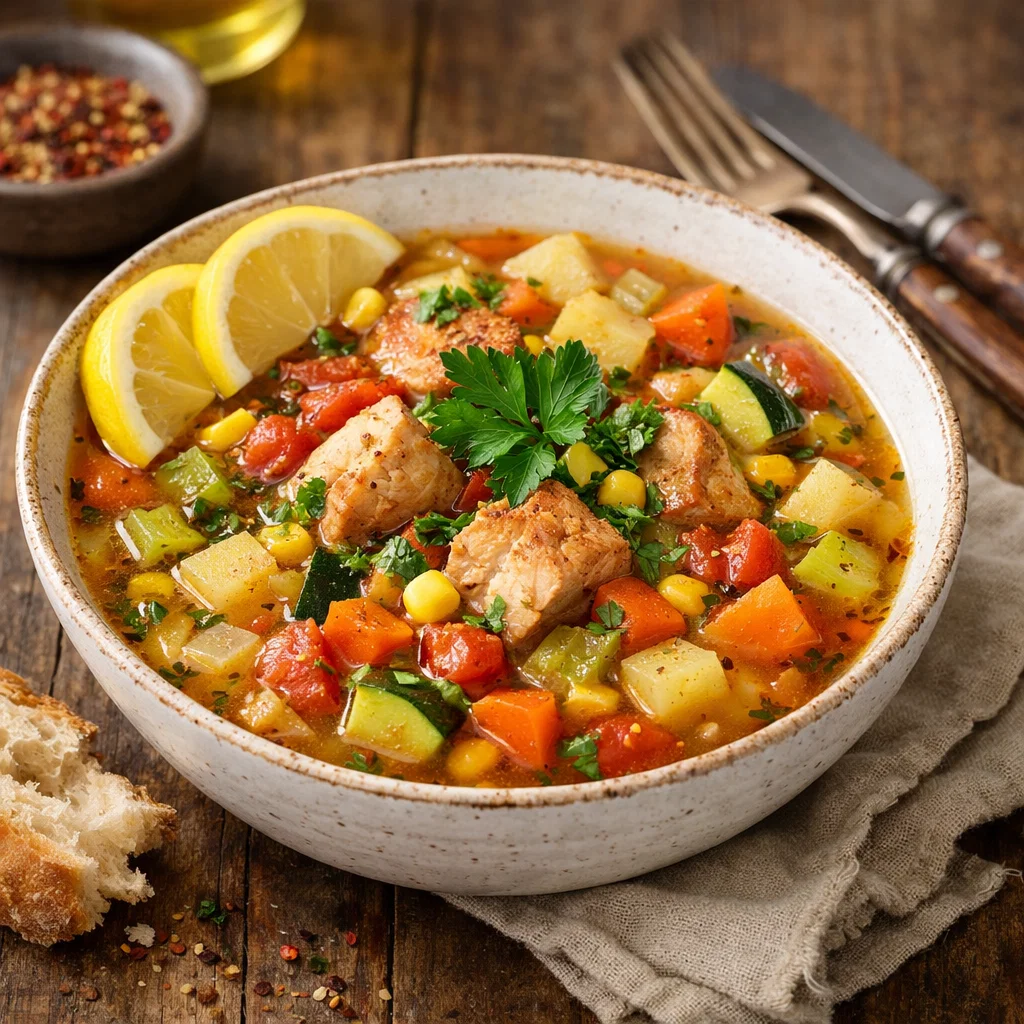
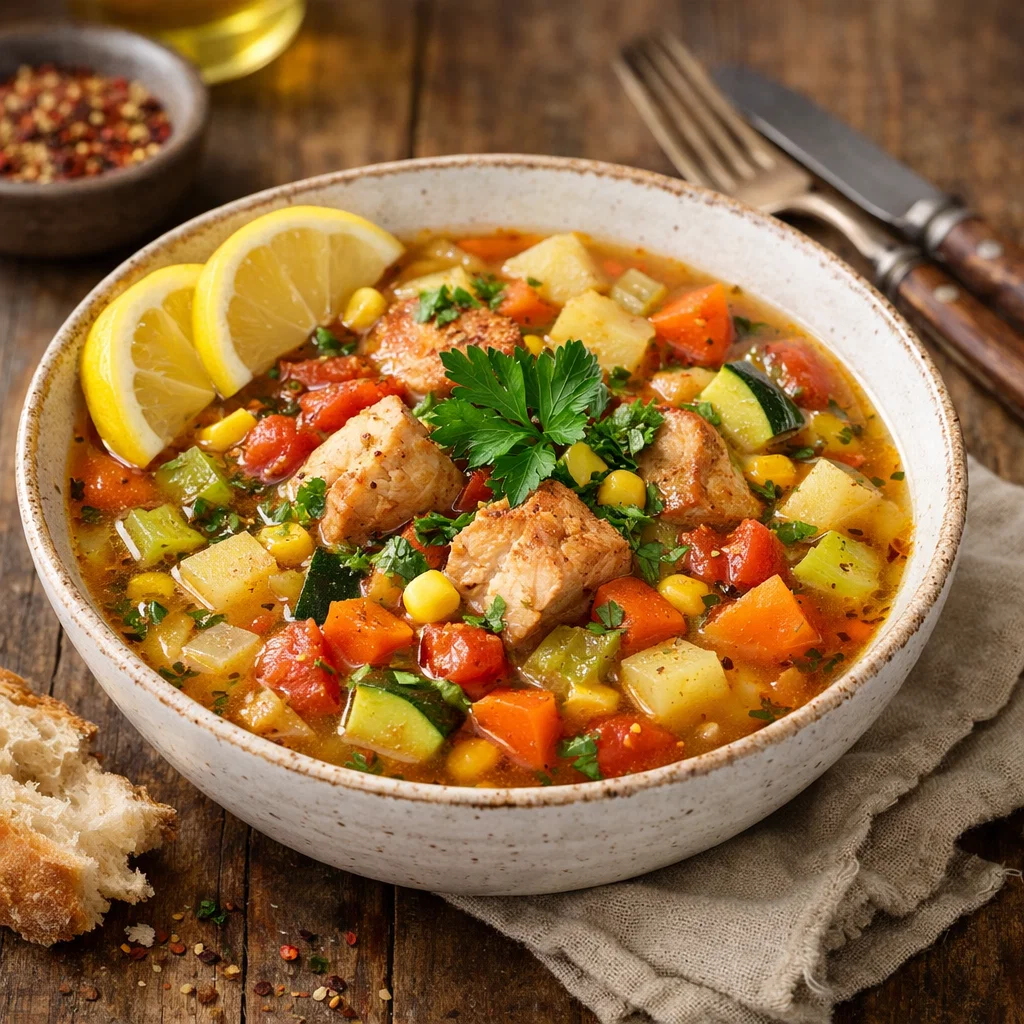
Thank you for reading this post, don't forget to subscribe!This vegetable soup recipe came from a cold. Not the weather kind — the getting-sick kind. A week of feeling run-down, a kitchen stocked with whatever happened to be on hand, and a genuine craving for something warm, nourishing, and deeply comforting. What started as a jumble of carrots, sweet potatoes, zucchini, and a can of fire-roasted tomatoes pulled from the pantry shelf became, after some patient simmering and a final handful of kale stirred in at the end, one of the most satisfying bowls of soup imaginable. Bright, hearty, fragrant with herbs, and genuinely restorative in the way that only a truly good homemade soup can be.
The best part of this easy vegetable soup isn’t the specific ingredient list — it’s the philosophy behind it. This recipe is designed to be flexible. It works with whatever produce you have on hand, whatever broth is in the pantry, whatever greens need to be used up before the week is out. The formula stays the same. The vegetables can change every single time. Once you understand how this homemade vegetable soup is built, you’ll find yourself making it on rotation throughout every season of the year without ever making exactly the same pot twice.
The “Sturdy vs. Tender” Formula: The Secret to Perfect Texture
The single most important concept behind a great vegetable soup recipe is also the simplest: not all vegetables belong in the pot at the same time. Getting this right is what separates a soup where every ingredient has its own distinct character from a soup where everything is uniformly soft and indistinguishable.
The formula is straightforward. Sturdy vegetables — the dense, root-vegetable types that take time to cook through — go in at the beginning, where they have 20 or more minutes to soften in the simmering broth and absorb the seasoning base. Tender vegetables — the softer, more delicate types that cook quickly — go in midway through, where 10 to 15 minutes is enough to make them perfectly cooked without turning them mushy. Leafy greens go in last, stirred in at the very end where just a few minutes of heat is enough to wilt them into the broth while preserving their color, nutrition, and slightly textural bite.
Alongside timing, how you cut your vegetables matters significantly. Dicing everything into small, relatively uniform pieces serves two purposes: it ensures even cooking within each category, and it means every spoonful of this chunky vegetable soup contains a little bit of everything — a piece of sweet potato, a round of carrot, a bit of zucchini, a chickpea, a ribbon of kale — creating a complexity of flavor and texture in every single bite that larger, unevenly cut vegetables simply can’t deliver.
The 4-Step Cooking Method
This healthy vegetable soup recipe is built in four distinct stages, each one adding a layer of flavor and texture to the finished pot. The total active cooking time is under an hour, and most of that time is hands-off simmering.
Step 1: The Flavorful Base
Every great homemade vegetable soup starts with a properly built base, and this one begins with a diced yellow onion. Heat a generous drizzle of olive oil in a large, heavy-bottomed pot or Dutch oven over medium heat. Add the onion and cook, stirring occasionally, for about 8 minutes until it is completely softened, translucent, and just beginning to turn golden at the edges. This longer-than-average sauté time is intentional — fully softened, slightly caramelized onion adds a natural sweetness and depth to the broth base that a quickly cooked onion simply doesn’t contribute. Don’t rush this step. The 8 minutes invested here pays dividends in flavor throughout the entire finished soup.
Step 2: The Hearty Simmer
Once the onion base is ready, it’s time to build the body of this easy homemade vegetable soup. Add your sturdy vegetables — diced carrots and sweet potatoes are the classic combination here — along with minced garlic, dried oregano, a pinch of red pepper flakes, and two bay leaves. Stir everything together and let the garlic and spices bloom in the oil for about 60 seconds before adding the liquid.
Pour in the vegetable broth and a can of fire-roasted diced tomatoes with all their juices. Fire-roasted tomatoes are worth seeking out specifically for this vegetable soup recipe — the roasting process adds a subtle smokiness and depth that regular canned tomatoes don’t deliver, and it makes a noticeable difference in the finished broth. Bring the pot to a boil, then reduce to a steady simmer and cook for 20 minutes until the sturdy vegetables are just becoming tender.
Step 3: The Tender Addition
After the first simmer, the carrots and sweet potatoes should be approaching tenderness but not yet fully soft — this is exactly the right moment to add the tender vegetables. Stir in diced zucchini, trimmed green beans cut into bite-sized pieces, and halved cherry tomatoes. Add a can of drained, rinsed chickpeas for plant-based protein that makes this vegetarian vegetable soup genuinely satisfying and filling rather than just a light starter.
Return the pot to a simmer and cook for an additional 10 to 15 minutes until the tender vegetables are cooked through but still have a slight bite — not mushy, not underdone. The chickpeas will warm through and absorb some of the seasoned broth during this stage, becoming more flavorful throughout.
Step 4: The Bright Finish
This final step is what separates a good vegetable soup recipe from a great one. Remove the bay leaves from the pot. Add two large handfuls of roughly chopped kale — stems removed — directly into the simmering broth. Stir to submerge and cook for about 5 minutes until the kale is wilted and tender but still a vibrant, deep green color.
Immediately before serving, stir in 1 tablespoon of white wine vinegar — or the equivalent in fresh lemon juice if that’s what you have on hand. This final acidic addition is the bright finish that makes every other flavor in the soup snap into focus. It’s not enough to make the soup taste sour — it’s enough to make it taste alive, balanced, and complete in a way that soup without any acid never quite achieves. Taste and adjust salt and pepper as needed, and the soup is ready.
Flexible Variations and Customization
One of the defining strengths of this simple vegetable soup recipe is how readily it adapts to whatever is in your kitchen. Here are the most reliable and delicious variations, organized by category.
Vegetable Swaps
Butternut squash is an excellent substitute for carrots and sweet potatoes — it has a similar density and cooking time and brings a slightly sweeter, nuttier flavor that works beautifully in the broth. Cremini mushrooms, sliced and added with the sturdy vegetables, contribute a savory, meaty depth that makes this hearty vegetable soup feel even more substantial. Bell peppers — any color — can be added at the tender vegetable stage for sweetness and color. If kale isn’t available or isn’t to your taste, baby spinach wilts in under 2 minutes and contributes a milder, more delicate green flavor, while Swiss chard sits between spinach and kale in both texture and flavor and is an excellent middle-ground option.
Flavor and Protein Tweaks
Dried Italian seasoning used in place of oregano broadens the herb profile with the addition of basil, thyme, and rosemary notes — a reliable swap that adds complexity without requiring additional spices. For the protein component, white beans (cannellini work particularly well) are a creamy, mild-flavored alternative to chickpeas that almost melt into the broth during the final simmer. Cooked lentils stirred in with the tender vegetables add protein and a slightly earthy depth that makes this low calorie vegetable soup even more nutritionally dense.
One of the most highly rated reader suggestions for this recipe is the use of “No Chicken” vegetable bouillon in place of or alongside regular vegetable broth. This product adds a savory, slightly umami depth that bridges the gap between vegetable broth and chicken broth flavor without any animal products — the result is a richer, more complex base that elevates the entire soup. The same readers recommend adding frozen peas at the absolute end — after the heat is turned off — to keep them bright green and perfectly tender rather than dull and overcooked.
Garnish Ideas
The right garnish doesn’t just make a bowl of fresh vegetable soup look beautiful — it adds a final layer of flavor that completes the experience. A scattering of fresh flat-leaf parsley adds clean, herby brightness. Fresh basil torn over the top introduces a sweet, aromatic note that complements the tomato-based broth. A spoonful of basil pesto stirred in at the table adds richness, depth, and a beautiful swirl of green. For those who eat dairy, a generous sprinkle of freshly grated Parmesan adds salty, nutty umami that makes the whole bowl taste more luxurious.
Serving and Pairing Suggestions
This best vegetable soup recipe is satisfying enough to stand confidently on its own as a complete meal — but the right accompaniments make it even better.
For a nutritious and texturally complementary pairing, serve a bowl alongside a simple kale salad dressed with lemon and olive oil. The raw crunch of the salad against the warm, hearty soup creates a contrast that makes the meal feel complete and balanced. A thick slice of crusty artisan bread — sourdough, a rustic boule, or a hearty whole grain loaf — is essential for sweeping up the last of the deeply flavored broth at the bottom of the bowl.
For the ultimate comfort meal combination that has earned unanimous enthusiasm from everyone who has tried it, serve this warming vegetable soup alongside a properly made grilled cheese sandwich. The buttery, crispy, melty sandwich dipped into the savory, herb-scented broth is one of those food combinations that is simultaneously simple and perfect — the kind of pairing that makes a cold afternoon or a slow recovery day genuinely pleasant.
Storage and Meal Prep Excellence
This make-ahead vegetable soup recipe is one of the best meal prep investments you can make. It requires about 45 minutes of active cooking time, produces a generous pot that feeds 6 to 8, and only gets better as it sits.
The Better-Next-Day Effect
Store cooled soup in an airtight container in the refrigerator for up to 4 days. Unlike many dishes that taste best immediately after cooking, this homemade vegetable soup genuinely improves over the first 24 to 48 hours in the fridge. The vegetables continue to absorb the seasoned broth, the herbs deepen and meld, and the overall flavor becomes more cohesive and rounded. By day two, what was already a great pot of soup has become something even more satisfying. Reheat gently on the stovetop over medium-low heat, adding a splash of broth or water if the soup has thickened more than desired.
Freezing Instructions
This vegetable soup recipe freezes exceptionally well, making it an outstanding candidate for batch cooking. Allow the soup to cool completely before transferring to airtight freezer-safe containers. Freeze for up to 3 months with no significant loss of flavor or texture. One critical rule: always leave at least one inch of empty space at the top of each container before sealing. Liquid expands as it freezes, and a container filled to the brim will crack or warp — leaving that buffer space protects both your containers and your frozen soup. Thaw overnight in the refrigerator and reheat gently on the stovetop.
Nutritional Highlights
Beyond its flavor and flexibility, this healthy vegetable soup recipe delivers a genuinely impressive nutritional profile that makes it one of the most health-supportive meals you can put on the table.
A single serving provides 165% of the Daily Value of Vitamin A — driven primarily by the sweet potatoes, carrots, and kale — and 27% of the Daily Value of Vitamin C from the tomatoes, bell peppers, and leafy greens. The chickpeas contribute plant-based protein and dietary fiber that support satiety and digestive health, while the kale brings calcium, iron, and a dense concentration of antioxidants.
At just 117 calories per serving, this is one of the most volume-generous, nutrient-dense, low-calorie meals available in the home cooking repertoire — a large, deeply satisfying bowl of food that supports health goals rather than working against them. The recipe is naturally vegetarian as written, and becomes fully vegan simply by omitting the optional Parmesan garnish and ensuring the broth used contains no animal products. It is also naturally gluten-free, making it accessible to a wide range of dietary needs without any modification to the core recipe.
Whether you’re making it as part of a weekly meal prep routine, cooking through a cold, or simply looking for a warming, nourishing dinner that comes together from whatever is in the refrigerator — this vegetable soup recipe delivers every time.