
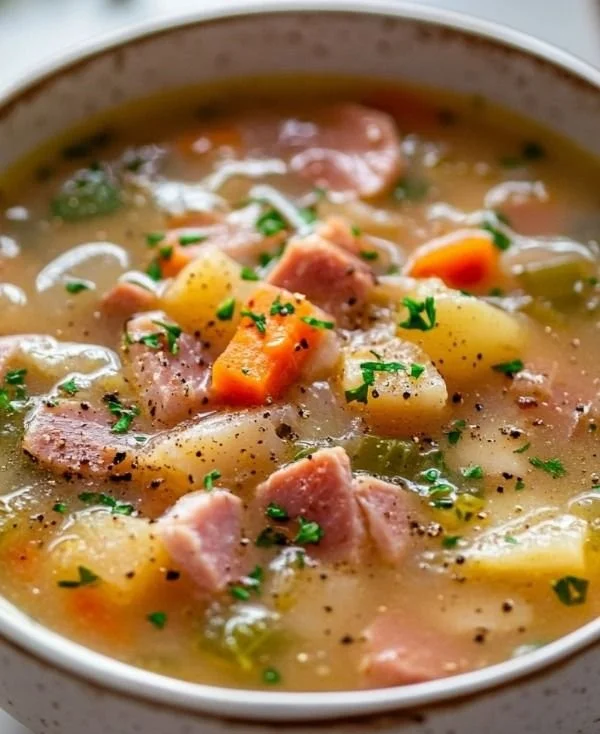
Best Ham and Bean Soup Recipe: Perfect for Leftover Ham Bone
Table of Contents
Every holiday ham tells two stories. The first is the centerpiece story — the glazed, golden roast that anchors the table on Thanksgiving, Christmas, or Easter, surrounded by side dishes and admired before the first slice is carved. The second story is quieter, more domestic, and in many ways more satisfying: what happens to that ham the next day, and the day after that, when the celebration is over and the refrigerator holds a generous quantity of leftover meat that deserves better than a dry sandwich.
Thank you for reading this post, don't forget to subscribe!This ham and bean soup recipe is the best answer to that second story that exists in the home cooking repertoire. It transforms leftover holiday ham — and crucially, the bone that most people discard — into a deeply savory, stick-to-your-ribs soup that is richer, more complex, and more comforting than almost anything else you can make from what’s already in your kitchen.
The secret to what makes this ham bean soup so extraordinary lies in that bone. While boneless leftover ham produces a perfectly acceptable soup, a ham bone, ham hock, or ham shank simmering in the pot for hours releases collagen, marrow, and concentrated pork flavor into the broth that no amount of seasoning can replicate. The liquid transforms from simple stock into something unctuous, deeply savory, and almost silky — the kind of broth that makes people close their eyes on the first sip and ask what’s in it.
This is cold-weather cooking at its most honest and most rewarding. A family favorite that earns its place in the permanent rotation and gets requested by name every time holiday ham is on the menu.
Preparation: Mastering the Dried Bean
The foundation of a great ham and bean soup recipe is the bean itself, and the single most important decision you’ll make about your beans happens the night before you intend to cook.
Why Soaking Matters
Dried beans that have been properly soaked for 8 to 10 hours or overnight in cold water are categorically superior to unsoaked beans in this application. Soaking allows the beans to rehydrate gradually and evenly, which produces a more consistent texture during cooking — creamy and tender all the way through rather than soft on the outside and slightly chalky at the center. Soaked beans also cook more evenly alongside the other ingredients in the pot, which is particularly important for the long stovetop simmer method where timing and texture synchronization matter.
Bean Selection for the Best Results
Three bean varieties perform best in a homemade ham and bean soup: Great Northern beans, Navy beans, and Cannellini beans. All three share the characteristics that make them ideal — a creamy, mild flavor that absorbs the smoky ham broth beautifully, a smooth texture that holds its shape through long cooking without falling apart, and a natural starchiness that contributes to the thick, hearty consistency that defines a truly great bean and ham soup. Great Northern beans are the most commonly used and the most reliably available. Navy beans are slightly smaller and produce a creamier result. Cannellini beans are the largest of the three and give the soup a more rustic, chunky character.
Quality Control: The One-Year Rule
Before your beans go into the soaking water, take a moment to sort through them. Discard any that are broken, shriveled, or significantly discolored — these are signs of age or damage that will affect texture and flavor in the finished soup. And pay attention to when you purchased your dried beans: dried beans older than one year have lost enough moisture that they may never fully soften regardless of how long they cook, resulting in a hard, chewy texture that no amount of simmering can fix. If your beans have been sitting in the pantry for more than a year, buy a fresh bag. It’s a small investment that makes a significant difference in the finished ham and bean soup.
Choose Your Method: Stovetop, Slow Cooker, or Instant Pot
One of the most practical strengths of this easy ham and bean soup recipe is its adaptability to whichever cooking method fits your schedule. All three produce an outstanding result — the differences are in time, texture, and hands-on involvement rather than in quality.
Traditional Stovetop: The Classic Approach
The stovetop method is the original and the one that produces the deepest, most developed broth of the three. A slow, patient simmer of approximately 3 hours gives the ham bone maximum time to release its collagen and flavor into the liquid, the vegetables time to melt into the broth, and the beans time to become perfectly, uniformly tender. This is the method to choose when you have an afternoon at home and want the kitchen to smell extraordinary for several hours. It requires occasional stirring and monitoring but is otherwise largely hands-off.
Instant Pot Shortcut: Full Flavor in 50 Minutes
The Instant Pot version of this ham and bean soup recipe is genuinely impressive in what it delivers in a fraction of the stovetop time. Using the pressure cooking function, the same deep, rich, bone-infused broth that takes 3 hours on the stovetop comes together in approximately 50 minutes of total time including pressurization and natural release. The high-pressure environment drives flavor into the beans rapidly and produces a broth that rivals the stovetop version in depth. This is the method for weeknights, for days when the craving hits without advance planning, and for cooks who want outstanding results without the time investment.
Slow Cooker: The Set-and-Forget Solution
The slow cooker method is the most hands-off and arguably the most convenient of the three. Combine all ingredients in the slow cooker insert in the morning, set it to low for 8 to 10 hours or high for 4 to 5 hours, and come home to a kitchen that smells like the best possible version of comfort food. The extended low-heat cooking produces exceptionally tender beans and a broth that has had all day to develop. This is the ideal method for busy households, for days when you want dinner to take care of itself, and for anyone who considers arriving home to a ready meal one of life’s genuine pleasures.
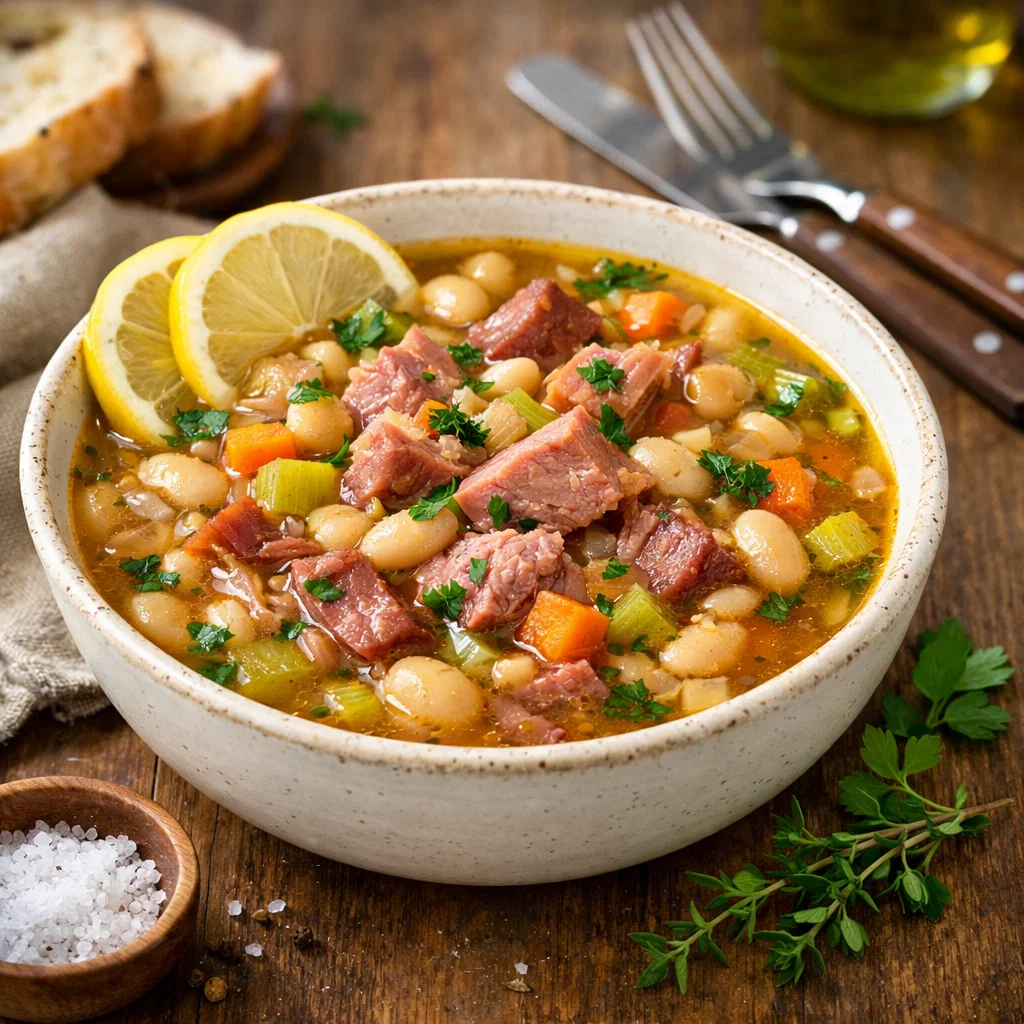
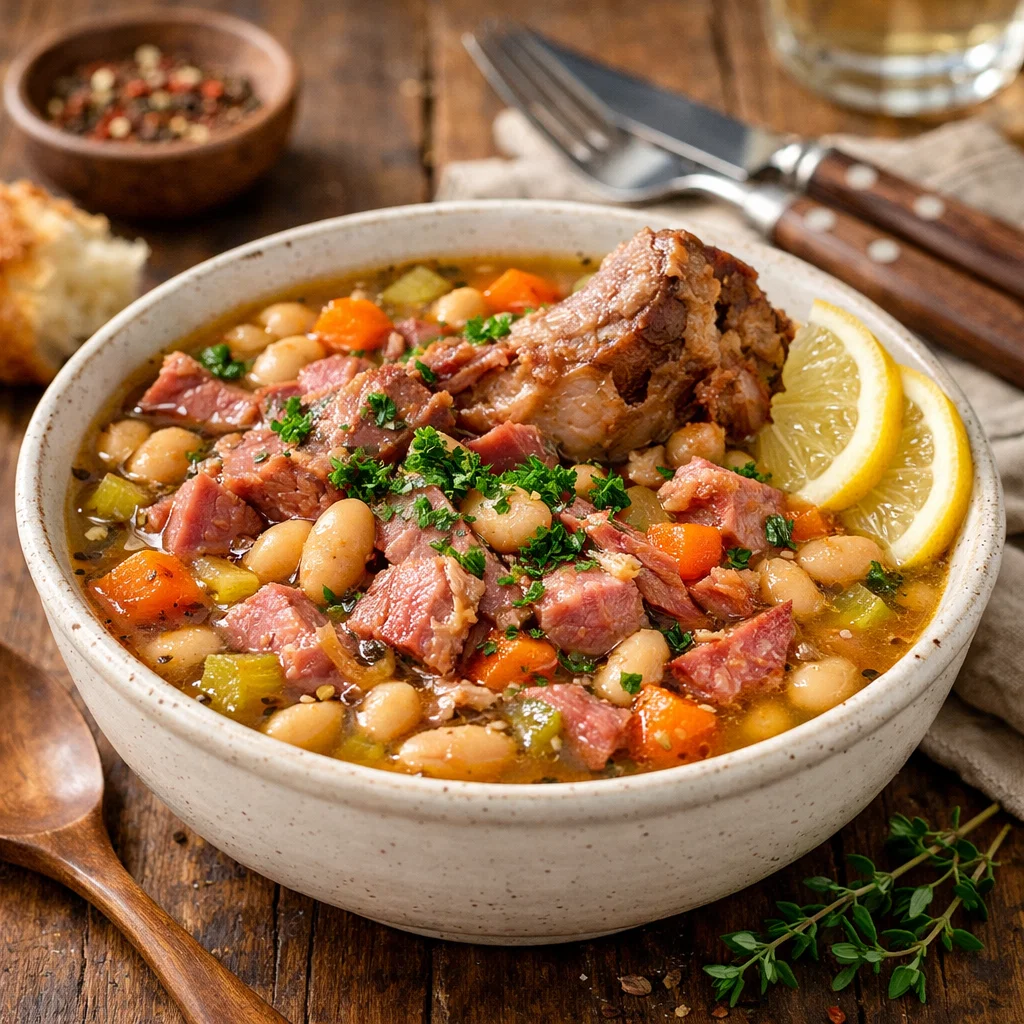
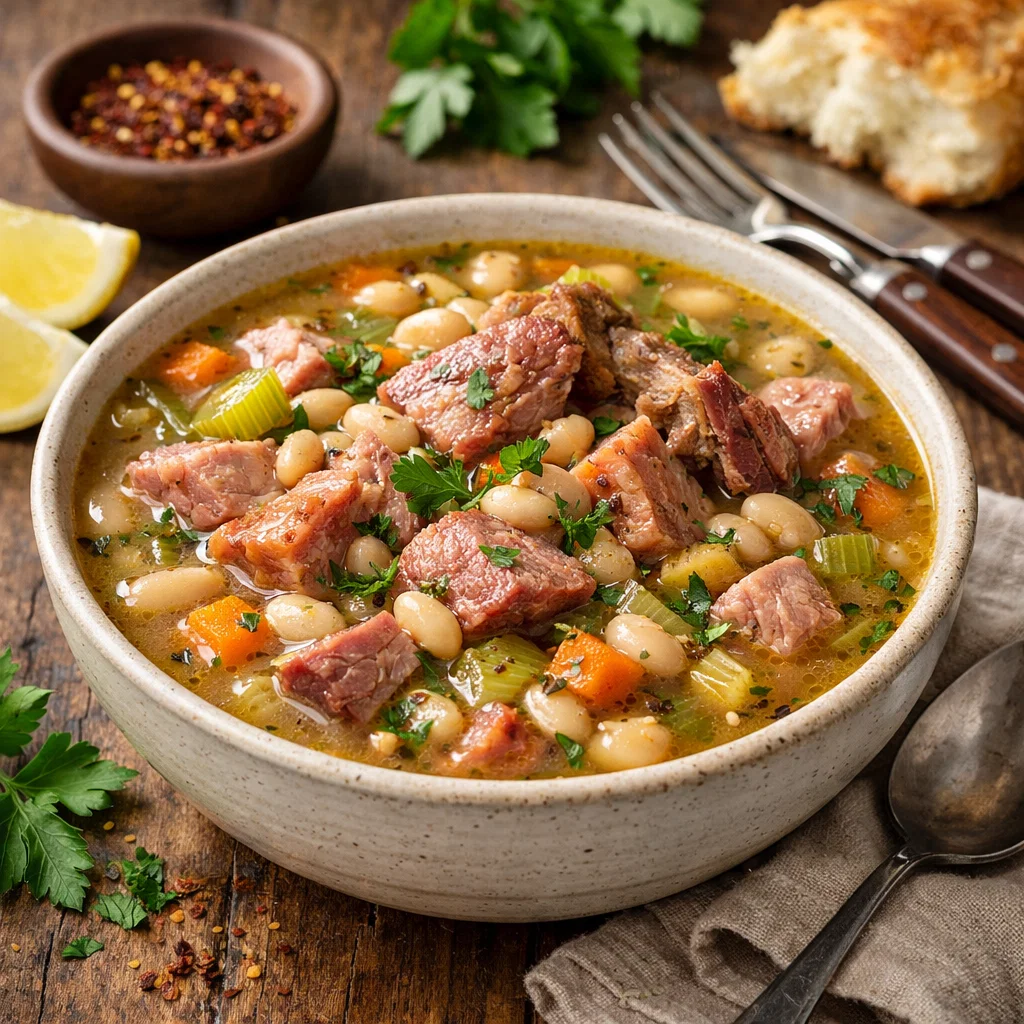
Step-by-Step Cooking Guide (Stovetop Method)
Step 1: The Sauté — Building the Aromatic Base
Heat 2 tablespoons of olive oil in a large, heavy-bottomed pot or Dutch oven over medium heat. Add diced celery, diced carrots, and diced yellow onion to the pot. Cook stirring occasionally for 6 to 8 minutes until the vegetables are softened and the onion is translucent and beginning to turn golden. Add the minced garlic and cook for an additional 60 seconds until fragrant. This aromatic base — the classic mirepoix anchored with garlic — is the flavor scaffolding that supports everything built on top of it in this stovetop ham and bean soup.
Step 2: Building the Broth
Add the chicken stock to the pot along with the ham bone, ham hock, or ham shank, and any cubed leftover ham you’re incorporating. The ham bone should be submerged as fully as possible in the liquid — if your pot is deep enough, nestle it in so the marrow-rich ends are surrounded by stock on all sides. Stir everything together and bring the liquid to a gentle boil over medium-high heat.
Step 3: Seasoning
Add the drained, soaked beans to the pot along with fresh or dried thyme, fresh or dried parsley, and freshly cracked black pepper. Stir to distribute the seasonings evenly throughout the broth. Hold the salt at this stage — the ham bone, the cubed ham, and the chicken stock all contribute sodium to the broth as they cook, and the final saltiness of the soup cannot be accurately assessed until everything has simmered together. Seasoning with salt prematurely in a ham and bean soup recipe almost always results in an over-salted finished dish.
Step 4: The Long Simmer
Reduce the heat to maintain a steady, gentle simmer — not a rolling boil, which can break down the beans unevenly and produce a cloudy broth. Cover the pot partially with a lid to allow some steam to escape while retaining most of the heat. Simmer for 2 to 3 hours, stirring occasionally, until the beans are completely tender throughout and the broth has deepened in color and developed a rich, smoky, porky depth that makes this old fashioned ham and bean soup taste like it’s been cooking since morning.
The Signature Finish: The “1-Cup Puree” Trick
This is the technique that separates a good ham and bean soup from an extraordinary one — and it requires no additional ingredients, no flour, and no cream.
When the beans are perfectly tender and the broth is richly flavored, use a ladle to remove approximately 1 cup of the soup — beans, vegetables, and broth together — and transfer it to a separate bowl or a tall container suitable for an immersion blender. Blend this cup of soup until completely smooth and creamy, then stir the pureed mixture back into the pot.
The effect is remarkable. The pureed beans and vegetables act as a natural thickener, giving the broth a velvety, slightly creamy body without any added starch or dairy. The soup goes from brothy and thin to luxuriously thick and substantial in a single step. This is the technique that makes this creamy ham and bean soup feel restaurant-quality — a professional trick that home cooks immediately adopt as a permanent part of their repertoire.
Before serving, remove the ham bone from the pot and use two forks to pull any large pieces of ham still attached to the bone away from it. Chop these pieces into bite-sized chunks and stir them back into the soup — the meat closest to the bone is the most flavorful in the entire pot and should not be discarded. Discard the bone itself and any cartilage or connective tissue.
Customization and Troubleshooting
The Potato Debate
The original ham bean soup recipe does not include potatoes — the author’s experience is that potatoes become too mushy during the long simmer, breaking down and muddying the broth rather than contributing clean, distinct texture. However, a significant portion of the reader community disagrees and reports excellent results with potatoes added to the soup. The consensus from those who use them successfully is to cut potatoes into small, bite-sized pieces and add them during the final 30 to 40 minutes of cooking rather than at the beginning — this gives them enough time to cook through without fully disintegrating into the broth.
Ham Variations Worth Trying
Honey Baked ham scraps and bone produce a noticeably different flavor profile in this ham and bean soup recipe — the sweet glaze caramelizes into the broth during simmering, creating a subtle sweet-savory contrast that plays beautifully against the earthiness of the beans and the smoke of the bone. If you have Honey Baked ham leftovers after a holiday, this is an outstanding use for them.
Sodium Control: Salt Last, Always
As noted in the cooking steps, never add salt until the very end of the cooking process in this recipe. Ham varies enormously in saltiness depending on the brand, the cure, and whether it was glazed. Chicken stock ranges from very low sodium to quite salty depending on the variety used. The interaction of these two primary sodium sources over a long simmer produces a broth whose final saltiness genuinely cannot be predicted in advance. Always taste the finished easy ham and bean soup after completing all cooking steps and adjust salt at that point — a little at a time, tasting between additions.
Storage and Future Meals
Refrigeration
Allow the finished ham and bean soup to cool to room temperature before transferring to airtight containers. Refrigerate for up to 3 to 4 days. The soup will thicken considerably in the refrigerator as the bean starch continues to absorb the broth — this is normal and expected. Reheat gently on the stovetop over medium-low heat, adding a splash of chicken stock or water to restore the original consistency and stirring frequently to prevent the thick soup from scorching on the bottom of the pan.
Freezing Strategy
This ham and bean soup recipe freezes exceptionally well and is one of the most practical candidates for batch cooking in the comfort food category. Allow the soup to cool completely before portioning into airtight freezer-safe containers or heavy-duty freezer bags. Leave at least one inch of headspace in each container to allow for expansion during freezing. Freeze for up to 3 months. Thaw overnight in the refrigerator and reheat on the stovetop over medium-low heat. Having a container of this soup in the freezer is one of the most reliable forms of weeknight dinner insurance available — a genuinely outstanding meal that requires nothing more than reheating.
Nutritional Value
Beyond its extraordinary flavor, this hearty ham and bean soup is a genuinely impressive nutritional package that makes it as smart a choice as it is a delicious one.
Each serving delivers 32 grams of protein — a substantial contribution to daily protein needs from a single bowl, driven by the combination of lean ham and high-protein beans. The fiber content of 11 grams per serving supports digestive health and contributes to the sustained satiety that makes this soup so filling and satisfying as a complete meal. A single serving also provides over 5,000 IU of Vitamin A — primarily from the carrots in the aromatic base — representing more than 100% of the recommended daily value in a single bowl.
For a soup built largely from leftover ingredients and pantry staples, this best ham and bean soup delivers a nutritional profile that rivals purpose-built health foods. It is high in protein, high in fiber, rich in vitamins and minerals, and deeply satisfying in a way that genuinely supports rather than undermines health goals — proof that comfort food and nutritious food are not opposites, and that the best cooking takes care of both simultaneously.