
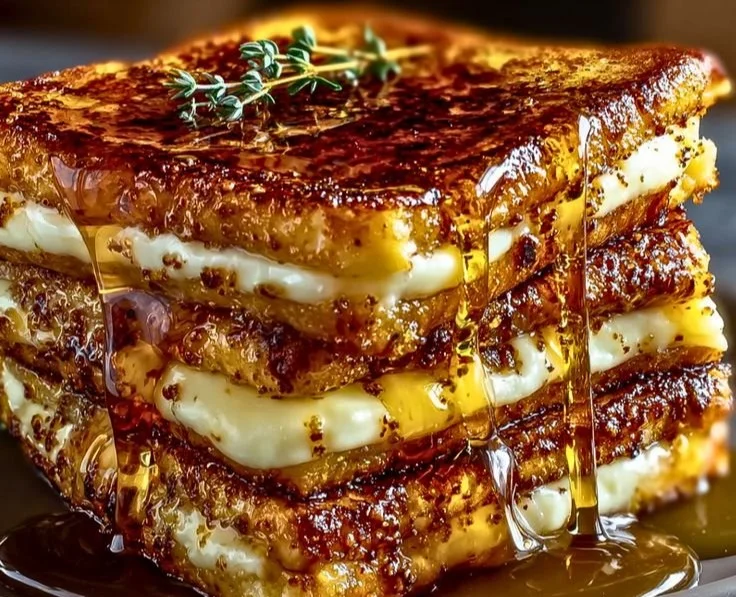
Crème Brûlée French Toast
Table of Contents
Has your breakfast ever made someone close their eyes on the first bite? Not out of politeness — out of genuine, involuntary pleasure? Most breakfasts don’t do that. They’re fine. They’re functional. They fill the gap between waking up and the rest of the day. But they don’t stop people mid-sentence, don’t generate the kind of silence that means everyone is too busy eating to speak. If that’s the breakfast experience you’ve been missing, Crème Brûlée French Toast is exactly what you need.
Thank you for reading this post, don't forget to subscribe!This extraordinary recipe takes everything magical about classical French crème brûlée — the deep vanilla custard, the brittle caramelized sugar crust, the contrast of silky richness against crackle — and translates it entirely into a breakfast format that serves six, requires no blowtorch, and comes together in under 30 minutes. Thick slices of brioche or challah bread are soaked in a rich vanilla-heavy cream custard, then pan-seared in a buttery caramelized sugar glaze until the exterior develops that signature amber, glass-like crust. The result is simultaneously the most elegant and the most comforting breakfast you will ever make.
As a classically trained pastry chef and breakfast recipe developer with 14 years of professional kitchen experience — including time spent perfecting crème brûlée at a Michelin-starred restaurant in Lyon — I’ve spent years bridging the gap between restaurant-quality desserts and achievable home breakfasts. This recipe is the product of that journey. It works the first time, every time, without professional equipment.
In this complete guide, you’ll find everything you need: how to choose the right bread and cream for maximum custard absorption, the full ingredient list with substitutions, step-by-step cooking instructions with chef-level technique explanations, pro tips for achieving the perfect caramel crust at home, creative flavor variations, serving ideas worthy of a luxury brunch, and answers to every question our readers ask about Crème Brûlée French Toast.
Why This Breakfast Recipe Works
Crème Brûlée French Toast is not just a creative name — it’s a structurally brilliant recipe that delivers restaurant-quality results through a surprisingly accessible technique. Here’s exactly why it earns standing ovations from every home cook who makes it:
- Uses affordable, widely available ingredients. Brioche or challah bread, heavy cream, eggs, vanilla, and sugar — an indulgent result from pantry and bakery staples.
- No blowtorch required. The caramel crust forms naturally in a hot, buttered skillet. The same Maillard reaction and caramelization that a torch achieves happens beautifully in cast iron or stainless steel.
- Perfect for weekends or special occasion breakfasts. Elegant enough for anniversary mornings, Mother’s Day brunch, or holiday gatherings — yet simple enough for any unhurried Sunday.
- The overnight soak option elevates the result dramatically. Letting the bread absorb the custard overnight in the refrigerator creates a deeply saturated, almost bread-pudding-like interior that is simply extraordinary.
- Scalable without effort. Feeding two or feeding twelve — the custard ratio scales perfectly and the cooking technique is identical regardless of batch size.
- The crème brûlée sugar crust is achievable at home. Sprinkling sugar over custard-soaked bread in a hot buttered pan and pressing lightly creates a caramelized, glass-like surface that cracks on a fork exactly as crème brûlée does.
- Genuinely show-stopping presentation. The amber caramel surface, the dusting of powdered sugar, the garnish of fresh berries and whipped cream — this is a breakfast that photographs magnificently and impresses every guest.
Choosing the Right Ingredients for Crème Brûlée French Toast
The ingredient selection for Crème Brûlée French Toast is where the recipe either becomes extraordinary or merely ordinary. Each choice matters enormously.
Best Bread for This Recipe
The bread is the vessel that carries the custard — it must be rich enough to absorb generously without disintegrating:
- Brioche (strongly recommended): The ultimate choice. Its high butter and egg content makes it naturally rich, slightly sweet, and exceptionally absorbent. It holds its structure through soaking, develops a beautiful golden crust, and has a pillowy interior that becomes almost custard-like when fully soaked. Slice 3/4 to 1 inch thick.
- Challah: The traditional French toast bread — slightly less rich than brioche but equally absorbent and delicious. Its mild sweetness and egg-enriched crumb make it an excellent choice. Slice at least 3/4 inch thick for proper custard absorption.
- Texas toast: Thick-sliced, cloud-soft, and affordable. Not as rich as brioche or challah, but absorbs custard readily and develops good caramelization. The more accessible everyday alternative.
- Pain de mie (Japanese-style milk bread): Produces an extraordinarily tender, pillowy crème brûlée French toast — its ultra-soft crumb and mild sweetness are an exceptional pairing with the rich vanilla custard.
- Avoid standard thin-sliced sandwich bread: Too thin and too porous — it absorbs the custard too fast, becomes waterlogged, and falls apart before it reaches the pan. Always use thick-cut (3/4 inch minimum) enriched breads.
Best Dairy for the Custard
The custard is the heart of Crème Brûlée French Toast — use the richest dairy available:
- Heavy cream (strongly recommended): The defining ingredient. Heavy cream creates a custard with the same silky richness as actual crème brûlée — custardy interior, luxurious mouthfeel, and superior caramelization. Nothing else replicates its performance.
- Half-and-half: A lighter, slightly less indulgent alternative that still produces excellent results — good for households reducing fat intake without sacrificing the crème brûlée character entirely.
- Whole milk: Produces a lighter, less custardy result — acceptable but noticeably thinner in richness and flavor depth. Add an extra egg yolk to compensate if using whole milk.
- Full-fat coconut cream: The best dairy-free substitute for heavy cream in this recipe. Its fat content and richness create a surprisingly similar custard with a subtle tropical note.
Buying Tips
- Buy brioche or challah from a bakery rather than pre-packaged — the higher quality and freshness produces superior custard absorption and better caramelization.
- Day-old or slightly stale brioche is actually ideal — slightly dried bread absorbs custard more evenly and deeply than fresh, which can be too moist at the surface.
- Use real vanilla bean paste or vanilla extract from Madagascar Bourbon vanilla — the vanilla flavor is the dominant note in this custard and quality makes an enormous perceptible difference.
- Choose the highest fat heavy cream available (36% fat or above) for the most luxurious, restaurant-quality custard.
- Use fine white granulated sugar for the caramel crust — raw or turbinado sugar has larger crystals that can caramelize unevenly and create bitter, dark spots.
Ingredient Substitutions
- No heavy cream? Use half-and-half or whole milk with one extra egg yolk per cup of liquid — the additional fat from the yolk partially compensates for the reduced cream fat.
- No fresh vanilla? Vanilla bean paste is the closest substitute — 1 teaspoon paste equals one vanilla bean pod and delivers the same flavor plus beautiful vanilla seed specks throughout the custard.
- No brioche or challah? Use any thick-cut, enriched bread. Even thick-cut Hawaiian rolls (cut in half) produce a delicious, if more casual, version of the recipe.
- Dairy-free version? Replace heavy cream with full-fat coconut cream or oat milk barista blend. Replace butter with vegan butter (Miyoko’s or Earth Balance). The caramelization and custard qualities hold up remarkably well.
- Lower sugar option? Replace granulated sugar in the custard with a small amount of pure maple syrup or honey (2 tablespoons per cup of cream). The caramel crust sugar can be reduced by half without significantly compromising the crack.
Ingredients & Prep
Crème Brûlée French Toast Prep Essentials
The prep for this recipe is minimal but thoughtful — a few focused steps make the difference between good and transcendent:
- Slice bread to a consistent 3/4 to 1 inch thickness — uniformity ensures every slice soaks at the same rate and cooks in the same time. Use a serrated bread knife for clean cuts.
- Allow bread to sit uncovered at room temperature for 30 minutes before soaking, or lightly toast slices for 3 minutes in a 250°F oven — slightly dried bread absorbs custard far more evenly than fresh.
- Whisk eggs thoroughly before adding cream — fully broken-up eggs create a smooth, uniform custard rather than patches of egg white or yolk in the final cook.
- Use vanilla bean paste if available and stir vigorously into the cream before adding eggs — this ensures the vanilla is fully distributed before the heat-sensitive eggs are incorporated.
- Plan for a minimum 20-minute soak time (30 minutes is better, overnight in the refrigerator is extraordinary). Thick brioche needs time to absorb the custard all the way to the center.
- Have your caramel sugar pre-measured and ready beside the stove — the caramel crust step moves fast and requires immediate, confident action.
Full Ingredient List (Serves 6)
- 6 slices brioche or challah bread, 3/4 to 1 inch thick (day-old preferred)
- 4 large eggs + 2 additional egg yolks
- 1 cup heavy cream
- 1/4 cup whole milk
- 3 tablespoons granulated sugar (for custard)
- 1 teaspoon pure vanilla extract or vanilla bean paste
- 1/4 teaspoon fine sea salt
- Pinch of ground nutmeg
- 4 tablespoons unsalted butter (for cooking, divided)
- 6 tablespoons granulated sugar (for the caramel crust, 1 tablespoon per slice)
- Garnish: powdered sugar, fresh berries, whipped cream, warm maple syrup
Pantry Flavor Builders
- Vanilla bean paste: The superior form of vanilla for this recipe. The seeds suspended in paste form create visible specks throughout the custard and custard-soaked bread — a hallmark of genuine crème brûlée quality.
- Extra egg yolks: Two additional yolks beyond the whole eggs enrich the custard with fat and lecithin, creating a silkier, more deeply golden, more custardy interior that distinguishes this recipe from standard French toast.
- Nutmeg: A small pinch in the custard adds a warm, subtly exotic note that classical French pastry has used in custards for centuries. Don’t omit it.
- Sea salt: A quarter teaspoon of fine salt in a sweet custard isn’t about saltiness — it amplifies every other flavor dimension and prevents the custard from tasting flat.
- Grand Marnier or Cointreau (optional, 1 tbsp): A tablespoon of orange liqueur in the custard adds a sophisticated floral-citrus dimension that makes the entire recipe taste even more elevated and restaurant-worthy.
Step-by-Step Cooking Instructions
Follow these steps for Crème Brûlée French Toast with the perfectly caramelized amber crust, silky custard center, and the defining satisfying crack on every forkful.
Step 1 — Make the Custard & Soak
In a large shallow bowl or baking dish, whisk together eggs, egg yolks, heavy cream, milk, granulated sugar, vanilla bean paste or extract, salt, and nutmeg until completely smooth and well-combined. The custard should be silky, uniform in color, and slightly frothy. Place bread slices in the custard and allow to soak for a minimum of 20 minutes at room temperature, turning once at the 10-minute mark. For the best possible result, arrange soaked slices in a single layer in a shallow baking dish, pour remaining custard over, cover, and refrigerate overnight. The overnight soak transforms the interior into a creamy, bread-pudding-like texture that is the true crème brûlée experience.
Step 2 — Pre-Cooking Prep
Remove soaked bread slices from the custard and allow excess to drip back into the bowl for 5–10 seconds — do not press or squeeze. You want generously coated, not waterlogged slices. Place on a wire rack for 2–3 minutes to allow the surface to dry slightly — this is what creates the proper caramelization rather than steaming. Measure 1 tablespoon of granulated sugar onto a small plate for each slice. Have butter measured and soft beside the stove. Ensure your pan is the right temperature before the sugar hits.
Step 3 — Create the Caramel Crust
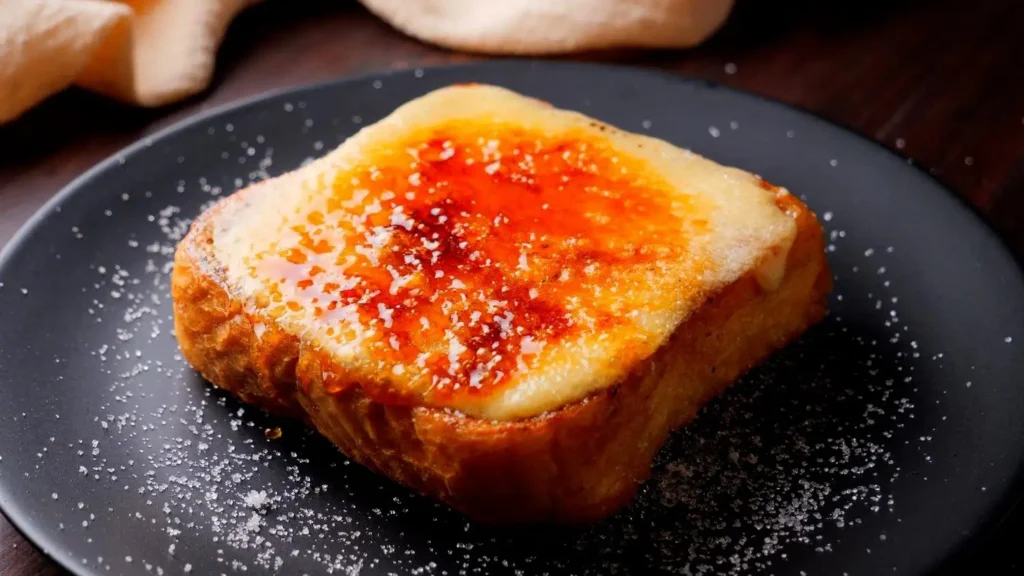
Melt 1 to 1.5 tablespoons of butter in a large cast-iron or stainless-steel skillet over medium heat until the foam subsides and the butter is golden. Working one or two slices at a time, sprinkle 1 tablespoon of granulated sugar evenly over the top surface of each custard-soaked bread slice. Carefully place the slices sugar-side DOWN in the hot buttered pan. Immediately press very gently with a spatula to ensure full, even contact between the sugared surface and the hot pan. Cook undisturbed for 3–4 minutes. The sugar will melt, bubble, and then set into a deep amber caramel crust. Do not move the bread during this time.
Step 4 — Flip and Finish
When the sugar-side caramel is deep amber and set (it will look glossy and glass-like when you peek at the edge), carefully flip each slice using a wide spatula. The caramel side is now on top — it should be a beautiful, burnished amber color. Cook the second side for 2–3 minutes until golden, cooked through, and fragrant. The doneness check: the center of each slice should feel firm but yielding when pressed — not liquid. The internal temperature of a properly cooked crème brûlée French toast should reach 160°F at the center. The exterior should be golden with no wet custard visible at the edges.
Step 5 — Rest and Plate
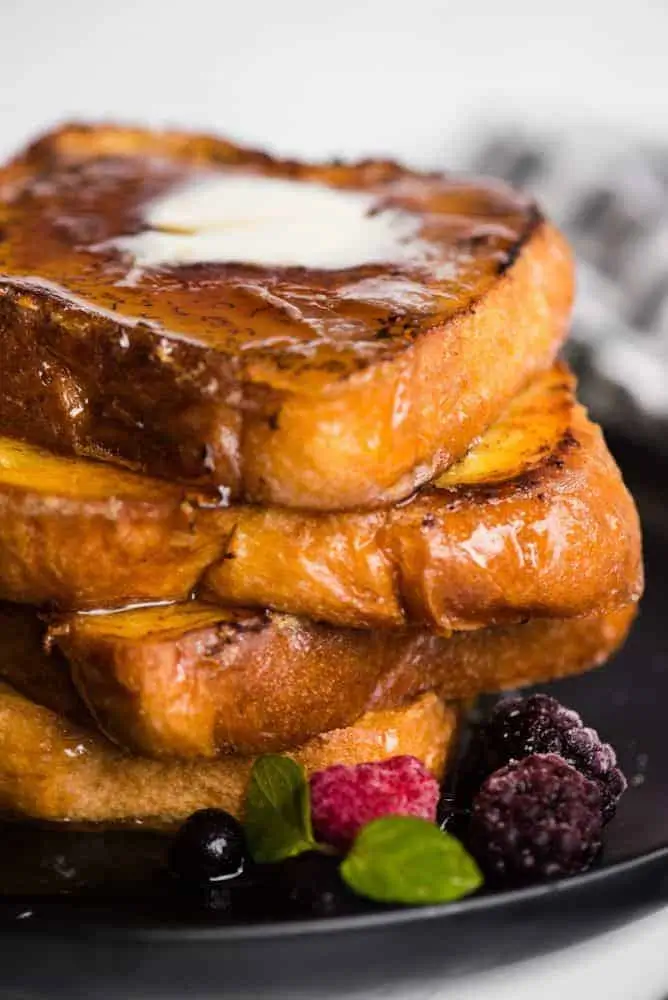
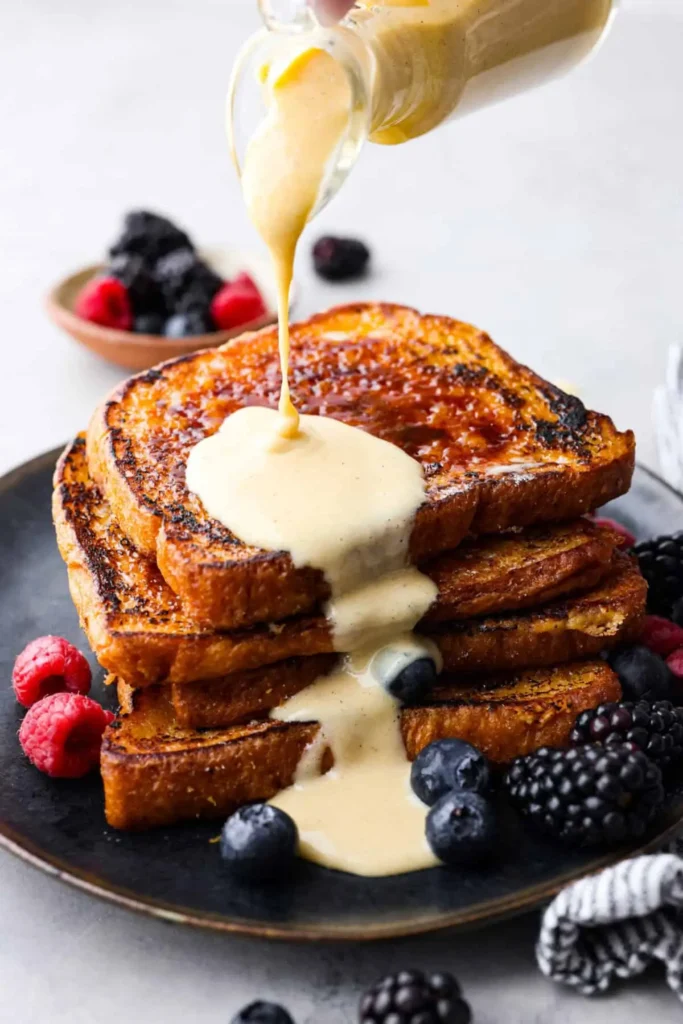
Transfer finished Crème Brûlée French Toast to a wire rack and rest for 2–3 minutes before plating — the caramel crust sets fully during this brief rest, achieving maximum brittleness. Do not stack slices or the caramel surfaces will stick together and lose their crack. Plate caramel-side up. Dust lightly with powdered sugar (applied through a fine sieve for a restaurant presentation), add fresh berries and a spoonful of whipped cream alongside. Serve immediately — the caramel crust is most spectacular in the first 5 minutes before ambient moisture begins to soften it.
Pro Tips for Perfect Crème Brûlée French Toast
Avoiding Common Mistakes
- Never rush the soak. Under-soaked bread produces dry, bread-tasting French toast without the crème brûlée interior. Minimum 20 minutes — overnight is transformative. The bread must be saturated to the center.
- Never use too-thin bread. Bread thinner than 3/4 inch becomes waterlogged and falls apart in the pan. Thick slices hold their structure while still absorbing fully.
- Never use low heat for the caramel. The sugar needs medium to medium-high heat to melt and caramelize properly. Low heat causes the sugar to dissolve into the butter without caramelizing — you get a sticky coating rather than a crack.
- Never move the bread during caramelization. The sugar needs 3–4 uninterrupted minutes of contact with the hot pan to form the crust. Premature movement tears it away before it sets.
- Never use dark or non-stick pans for the caramel. Dark pans make it impossible to judge caramel color, and non-stick coatings can degrade at the temperatures required for proper caramelization. Use light-colored stainless steel or cast iron.
- Never stack freshly cooked slices. The hot caramel surfaces are tacky and will bond together, destroying the crack on both surfaces. Rest individually on a wire rack.
Tool Recommendations
- Cast-iron or stainless-steel skillet: The essential tool for this recipe. Both retain and distribute heat evenly and can reach the sustained medium-high temperature required for proper caramelization without hot spots.
- Wide, thin spatula: A fish spatula is the professional choice — thin enough to slide cleanly under delicate custard-soaked bread without breaking it, and wide enough to support the full slice during flipping.
- Fine-mesh sieve: For dusting powdered sugar in a thin, even, restaurant-quality layer over the finished crème brûlée French toast.
- Shallow baking dish: For the overnight custard soak — a 9×13 dish accommodates all slices in a single layer and allows complete, even custard absorption.
- Instant-read thermometer: For verifying the center reaches 160°F — important when using thick slices that may look done on the exterior while the center is still undercooked.
- Kitchen torch (optional but spectacular): For the most dramatic, perfectly even caramel crust — sprinkle sugar on top after pan-cooking one side, then torch to an even, amber glass surface. Pure restaurant theater at the breakfast table.
Storage & Reheating
- Refrigerate: Store cooked slices in a single layer in an airtight container for up to 3 days. Note: the caramel crust will soften significantly in the refrigerator due to moisture absorption.
- Freeze: Cooked slices can be frozen between sheets of parchment paper for up to 1 month. Thaw in the refrigerator overnight before reheating.
- Reheat (best method): A dry cast-iron skillet over medium heat for 2–3 minutes per side restores some caramelization. Alternatively, place on a wire rack in a 325°F oven for 10 minutes. Sprinkle fresh sugar on top and re-torch or re-pan caramelize for a restored crust.
- Make-ahead strategy: The custard soak can be done fully overnight (this actually improves the recipe). Cook fresh in the morning — the 8-minute cooking time per batch is fast enough for a leisurely morning.
Flavor Variations
The Crème Brûlée French Toast recipe is an extraordinarily elegant base for creative variations that maintain the signature caramel crust while exploring new flavor territories:
Lavender and Honey Twist
- Infuse the heavy cream with 1 tablespoon of culinary-grade dried lavender flowers (heat gently, steep 15 minutes, strain before using in custard) for a floral, Provençal character.
- Replace granulated sugar in the custard with 2 tablespoons of high-quality wildflower honey for a rounded, complex sweetness.
- Use vanilla bean paste alongside 1/4 teaspoon of lavender extract for a doubled floral depth.
- Serve with fresh blueberries and lavender honey drizzle for a complete Provence-inspired presentation.
- Add a pinch of cardamom to the caramel sugar for a spiced, exotic variation on the crust.
Keto / Low-Carb Adaptation
- Replace brioche with thick-sliced keto bread (ThinSlim Foods or homemade almond flour bread) — both absorb custard acceptably when cut thick.
- Replace granulated sugar in the custard with a 1:1 granulated erythritol-monk fruit blend (Lakanto Golden is excellent).
- For the caramel crust, use allulose sugar specifically — it caramelizes at a similar temperature to sucrose, unlike most sugar alcohols. Swerve Brown also works acceptably.
- Use heavy cream (keto-friendly) as the sole liquid in the custard rather than a cream-milk combination.
- Serve with sugar-free maple syrup and fresh berries (strawberries and raspberries are lowest in carbs).
Global and Seasonal Flavors
- Japanese matcha: Add 1 teaspoon high-grade ceremonial matcha powder to the custard for an earthy, subtly bitter depth that plays beautifully against the sweet caramel crust. Serve with red bean paste and a dusting of matcha powder alongside powdered sugar.
- Mexican-inspired cajeta style: Replace half the heavy cream with goat’s milk, add a pinch of cinnamon and a tiny pinch of cayenne to the custard, and use dark brown sugar for the caramel crust for a deeper, more complex caramelization.
- Italian tiramisu style: Add 1 tablespoon of strong espresso and 1 tablespoon of Kahlua to the custard, use mascarpone whisked into the cream for extra richness, and dust finished slices with unsweetened cocoa powder alongside powdered sugar.
- Classic Christmas morning: Add 1/4 teaspoon each of cinnamon, ginger, and cloves to the custard, soak overnight, and serve with warm spiced apple compote and a cinnamon-sugar caramel crust instead of plain sugar.
- Rose and pistachio: Add 1 teaspoon of rose water to the custard, use pistachio paste thinned with cream as an optional bread filling, and garnish with crushed pistachios and dried rose petals for a Middle Eastern-inspired brunch showpiece.
Serving Suggestions
Crème Brûlée French Toast is spectacular on its own, but a thoughtfully composed serving elevates it from delicious to truly unforgettable. Here’s how to present it like a professional chef:
Best Garnishes and Toppings:
- Fresh berries (raspberries, sliced strawberries, blueberries) — their tartness and color contrast brilliantly against the amber caramel and powdered sugar.
- Lightly sweetened whipped cream — a classic partner to crème brûlée that adds cool creaminess to the warm, caramelized toast.
- Warm pure maple syrup served in a small ramekin for tableside pouring — the warm syrup against the caramel crack is deeply satisfying.
- A sprig of fresh mint — adds color, freshness, and an herbaceous note that lifts the richness.
- Crème fraîche or mascarpone instead of whipped cream — for a tangier, more sophisticated French-style garnish.
Best Side Dishes:
- Crispy, thin-cut bacon or prosciutto — the saltiness and savory contrast is the ideal counterpoint to the sweet, rich French toast.
- Fresh fruit compote (berry, stone fruit, or citrus) — warm, slightly tart, and vibrant alongside the caramel-sweet toast.
- Smoked salmon and cream cheese on the side — for an elevated brunch plate that balances sweet and savory perfectly.
- A very simple arugula salad with lemon and olive oil — peppery greens cut through the richness of the custard beautifully.
- Soft-poached eggs alongside — for those who want a complete brunch plate with the sweet French toast as the centerpiece.
Drink Pairings:
- Classic French pairing: A café au lait or a café crema — the milky, slightly bitter coffee is the most natural companion to crème brûlée flavors.
- Champagne brunch: A glass of Champagne or Prosecco — the acidity and effervescence cut through the custard richness and make the occasion feel celebratory.
- Special occasion: A Sauternes or late-harvest Riesling — both wines share the same honey, vanilla, and caramelized stone fruit notes as the French toast, creating a magnificent pairing.
- Non-alcoholic elegance: Sparkling water with a twist of lemon and a fresh sprig of mint — light, refreshing, and a beautiful visual contrast to the golden toast on the table.
- Cozy morning: A vanilla bean latte or a cardamom-spiced oat milk cappuccino — warm, aromatic, and harmonious with the vanilla custard character.
Frequently Asked Questions
Can I make Crème Brûlée French Toast completely ahead of time?
The custard soak can and should be done the night before — this genuinely improves the recipe. Store soaked slices covered in the refrigerator overnight. In the morning, remove them 15 minutes before cooking to take the chill off slightly, which ensures even cooking from edge to center. The cooking itself (caramelization and pan-frying) should be done fresh and immediately before serving — the caramel crust is at its most spectacular within the first 5 minutes of cooking and begins to soften as moisture from the bread migrates upward. Plan to cook and serve in immediate succession for maximum impact.
Can I make this recipe without heavy cream?
Yes, with adjustments. The best substitute is half-and-half — it produces a noticeably lighter but still delicious result. For a closer replication of heavy cream’s richness, add 2 extra egg yolks per cup of half-and-half and increase the soak time by 10 minutes. Whole milk alone produces an acceptable but significantly lighter version — add 3 extra yolks per cup and soak overnight to compensate. Full-fat coconut cream is the best dairy-free alternative and produces a custard that is genuinely excellent with a subtle tropical note. Avoid skim milk — it produces a watery custard without the richness the recipe requires.
How do I fix burnt or bitter caramel on my French toast?
Caramel bitterness occurs when the sugar goes past the deep amber stage into dark brown — typically from too-high heat or too-long cook time. Fixes going forward: reduce heat to medium (not medium-high), watch the caramel carefully after 2 minutes, and pull it when it reaches a deep amber color — it will continue darkening slightly from residual heat after removal. If a slice is too bitter, the bitterness can be softened by serving with a generous amount of sweetened whipped cream or maple syrup, which balances the bitterness. The bitterness is in the crust only — the interior custard remains sweet and mild regardless.
Is Crème Brûlée French Toast safe for pregnant women?
Yes, when fully cooked to proper doneness. Ensure all eggs are fully cooked through (the internal temperature at the center of each slice must reach 160°F — not just the exterior). Use commercially pasteurized eggs and heavy cream, both of which are standard in supermarkets. The overnight soak is fine using commercially pasteurized dairy and eggs refrigerated at or below 40°F. Do not use raw unpasteurized cream or farm-fresh eggs without pasteurization for pregnancy safety. The optional alcohol (Grand Marnier, etc.) should be omitted entirely. When all these conditions are met, Crème Brûlée French Toast is completely pregnancy-safe.
Why is my caramel crust not cracking like crème brûlée?
Three primary causes: insufficient sugar (must use a full tablespoon per slice — less produces a thin glaze rather than a proper crust), heat too low (medium-high is needed to melt and caramelize the sugar into a glass-like structure rather than just dissolving it), or too much moisture on the bread surface when the sugar is applied (the brief rest on a wire rack after removing from custard is essential for allowing the surface to dry slightly before sugaring). The crack also requires that the caramel has fully cooled and set for 2–3 minutes after cooking — hot caramel is soft and won’t crack. The brief resting period on the wire rack allows the caramel to achieve its characteristic brittleness.
What is the difference between Crème Brûlée French Toast and regular French toast?
The differences are significant and deliberate. Standard French toast uses a thinner custard (egg and milk), no caramel crust, and is finished simply with syrup. Crème Brûlée French Toast uses a much richer custard (heavy cream, extra egg yolks, vanilla bean paste), requires an extended soak time for deep custard penetration, and features a caramelized sugar crust that creates the defining crack and amber glass-like surface of classical crème brûlée. The interior texture of fully soaked, properly cooked Crème Brûlée French Toast is far closer to a baked custard or bread pudding than to conventional French toast.
Conclusion
There you have it — the complete, chef-level guide to making Crème Brûlée French Toast that will genuinely stop conversation at the breakfast table. From selecting the right brioche and heavy cream, to mastering the overnight custard soak, achieving the perfect amber caramel crack, and exploring sophisticated global flavor variations, you now have everything you need to create one of the most extraordinary breakfast experiences possible at home.
Stop settling for breakfast that merely feeds people. Make your first Crème Brûlée French Toast this weekend — start the overnight soak tonight and wake up to the most spectacular breakfast you’ve ever served. That first crack of the caramel crust under a fork is a sound and a sensation that will make every person at your table feel genuinely celebrated.
Join over 15,000 home cooks who’ve already made Crème Brûlée French Toast their signature celebration breakfast. Share your experience, drop a star rating below, and tell us in the comments which variation you tried first — we read every single one and feature the most beautiful reader photos every week.
You’ll Also Love These Recipes: