
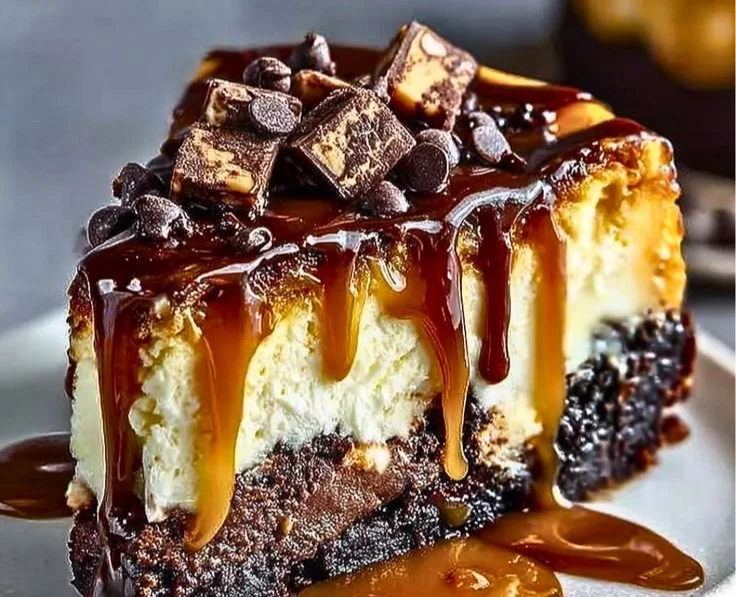
Caramel Brownie Cheesecake: The Ultimate Dessert Mashup
Table of Contents
I. The Ultimate Dessert Mashup: Why This Caramel Brownie Cheesecake Is Unlike Anything Else
There are good desserts. There are great desserts. And then there is Caramel Brownie Cheesecake — a layered masterpiece that creates an explosion of amazing tastes and textures in every single bite.
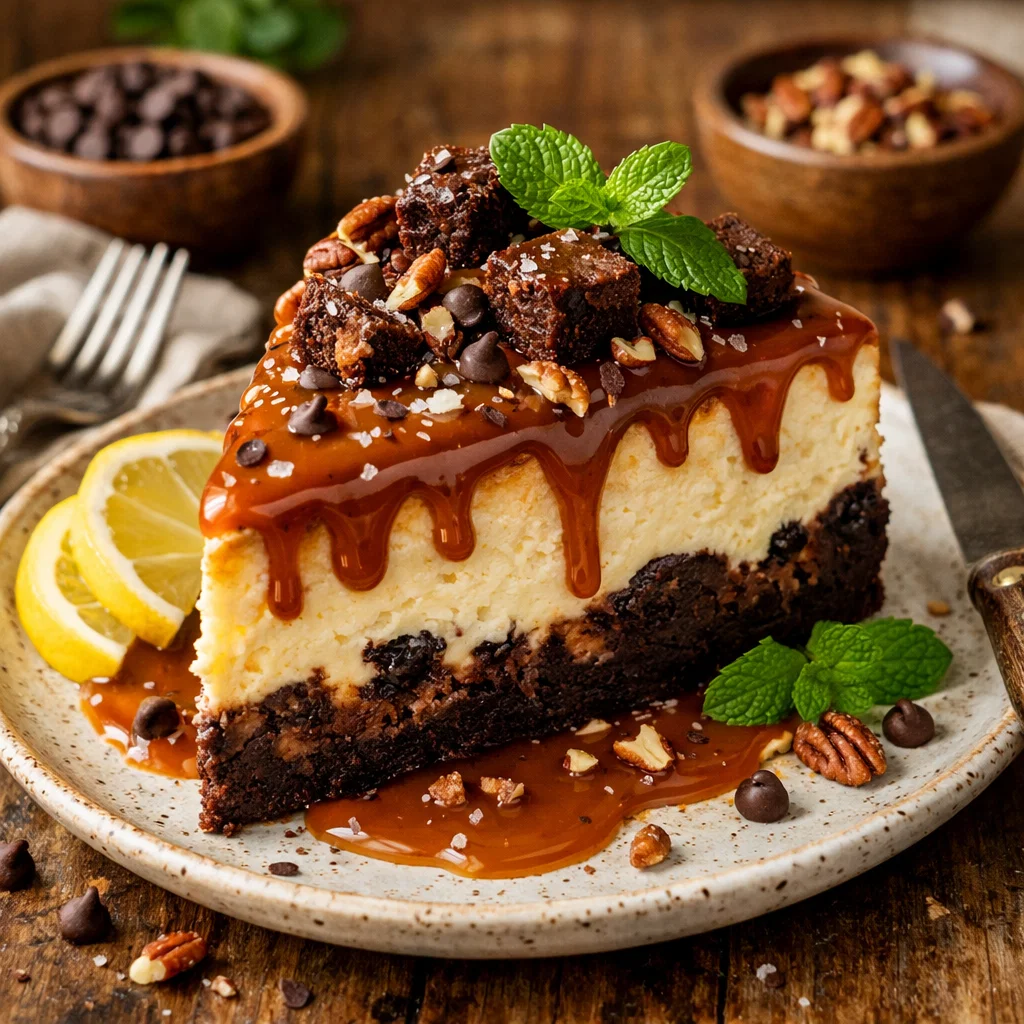
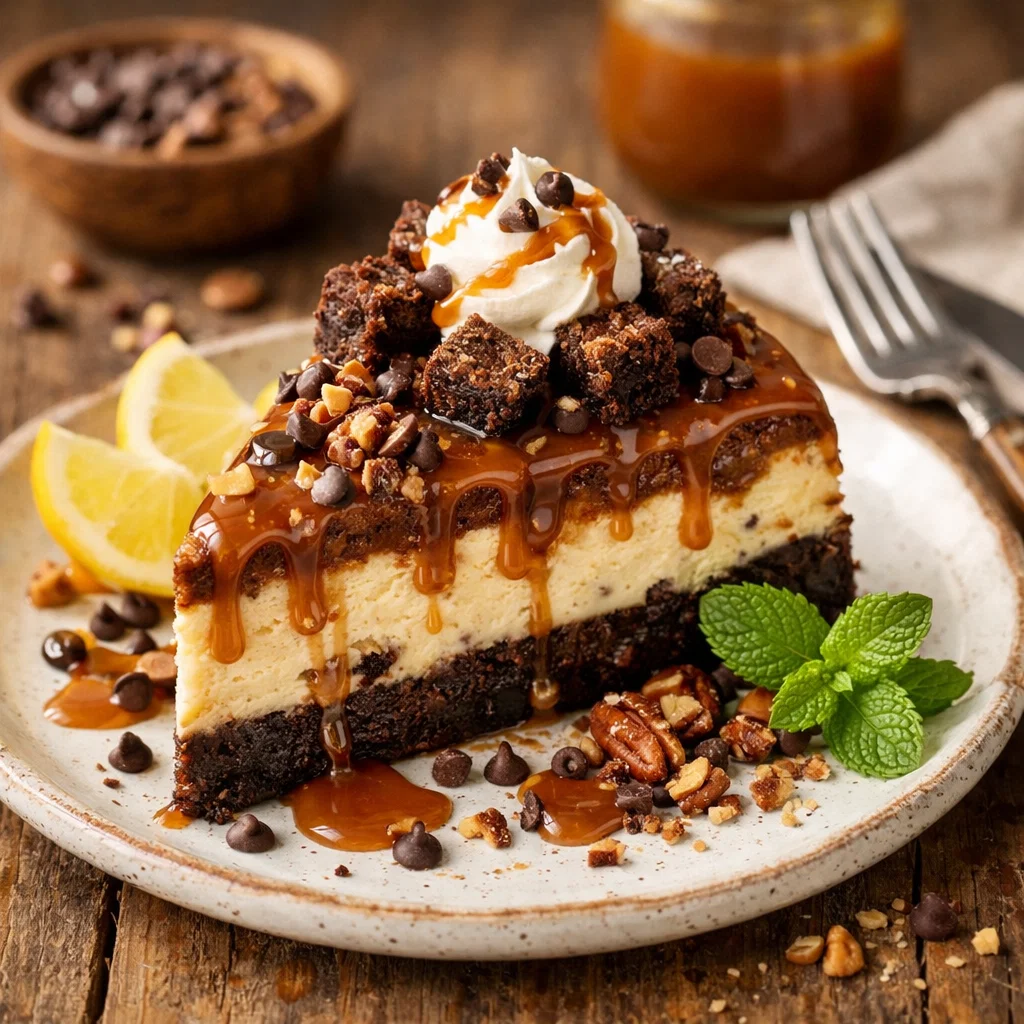
Thank you for reading this post, don't forget to subscribe!Imagine cutting into a thick, fudgy brownie base — deeply chocolaty, dense, and rich in a way that only a properly made brownie can be. Now imagine that same brownie crowned with a layer of luscious, smooth vanilla cheesecake that is tangy and creamy all at once. And over everything, a glossy pour of salted caramel that hits the sweet, salty, and indulgent notes that make a dessert truly unforgettable. That is this recipe. That is the experience waiting for you at the end of a single afternoon in the kitchen.
Taste, Texture, Ease — Everything You Need to Know
This Caramel Brownie Cheesecake recipe was developed to deliver on every front:
Taste: Expect a complex, layered flavor profile that moves from deeply chocolaty in the brownie base to tangy and creamy in the cheesecake layer, finished with the salty-sweet richness of salted caramel on top. Each element is distinct yet completely harmonious with the others.
Texture: The contrast here is deliberate and spectacular. The brownie base is thick and fudgy — the kind of brownie that pushes back slightly when you press it with a fork. The cheesecake layer is smooth and creamy, almost cloud-like in its consistency. Together, they create a textural experience that is genuinely difficult to describe until you have experienced it yourself.
Ease: Here is the good news — this recipe requires no advanced baking skills and no water bath. Yes, it uses several mixing bowls and baking dishes, and yes, the chilling time means you need to plan ahead. But the actual hands-on work is entirely approachable, even for bakers who have never attempted a cheesecake before.
Pros and Cons: This Caramel Brownie Cheesecake feeds a crowd, makes stunning presentation at dinner parties or holiday gatherings, and can be prepared ahead of time — which is a genuine gift to any busy host. As for cons? There simply are none. This recipe is pure upside.
II. The “Sprinkle of Science”: Success Secrets for Perfect Caramel Brownie Cheesecake
Great baking is always part art and part science. For a layered dessert as specific as Caramel Brownie Cheesecake, understanding the why behind the key techniques is what separates a flawless result from a frustrating one. These are the non-negotiable rules that guarantee success every time.
The Cream Cheese Rule: Full-Fat, High-Quality, Room Temperature
This is perhaps the single most important rule in the entire recipe, and it applies to every cheesecake you will ever make. You must use full-fat cream cheese in brick form — not the spreadable cream cheese that comes in a tub, not a reduced-fat version, and not a whipped variety. The fat content in full-fat brick cream cheese is what gives the cheesecake layer its characteristic richness and stability. Lower-fat alternatives contain more water, which throws off the entire chemistry of the filling.
Equally important is temperature. Your cream cheese must be at room temperature before it is beaten. Cold cream cheese will not incorporate smoothly no matter how long you mix it, leaving you with a lumpy, uneven filling that will never fully smooth out during baking. Pull your cream cheese from the refrigerator at least one hour before you begin. This one habit alone will transform your cheesecake results.
Brand matters too — reach for a well-known, high-quality brand of cream cheese. The difference in flavor and texture between premium and budget cream cheese is significant enough to affect the final result of your Caramel Brownie Cheesecake.
The Egg Factor: Why Overbeating Is the Enemy
Once you add eggs to your cheesecake batter, the rules change entirely. Eggs must be incorporated on low speed and only until just combined. The moment eggs are beaten into the batter, overbeating begins to incorporate excess air into the filling. That air expands rapidly in the oven, causing the cheesecake to puff up — and then collapse and crack dramatically as it cools.
The goal is a dense, smooth, creamy filling that bakes evenly and slowly. Mix each egg in on low speed, stop as soon as you no longer see streaks of yolk, and resist the urge to keep the mixer running. Overbeating after adding eggs is the single most common cause of sinking and cracking in a baked cheesecake. Now you know — and knowing is how you avoid it.
Brownie Base 101: Natural Cocoa and the Importance of Par-Baking
The brownie layer in this Caramel Brownie Cheesecake is built for two things: deep chocolate flavor and structural integrity. Both start with natural cocoa powder. Natural cocoa is more acidic than Dutch-process cocoa and reacts with the other ingredients in the brownie batter to create a ridiculously fudgy, moist result with a pronounced chocolate flavor. Dutch-process cocoa, which has been treated to neutralize its acidity, produces a milder flavor and a slightly different texture — not bad, but not what this recipe is optimized for.
The second critical step is par-baking the brownie layer for 15 minutes before the cheesecake filling is added on top. This initial bake gives the brownie base time to set and firm up just enough to hold the weight of the cheesecake filling without the two layers blending together during the full bake. It is what keeps the brownie layer distinct, fudgy, and recognizable in every slice rather than merging into the cheesecake above it.
III. Mastering the No Water Bath Method for Caramel Brownie Cheesecake
Traditional cheesecake recipes often call for a water bath — a technique where the springform pan is wrapped in foil and set inside a larger pan of hot water to regulate heat and humidity during baking. It works, but it is also messy, fussy, and intimidating for many home bakers.
This Caramel Brownie Cheesecake recipe skips the water bath entirely without sacrificing quality. Here is how it works — and how to handle the minor imperfections that can occasionally arise.
The Camouflage Technique: Salted Caramel to the Rescue
One of the most elegant aspects of this recipe is the way the salted caramel topping serves a dual purpose. Yes, it adds a layer of flavor that makes this dessert extraordinary. But it also functions as a beautiful, glossy camouflage for any minor surface imperfections — small cracks, slight unevenness, or any cosmetic blemishes that might form on the cheesecake surface during baking or cooling. A generous pour of salted caramel before serving conceals every flaw beneath a professional-looking finish. Nobody at the table will ever know the difference, and you can serve your Caramel Brownie Cheesecake with complete confidence.
The Oven Door Trick: Slow Cooling for Crack Prevention
Temperature shock is a leading cause of cheesecake cracking. When a hot cheesecake is moved abruptly from a 325°F oven to the cool air of a kitchen, the sudden change in temperature causes the outer edges — which are firmer and less flexible — to contract rapidly while the center is still warm and soft. The result is cracking.
The solution is beautifully simple: when the baking time is complete, turn off the oven but do not remove the cheesecake. Instead, prop the oven door open with a wooden spoon and allow the cheesecake to remain inside as the oven gradually cools. This slow, gentle cooling process gives the cheesecake time to adjust to the temperature change incrementally, dramatically reducing the risk of cracking. Leave it in the slowly cooling oven for approximately one hour before transferring it to the counter to cool completely.
The Wobbly Center Rule: Under-Baking Is Your Friend
This is counterintuitive for many bakers, but it is absolutely essential: it is always better to slightly under-bake your cheesecake than to over-bake it. When you turn off the oven, the center of your Caramel Brownie Cheesecake should still have a visible, gentle jiggle — like a very thick Jell-O. The outer two-thirds of the surface should appear set, but that center wobble is a sign of success, not a problem.
The cheesecake will continue to cook from residual heat as it cools in the turned-off oven, and it will firm up completely during the chilling period in the refrigerator. A cheesecake pulled from the oven while still slightly jiggly in the center will be perfectly set and silky smooth once fully chilled. A cheesecake left in the oven until the center looks completely firm will be overcooked, dry, and almost certainly cracked by the time it reaches the table.
Trust the wobble. Pull it early. Your Caramel Brownie Cheesecake will thank you.
IV. Prep, Customization & Troubleshooting
Make-Ahead Benefits: The Perfect Entertaining Dessert
This Caramel Brownie Cheesecake is genuinely one of the best make-ahead desserts in a home baker’s repertoire. After baking and slow-cooling, the cheesecake needs a minimum of 4 hours of refrigeration to fully set — but the ideal scenario is to make it the evening before and allow it to chill overnight. This extended chilling time not only sets the texture perfectly but actually deepens and improves the flavor as the brownie, cheesecake, and caramel layers meld together.
For entertaining, this is extraordinary. You can bake your Caramel Brownie Cheesecake the day before a dinner party, store it covered in the refrigerator, and simply add the final caramel drizzle right before serving. The hard work is completely done ahead of time, leaving you free to focus on your guests rather than your oven.
Ingredient Substitutions
Natural Cocoa vs. Dutch-Process Cocoa: For this recipe, natural cocoa powder is strongly preferred over Dutch-process. The acidity in natural cocoa activates baking ingredients in a specific way that contributes to the fudgy, moist texture that makes the brownie base of this cheesecake so exceptional. Dutch-process cocoa has been alkaline-treated and lacks that acidity, which changes the chemistry of the batter in ways that can result in a less fudgy, slightly drier brownie. If Dutch-process is all you have available, you can use it in a pinch — but natural cocoa is the right tool for this job.
Unsalted Butter for Flavor Control: The recipe calls for unsalted butter, and there is a specific reason for that. Using unsalted butter gives you complete control over the salt content of both the brownie layer and the salted caramel topping. Since the caramel is intentionally salted, introducing additional unpredictable salt from salted butter in the batter could tip the balance. Unsalted butter keeps every element of the flavor profile exactly where you want it.
Cream Measurements for Those Without Measuring Cups: If you are working without standard measuring cups, here is a helpful reference: ¼ cup of heavy cream equals approximately 57 grams. Use a kitchen scale for the most accurate results when working with cream in the cheesecake filling and caramel topping.
The Right Tools
Two pieces of equipment make a significant difference in the success of your Caramel Brownie Cheesecake:
A 9-inch springform pan is the correct vessel for this recipe. The removable sides of a springform pan allow you to release the cheesecake cleanly after chilling without disturbing the layers or the delicate surface. A standard cake pan is not an appropriate substitute here.
Place your springform pan on a rimmed baking sheet before putting it in the oven. Springform pans, by design, are not perfectly sealed. A rimmed baking sheet beneath the pan catches any minor drips or leaks and keeps your oven clean throughout the baking process.
V. Caramel Brownie Cheesecake Recipe Card
Yield: 12 servings Total Time: 5 hours 45 minutes (including chilling time)
Ingredients
Brownie Layer:
- ½ cup (113g) unsalted butter, melted
- 1 cup (200g) granulated sugar
- 2 large eggs, room temperature
- 1 teaspoon vanilla extract
- ½ cup (50g) natural cocoa powder
- ½ cup (63g) all-purpose flour
- ¼ teaspoon salt
Cheesecake Layer:
- 16 oz (452g) full-fat brick cream cheese, room temperature
- ½ cup (100g) granulated sugar
- 2 large eggs, room temperature
- 1 teaspoon vanilla extract
- ¼ cup (57g) heavy cream
Salted Caramel Topping:
- 1 cup (200g) granulated sugar
- 6 tablespoons (85g) unsalted butter, cubed and room temperature
- ½ cup (115g) heavy cream, warm
- 1 teaspoon flaky sea salt (plus more for finishing)
Step-by-Step Instructions
Step 1 — Prepare Your Pan and Oven: Preheat your oven to 325°F (163°C). Grease a 9-inch springform pan and line the bottom with parchment paper. Place the springform pan on a rimmed baking sheet and set aside.
Step 2 — Make the Brownie Layer: In a medium bowl, whisk together the melted butter and granulated sugar until combined. Add the eggs and vanilla extract and whisk until smooth. Fold in the natural cocoa powder, flour, and salt until just combined — do not overmix. Pour the brownie batter into the prepared springform pan and spread it into an even layer, all the way to the edges.
Step 3 — Par-Bake the Brownie Base: Bake the brownie layer at 325°F for 15 minutes. Remove from the oven and allow to cool slightly while you prepare the cheesecake filling. Do not turn off the oven.
Step 4 — Make the Cheesecake Layer: In a large bowl, beat the room-temperature cream cheese on medium speed until completely smooth, about 2 minutes. Add the granulated sugar and beat until combined. Add the vanilla extract and heavy cream and mix on low until incorporated. Add the eggs one at a time, beating on low speed just until each egg disappears into the batter. Do not overbeat.
Step 5 — Layer and Bake: Pour the cheesecake filling over the par-baked brownie layer, spreading it gently and evenly with a spatula. Return the pan to the oven and bake at 325°F for 55 to 65 minutes, until the edges are set and the center has a slight jiggle when the pan is gently shaken.
Step 6 — Slow Cool in the Oven: Turn off the oven. Prop the oven door open with a wooden spoon and leave the Caramel Brownie Cheesecake inside for 1 hour to cool gradually and prevent cracking.
Step 7 — Chill: Remove the cheesecake from the oven and allow it to cool completely at room temperature. Cover and refrigerate for at least 4 hours, or preferably overnight, until fully set.
Step 8 — Make the Salted Caramel: In a medium heavy-bottomed saucepan over medium heat, cook the granulated sugar, stirring constantly, until it melts into a deep amber-colored liquid. Add the cubed butter carefully (it will bubble vigorously) and stir until fully melted. Remove from heat and slowly pour in the warm heavy cream, stirring constantly. Add the sea salt. Allow the caramel to cool to a pourable but slightly thickened consistency.
Step 9 — Serve: Release the springform pan sides. Just before serving, pour or drizzle the salted caramel generously over the top of the chilled cheesecake. Finish with an additional pinch of flaky sea salt.
VI. Professional Serving and Storage Tips
The Clean Cut: Bakery-Quality Slices Every Time
Cheesecake slices beautifully when you treat the knife correctly. Run a sharp chef’s knife under hot water, wipe it dry with a clean towel, and make your first cut. Repeat — rinse the knife under hot water and wipe it clean between every single slice. This prevents the cheesecake layers from dragging or smearing, giving you clean, defined cuts that show off the distinct brownie and cheesecake layers in every piece. It is a small step that makes a dramatic visual difference, especially when serving your Caramel Brownie Cheesecake to guests.
The Caramel Finishing Touch: Timing Is Everything
As gorgeous as the salted caramel topping is, resist the urge to drizzle it over the cheesecake during storage. The caramel will soak into the cheesecake surface over time and lose its beautiful glossy finish. Instead, keep the caramel stored separately in a sealed jar in the refrigerator and drizzle it over the cheesecake just before serving. Gently warm the caramel if it has thickened in the fridge by microwaving it in 10-second increments until it reaches a pourable consistency.
Storage Instructions
Store your Caramel Brownie Cheesecake covered in the refrigerator for up to 2 days. Keep slices in an airtight container to prevent the cheesecake from absorbing other refrigerator odors. The brownie layer remains fudgy and the cheesecake layer stays creamy throughout the storage period, making this an excellent make-ahead option for events and gatherings.
Share Your Results
Made this Caramel Brownie Cheesecake at home? We want to see it. Share your photos and results using #handletheheat on social media — whether it came out perfectly on the first try or you learned something new along the way, every result is worth celebrating. The baking community is one of the most generous and encouraging communities around, and your version of this recipe might be exactly the inspiration someone else needs to try it for the first time.
Few desserts can claim to be truly greater than the sum of their parts. This Caramel Brownie Cheesecake is one of the rare exceptions — where a fudgy brownie, a silky cheesecake, and a poured salted caramel topping come together into something that is genuinely more spectacular than any one of those elements could be alone. Make it once, and it will earn a permanent place in your dessert rotation.