
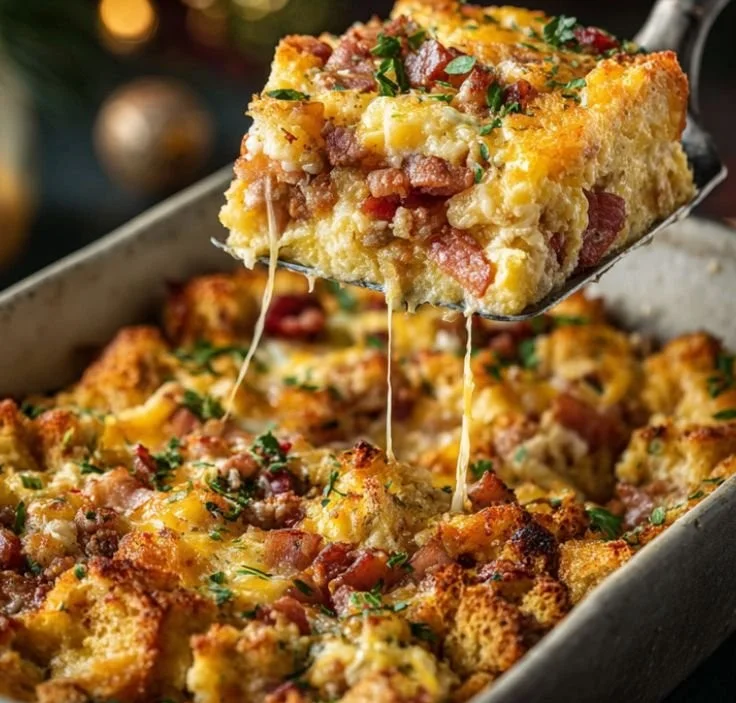
Christmas Breakfast Casserole
Table of Contents
Does Christmas morning breakfast feel like the one thing nobody planned for? The gifts are wrapped, the decorations are perfect, the dinner is organized — but breakfast on the most magical morning of the year somehow ends up being cold cereal, rushed toast, or a frantic scramble of eggs while everyone is already distracted and excited. You deserve better. Your family deserves better. Christmas morning should begin with something as memorable as the rest of the day.
Thank you for reading this post, don't forget to subscribe!The Christmas Breakfast Casserole is the answer that thousands of families have already discovered: a warm, golden, gloriously festive baked dish loaded with savory sausage, fluffy eggs, melted cheese, and colorful holiday vegetables — assembled entirely the night before, slid into the oven Christmas morning while presents are opened, and ready to serve a crowd with zero morning stress. It is the breakfast equivalent of a Christmas miracle: effortless, extraordinary, and utterly crowd-pleasing.
As a holiday recipe developer and food stylist with over 15 years of creating make-ahead Christmas morning recipes for families of every size, I’ve refined the Christmas Breakfast Casserole to an exact science. The egg custard ratio that prevents sogginess, the cheese layering technique that ensures maximum melt-through, the overnight rest that deepens every flavor — this guide contains everything I’ve learned across hundreds of batches.
In this complete guide you’ll find: how to choose the best sausage, bread, and cheese for holiday impact; the full ingredient list with substitutions; step-by-step assembly and baking instructions; pro tips for a perfect casserole every Christmas; festive flavor variations; serving ideas worthy of a holiday table; and answers to every question families ask about Christmas Breakfast Casserole.
Why This Breakfast Recipe Works
The Christmas Breakfast Casserole isn’t just a convenient recipe — it’s one of the most strategically smart holiday breakfasts ever designed. Here’s exactly why it earns its place on the Christmas morning table year after year:
- Assembles entirely the night before. Everything goes together on Christmas Eve — bread layers, sausage, cheese, egg custard. Cover and refrigerate. Christmas morning, slide into the oven. Breakfast is genuinely hands-off.
- Uses affordable, festive, easy-to-find ingredients. Brioche or sourdough bread, bulk sausage, eggs, cheddar, and a handful of holiday-appropriate vegetables. Impressive results from approachable ingredients.
- Feeds a crowd from one dish. A single 9×13 baking dish feeds 10–12 people — grandparents, children, overnight guests, all from one gloriously simple casserole.
- Overnight soak makes the casserole better, not worse. The bread absorbs the custard overnight, creating a bread-pudding-like texture that is far superior to a same-day bake.
- Completely customizable for any family’s preferences. Swap proteins, cheeses, and vegetables to honor family traditions, dietary needs, or the contents of your refrigerator.
- The kitchen stays clean on Christmas morning. One dish, assembled the night before — Christmas morning is for opening presents and drinking coffee, not washing pans.
- Leftover slices reheat perfectly. Individual portions microwaved in 90 seconds are ideal for late-rising family members or a Boxing Day breakfast without any additional cooking.
Choosing the Right Ingredients for Christmas Breakfast Casserole
The ingredient choices you make determine whether your Christmas Breakfast Casserole is merely good or genuinely extraordinary. Here’s how to choose each component with intention.
Best Bread for This Recipe
The bread is the structural foundation of the casserole — it absorbs the egg custard overnight and creates the interior texture:
- Brioche (strongly recommended): Rich, buttery, and perfectly absorbent. Its high fat content creates a custardy, almost bread-pudding-like interior after an overnight soak — the most luxurious choice for a special occasion like Christmas morning.
- Sourdough (artisan loaf): Adds a subtle tangy complexity that balances the richness of eggs, sausage, and cheese beautifully. Its denser crumb holds up well to overnight soaking without disintegrating.
- Ciabatta: Open, airy crumb that absorbs custard rapidly and creates a pleasantly chewy texture. Cut into larger cubes to maintain some structure after soaking.
- French baguette (day-old): A classic choice for savory bread-based casseroles. The thick crust resists complete saturation, creating textural contrast between the soft interior and slightly crisper surface pieces.
- Whole-grain or multigrain bread: For a heartier, more nutritious casserole. Its denser texture holds up beautifully and adds nuttiness that pairs well with sharp cheddar and sage sausage.
Best Protein Options
The protein defines the savory character of the entire casserole:
- Breakfast sausage with sage (top recommendation): The classic holiday pairing. Sage-seasoned pork breakfast sausage echoes the flavors of Christmas dinner and fills the casserole with warmth and deeply savory depth.
- Italian sweet sausage: Adds fennel and herb complexity — slightly more sophisticated and pairs beautifully with mozzarella and roasted red pepper variations.
- Smoked ham or honey-glazed ham (diced): A festive alternative that uses Christmas ham leftovers beautifully. Its sweetness plays wonderfully against sharp cheddar and dijon mustard.
- Turkey or chicken sausage: A lighter option for health-conscious households. It browns well and carries seasoning beautifully without the richness of pork.
- Bacon (thick-cut): Cooked, crumbled, and layered throughout the casserole adds smoky depth and crispy textural contrast. Excellent combined with another protein.
- Plant-based sausage: Beyond Meat or Impossible breakfast sausage browns and crumbles identically to pork — a fully vegetarian Christmas Breakfast Casserole that even meat-eaters won’t miss the pork in.
Buying Tips
- Buy brioche or artisan sourdough from a bakery on Christmas Eve — day-old bread from that morning’s bake is actually ideal for maximum custard absorption overnight.
- Choose bulk (loose) sausage over links for even distribution throughout the casserole — it crumbles more evenly and flavors every forkful.
- Always shred cheese fresh from the block on Christmas Eve. Pre-shredded bagged cheese contains anti-caking agents that prevent the smooth, creamy melting that makes the casserole so appealing.
- Buy extra cheese for the top layer — the final generous cheese blanket visible through the baking dish is what makes the casserole look spectacular when it comes out of the oven.
- For the egg custard, use large eggs at room temperature and whole milk or heavy cream — cold dairy creates uneven custard absorption overnight.
Ingredient Substitutions
- No sausage? Use diced cooked bacon, cubed smoked ham, shredded turkey, or a combination of sauteed mushrooms and spinach for a fully vegetarian version. The egg custard structure holds with any filling.
- No brioche? Any thick, slightly stale bread works — even leftover dinner rolls or croissants cut in half create an indulgent, richly flavored casserole.
- No cheddar? Gruyere creates a more sophisticated, nutty depth. Colby-Jack is milder and kid-friendly. A combination of white cheddar and fontina produces exceptional meltability.
- Dairy-free Christmas? Use unsweetened oat milk in the egg custard and dairy-free shredded cheddar (Violife). Replace butter for greasing with coconut oil.
- Gluten-free guests? Use a quality gluten-free artisan bread (Canyon Bakehouse) cut into cubes — the casserole holds together identically.
Ingredients & Prep
Christmas Breakfast Casserole Prep Essentials
The beauty of this recipe is that all substantive prep happens on Christmas Eve. A few focused steps ensure Christmas morning perfection:
- Cut bread into 1-inch cubes and leave uncovered on a baking sheet for 1–2 hours before assembly, or in a 200°F oven for 10 minutes — slightly staled bread absorbs the egg custard more evenly and deeply without becoming mushy.
- Cook and drain sausage completely before assembly — undrained fat will make the casserole greasy and prevent the egg custard from setting cleanly.
- Saute any fresh vegetables (onions, bell peppers, mushrooms) for 5 minutes before adding to the casserole — raw high-moisture vegetables release water during baking that can make the casserole soggy.
- Grease the 9×13 baking dish thoroughly on all sides with butter — this ensures the casserole releases cleanly into crisp, well-defined squares.
- Pour the egg custard slowly and evenly over the assembled casserole, pressing bread cubes gently down to ensure full submersion before refrigerating overnight.
- Wrap tightly with plastic wrap for the overnight refrigerator rest — this prevents surface drying and keeps the custard from absorbing fridge odors.
Full Ingredient List (Serves 10–12)
- 1 loaf (about 16 oz) brioche or sourdough bread, cut into 1-inch cubes, slightly staled
- 1 lb bulk breakfast sausage with sage
- 10 large eggs
- 2 cups whole milk
- 1/2 cup heavy cream
- 2 cups sharp cheddar cheese, freshly shredded (divided: 1.5 cups in casserole, 0.5 cup on top)
- 1 cup white cheddar or Gruyere, freshly shredded
- 1 medium onion, diced and sauteed
- 1 red bell pepper, diced and sauteed (festive red color)
- 1 green bell pepper, diced and sauteed (festive green color)
- 2 cloves garlic, minced
- 1 teaspoon dry mustard powder
- 1 teaspoon dried thyme
- 1/2 teaspoon smoked paprika
- 1/2 teaspoon sea salt
- 1/2 teaspoon black pepper
- 2 tablespoons butter (for greasing the dish)
- Optional: fresh chives or parsley for garnish after baking
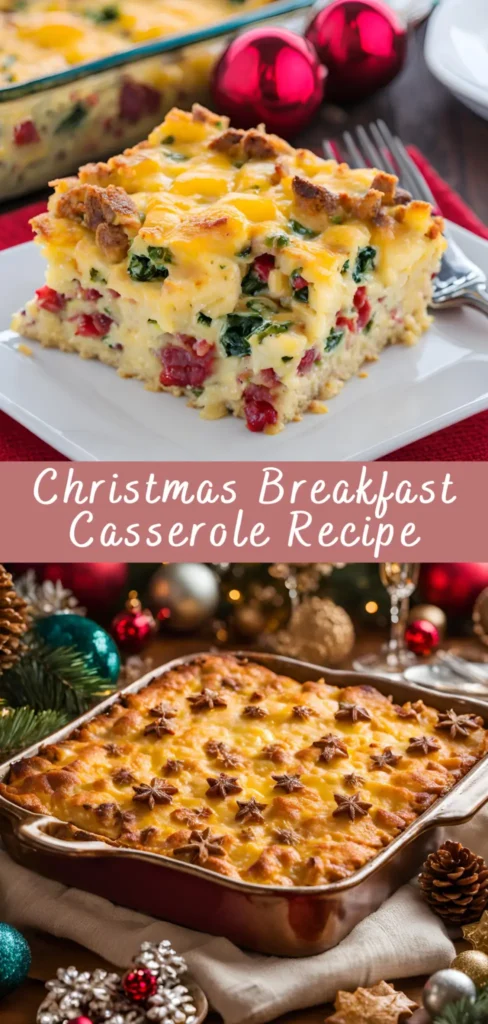
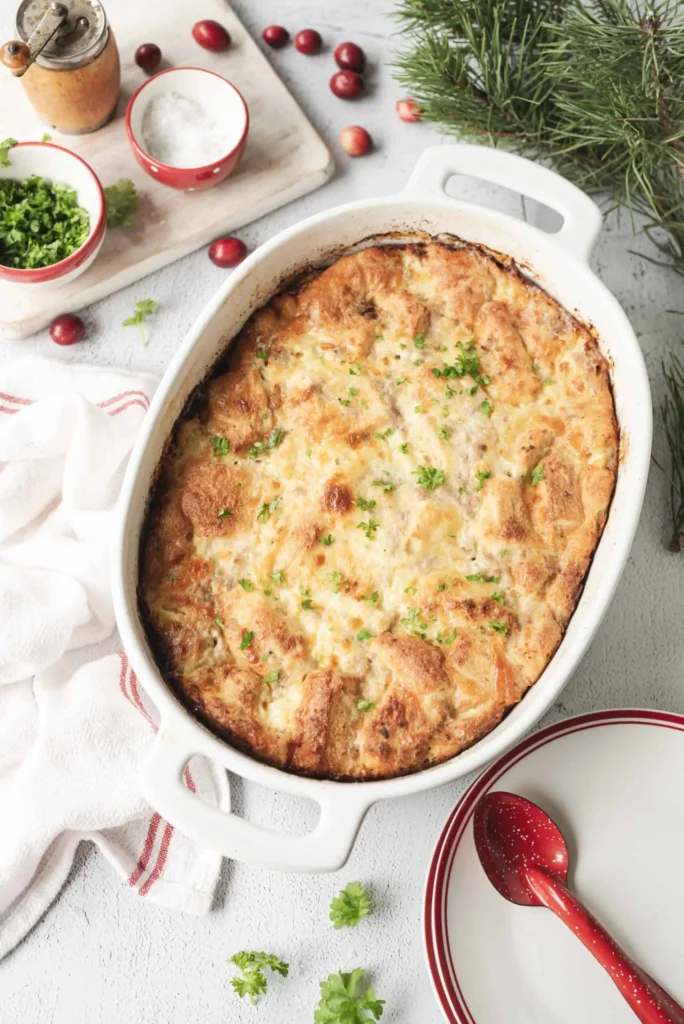
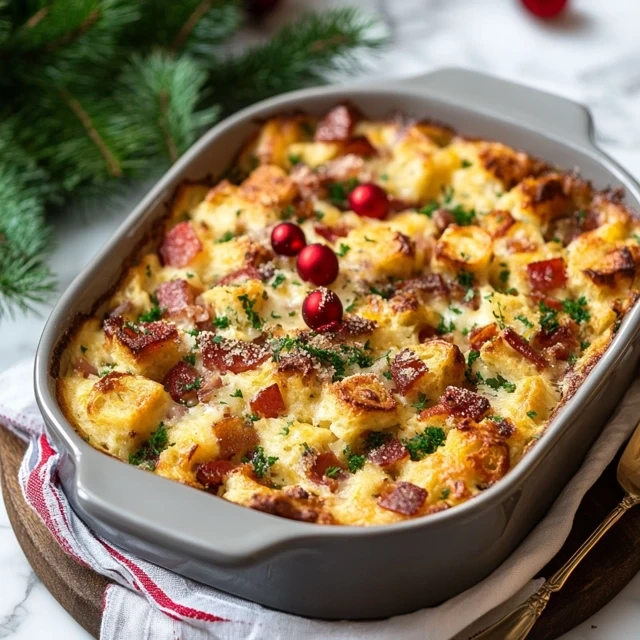
Holiday Flavor Builders
- Dry mustard powder: A teaspoon stirred into the egg custard amplifies the sharpness of the cheddar and adds a savory depth that makes tasters wonder what makes this casserole taste so complex.
- Fresh thyme or dried sage: The definitive Christmas morning herbs — they echo the flavors of holiday dinner and make the kitchen smell extraordinary while the casserole bakes.
- Smoked paprika: A half teaspoon adds a subtle smokiness that ties the sausage and cheese layers together with deep, warming flavor.
- Worcestershire sauce (1 tsp in custard): An invisible flavor amplifier that adds savory umami depth without any detectable Worcestershire note.
- Red and green bell peppers: Beyond flavor, the combination of red and green vegetables makes the Christmas Breakfast Casserole visually festive — a Christmas-colored filling that looks as beautiful as it tastes.
Step-by-Step Cooking Instructions
Follow these steps for a perfectly set, golden-topped, festively flavored Christmas Breakfast Casserole that slices cleanly and serves beautifully on the most important morning of the year.
Step 1 — Christmas Eve Assembly
Generously butter a 9×13 inch baking dish. Spread the staled bread cubes in an even layer across the bottom of the dish. In a large skillet over medium-high heat, cook and crumble the breakfast sausage until deeply browned and cooked through. Drain thoroughly. Saute diced onions, red and green bell peppers, and garlic in the same pan for 4–5 minutes until softened. Distribute the sausage and vegetable mixture evenly over the bread cubes. Sprinkle 1.5 cups of the shredded cheddar and 1 cup of Gruyere evenly over the sausage layer.
Step 2 — Make and Pour the Egg Custard
In a large bowl, whisk together eggs, whole milk, heavy cream, dry mustard, thyme, smoked paprika, salt, black pepper, and Worcestershire sauce (if using) until completely smooth. Pour the custard mixture slowly and evenly over all layers in the baking dish, ensuring every bread cube is moistened. Press bread cubes gently down into the custard with clean hands or a spatula to fully submerge them. Sprinkle the remaining 0.5 cup of cheddar evenly over the top. Cover the dish tightly with plastic wrap and refrigerate overnight (minimum 8 hours, up to 18 hours).
Step 3 — Christmas Morning Bake
Remove the Christmas Breakfast Casserole from the refrigerator 30 minutes before baking to take the chill off slightly — this promotes more even cooking from edge to center. Preheat oven to 350°F (175°C). Remove plastic wrap and bake uncovered for 50–60 minutes, until the top is deeply golden, the cheese is bubbling at the edges, and the center is fully set with no jiggle when the dish is gently shaken. If the top browns too quickly before the center sets, tent loosely with aluminum foil after 35 minutes and continue baking.
Step 4 — Doneness Check
The Christmas Breakfast Casserole is done when a knife or instant-read thermometer inserted into the center comes out clean and registers 160°F (71°C). The top should be golden-brown with visible cheese bubbling, and the edges should be slightly pulling away from the sides of the dish. The center, when pressed gently, should feel firm and springy rather than liquid or soft. If the thermometer reads below 155°F, continue baking in 5-minute increments with the foil tent to prevent further browning.
Step 5 — Rest, Garnish, and Serve
Remove the casserole from the oven and allow it to rest uncovered for 10 full minutes before slicing. This resting period is non-negotiable — it allows the egg custard to finish setting so that slices hold their shape cleanly rather than collapsing. Garnish with freshly chopped chives or flat-leaf parsley for a pop of green and festive presentation. Use a sharp knife and wide spatula to cut and lift clean squares. Serve directly from the baking dish at the table for a communal, family-style Christmas morning presentation.
Pro Tips for a Perfect Christmas Breakfast Casserole
Avoiding Common Mistakes
- Never skip staling the bread. Fresh bread absorbs custard too rapidly at the surface and not deeply enough in the center — creating a wet exterior and dry interior after baking. 1–2 hours uncovered or a brief oven dry is essential.
- Never underdrain the sausage. Excess fat from sausage not properly drained makes the egg custard greasy and prevents proper setting. Drain through a colander and pat dry with paper towels.
- Never cut into it without the 10-minute rest. The casserole looks set but the egg custard is still loose in the very center immediately out of the oven. Ten minutes transforms it from a potential mess to perfect squares.
- Don’t assemble less than 8 hours before baking. The overnight soak is not just convenient — it’s what creates the superior texture. Less than 4–5 hours produces noticeably inferior results. Plan for the full overnight.
- Don’t bake straight from the refrigerator. A fully cold 9×13 casserole baked immediately from the fridge can take 75+ minutes and still have an undercooked center while the top burns. The 30-minute room temperature rest is important.
Tool Recommendations
- 9×13 inch ceramic or glass baking dish: Both distribute heat gently and evenly — critical for a thick egg casserole that needs consistent temperature throughout to set uniformly without burning the edges.
- Instant-read thermometer: The only reliable doneness check. Insert into the center of the casserole (not near an edge) and verify 160°F before removing from the oven.
- Large colander: For draining browned sausage thoroughly — removes far more fat than paper towels.
- Fine-mesh sieve: For dusting a light coating of smoked paprika or fresh herb garnish over the finished casserole for a professional holiday presentation.
- Aluminum foil: Keep a sheet pre-torn and ready beside the oven for the tenting step if the top begins browning before the center sets.
Storage & Reheating
- Refrigerate: Cool completely, cover tightly, and refrigerate for up to 5 days. Individual slices actually improve in flavor overnight as the herbs and sausage meld further.
- Freeze: Slice into individual portions, wrap each in plastic wrap then foil, and freeze for up to 3 months. Label each portion with the date. Thaw overnight in the refrigerator.
- Reheat: Individual slices in the microwave for 90 seconds–2 minutes. Whole casserole in a 325°F oven covered with foil for 20–25 minutes. Add a final 3 minutes uncovered to re-crisp the cheese top.
- Boxing Day breakfast: Leftover Christmas Breakfast Casserole reheated the next morning is one of the great unsung pleasures of the holiday season. Many families think it tastes even better on day two.
Flavor Variations
The Christmas Breakfast Casserole is magnificent in its classic form, but these variations add seasonal excitement and accommodate every guest at the holiday table:
Holiday Spiced & Festive Twist
- Add 1/4 teaspoon each of ground nutmeg and ground allspice to the egg custard for a warming, holiday-spiced character reminiscent of Christmas pudding.
- Layer thinly sliced brie (rind removed) between the bread and sausage layers — it melts into a luxurious, creamy layer that elevates the whole dish for a special-occasion presentation.
- Use hot Italian sausage with fennel alongside crumbled pancetta for a bold, celebration-worthy flavor profile with Italian holiday character.
- Add roasted chestnuts (roughly chopped) to the casserole layers for a deeply seasonal, nutty element that echoes classic Christmas stuffing flavors.
- Drizzle lightly with truffle oil immediately before serving for an extraordinary finishing touch that transforms a home casserole into something genuinely restaurant-worthy.
Keto / Low-Carb Christmas Casserole
- Replace all bread with a combination of cauliflower florets (roasted first to remove moisture) and riced broccoli, both squeezed very dry — the egg custard binds them beautifully.
- Use heavy cream exclusively (no milk) in the custard for maximum fat content and ketogenic compliance.
- Load with extra cheese — sharp cheddar, Gruyere, and cream cheese crumbles are all keto-friendly and create a richer, more cohesive casserole.
- Ensure sausage has no added sugars and use uncured bacon strips where possible to keep all protein keto-compliant.
- Serve with avocado slices and sour cream instead of toast or biscuits for a complete low-carb Christmas morning plate.
Global Holiday Flavors
- British Christmas morning style: Use pork and sage stuffing sausage, add roasted Brussels sprouts leaves and diced parsnips, top with a generous layer of mature Lancashire or Stilton cheese, and serve with HP sauce and warm baked beans on the side.
- Italian-inspired (La Vigilia style): Use mild Italian sausage, layer with sauteed spinach, sun-dried tomatoes, and fresh basil, top with mozzarella and Parmesan, and season the custard with Italian seasoning and a pinch of red pepper flakes.
- Tex-Mex Christmas: Use chorizo instead of breakfast sausage, add roasted poblanos and fire-roasted corn, season the custard with cumin and smoked paprika, and top with Monterey Jack and Cotija cheese. Serve with warm salsa verde and crema.
- French-inspired Noel casserole: Use lardons (small bacon cubes), add caramelized shallots and fresh thyme, layer with Gruyere and comte cheese, and season the custard with Dijon mustard and a splash of dry white wine.
- Scandinavian Christmas: Use smoked salmon and dill in place of sausage, add crumbled goat cheese and capers, season with fresh dill and lemon zest, and serve with a side of lingonberry jam and rye crispbread.
Serving Suggestions
The Christmas Breakfast Casserole is a complete meal on its own, but the right accompaniments and presentation make Christmas morning feel as special as the evening ahead.
Best Holiday Sides:
- Fresh fruit salad with pomegranate seeds and mint — the ruby-red pomegranate arils look spectacularly festive and the tartness cuts through the rich, cheesy casserole.
- Warm, buttered dinner rolls or croissants — for those who want something to hold in hand while opening gifts before sitting down to eat.
- Roasted cherry tomatoes with fresh basil — simple, colorful, and adds acidity that brightens every savory, egg-rich bite.
- Sliced Christmas clementines arranged with fresh mint — effortless, seasonal, and visually stunning on a holiday table.
- Simple green salad with cranberry vinaigrette and candied pecans — for households that prefer a lighter accompaniment to balance the casserole’s richness.
Holiday Toppings & Condiments:
- Hot sauce — a bottle of Cholula or Tabasco on the Christmas table is always appreciated by the heat-lovers in the family.
- Sour cream or crème fraîche — a cooling, tangy dollop directly on a warm square of casserole.
- Fresh chives, green onions, or flat-leaf parsley — for color, freshness, and a mild onion note that lifts every bite.
- Cranberry hot sauce (cranberry sauce blended with a chipotle) — a festively seasonal condiment that perfectly bridges the holiday dinner and holiday breakfast worlds.
Holiday Drink Pairings:
- Classic Christmas morning: A pot of strong coffee or a cinnamon-spiced latte — the warm, aromatic spices complement the herb-and-sausage character of the casserole beautifully.
- Celebratory: Champagne or Prosecco — even at breakfast, the sparkle and acidity are perfect alongside a rich, savory casserole on Christmas morning.
- Family-friendly: A pitcher of fresh orange juice or a sparkling cranberry punch (cranberry juice, ginger ale, orange slices) — festive, colorful, and universally loved.
- Cozy holiday: Spiced apple cider (warm or cold) — its sweetness and warm spice notes echo the herbs in the casserole and taste unmistakably of Christmas.
- Adults only: A classic Bloody Mary with celery salt, lemon, and horseradish — the savory, spiced tomato juice is a perfect pairing with the cheese and sausage casserole.
Frequently Asked Questions
Can I assemble the Christmas Breakfast Casserole two days ahead?
Yes, with one important caveat. You can cook and prepare all components (brown the sausage, saute vegetables, shred cheese, cube bread) up to two days ahead and store each component separately in the refrigerator. However, pour the egg custard over the assembled casserole no earlier than 18 hours before baking — beyond this point, the bread can become over-saturated and the casserole may develop an unpleasantly dense, wet texture in the center. Christmas Eve assembly for Christmas morning baking is the ideal timeline for maximum flavor development without over-saturation.
Can I use frozen vegetables or frozen sausage?
Yes — frozen vegetables and sausage work well when handled properly. For frozen vegetables: thaw completely and squeeze out as much moisture as possible before sauteing. Frozen vegetables release significant water when heated; that moisture will make your casserole soggy if not removed first. For frozen sausage: thaw fully in the refrigerator overnight, cook until deeply browned, and drain thoroughly. Pre-cooked frozen sausage crumbles (like Jimmy Dean Fully Cooked) are an excellent shortcut — simply thaw and add to the layers without any additional cooking required.
How do I fix an undercooked Christmas Breakfast Casserole?
If the casserole looks perfectly golden on top but the center is still liquid or underdone, tent the entire dish immediately with a double layer of aluminum foil (to prevent the top from burning further) and continue baking in 10-minute increments, checking the center temperature each time. The target is 160°F at the center of the casserole. The foil tent is critical — without it, a 20-extra-minute bake will produce a burnt top before the center catches up. If this happens consistently, your oven may run hot at the top and cool in the center — try reducing your bake temperature by 15°F and extending by 10–15 minutes for the next Christmas.
Is Christmas Breakfast Casserole safe for pregnant women?
Yes, when fully and properly cooked. The critical requirements: all eggs must reach a minimum internal temperature of 160°F throughout the casserole (verify with an instant-read thermometer at the center), all sausage must be fully cooked through to 165°F before being added to the casserole, and all dairy (milk, cream, cheese) should be commercially pasteurized, which is standard for all supermarket products in the US and EU. Avoid unpasteurized artisan cheeses. When all conditions are met, Christmas Breakfast Casserole is completely pregnancy-safe. The make-ahead overnight assembly using properly refrigerated, pasteurized ingredients is fully safe.
How far ahead can I bake the Christmas Breakfast Casserole?
The casserole is best baked and served the same morning. However, it can be fully baked, cooled, covered, and refrigerated up to 3 days ahead. Reheat in a 325°F oven covered with foil for 25 minutes, then uncovered for 5 minutes to re-crisp the cheese top. Individual slices can be reheated in the microwave in 90–120 seconds. Note: the reheated casserole is excellent and deeply flavorful but will not have the same freshly baked texture as a same-morning bake. For Christmas morning specifically, the overnight-assembled, freshly-baked approach is always the gold standard.
Can I double the recipe for a large Christmas gathering?
Absolutely — and it is one of the greatest strengths of this recipe. Use two 9×13 baking dishes assembled side by side and baked simultaneously. Double every ingredient without modification. Rotate the dishes between oven racks halfway through baking to ensure even heating if your oven has hot spots. If baking two large dishes simultaneously, add 5–10 extra minutes to the total bake time and verify both dishes reach 160°F at the center before serving. Two casseroles comfortably feed 20–24 people from a single oven cycle on Christmas morning.
Conclusion
There you have it — the complete, expert guide to making a Christmas Breakfast Casserole that will make Christmas morning as memorable as Christmas evening. From selecting brioche and sage sausage, to the overnight custard soak that transforms every bite, to achieving the golden-topped, perfectly set squares that slice like a dream, you now have everything you need to give your family the Christmas morning breakfast they deserve.
Don’t let Christmas morning breakfast be an afterthought. Assemble your Christmas Breakfast Casserole tonight and wake up to the most effortless, most extraordinary holiday breakfast your family has ever had. That warm, fragrant casserole coming out of the oven while carols play and presents are unwrapped is a Christmas morning moment your family will ask you to recreate every year.
Join over 18,000 families who’ve already made Christmas Breakfast Casserole their most beloved holiday morning tradition. Leave a star rating, share your family’s variation in the comments, and tag us in your Christmas morning photos — we feature the most heartwarming reader stories every holiday season.
You’ll Also Love These Holiday Recipes: