
Beet Salad with Feta
Table of Contents
There is a category of salad that has been unfairly neglected in the conversation about what a salad can be — the lettuce-free salad. Freed from the obligation of a leafy green base, these salads are more interesting, more texturally varied, more visually striking, and considerably more versatile as side dishes than their lettuce-dependent counterparts. They hold up better during transport. They don’t wilt. They don’t require the last-minute tossing anxiety of a dressed green salad. And when the primary ingredient is roasted beet — jewel-toned, earthy, slightly sweet, and genuinely beautiful on a plate — the result is the kind of dish that people photograph before they eat it and ask about before they leave the table.
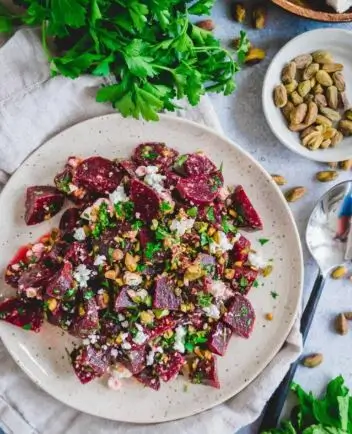
Thank you for reading this post, don't forget to subscribe!This beet salad with feta is built from a handful of ingredients that work together with the kind of complementary precision that makes a recipe feel inevitable rather than assembled — the earthy sweetness of beets against the sharp, salty creaminess of good feta, the bright crunch of pistachios, the freshness of parsley and mint, and a simple lemon and olive oil dressing that ties everything together without competing with any of the primary flavors. It is visually beautiful, genuinely simple, and meal-prep friendly in a way that lettuce-based salads fundamentally cannot be.
15 minutes of prep. No cooking required if you use ready-to-eat beets. A handful of quality ingredients. The result is a beet and feta salad that works as an elegant dinner party side dish, a meal-prep lunch component, and everything in between.
Ingredients and Selection Guide
The Essential Ingredient List
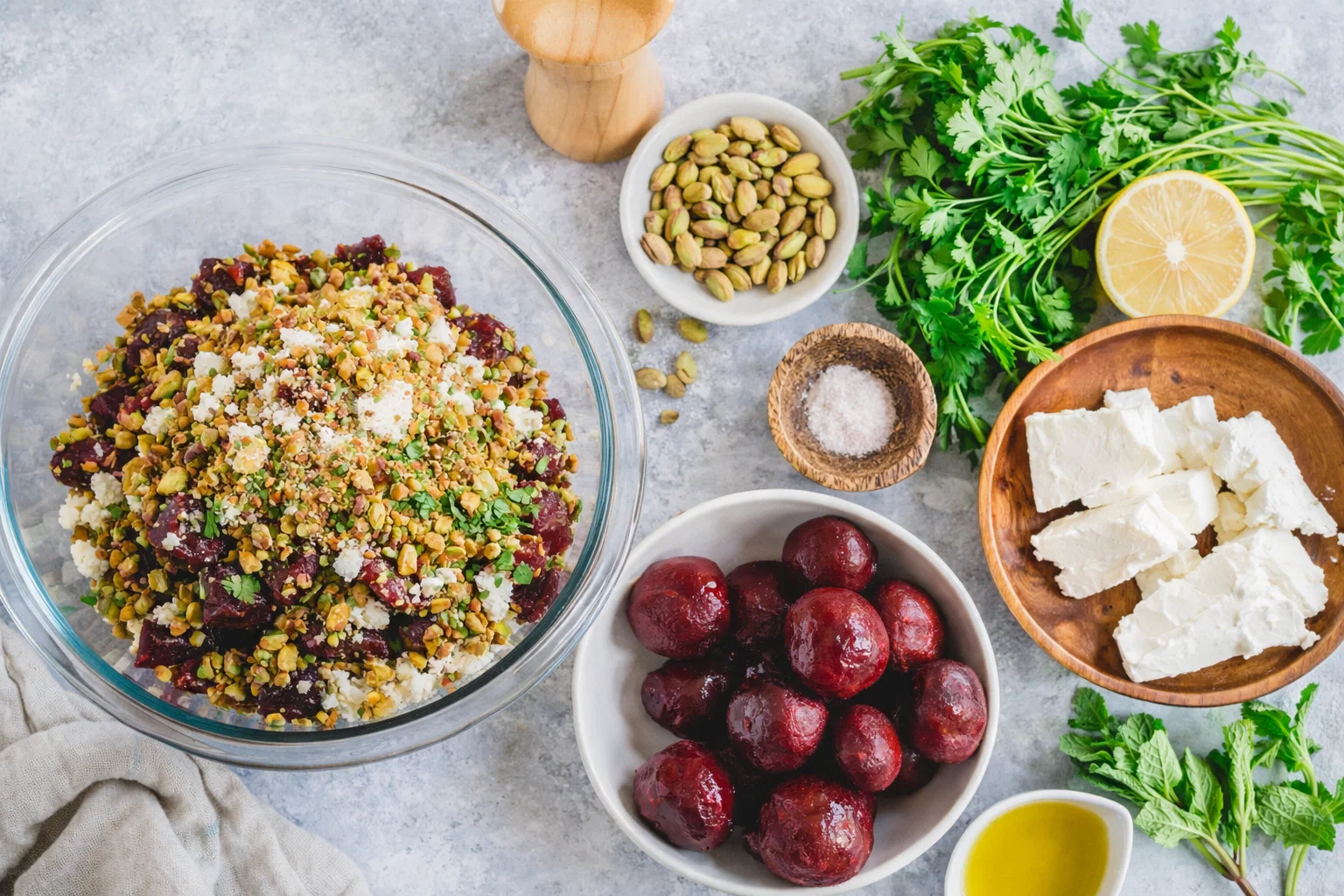
Every component of this easy beet salad with feta earns its place through genuine flavor contribution:
Cooked beets — the earthy, sweet, deeply colored foundation. Feta cheese — the salty, creamy, tangy counterpoint. Shelled pistachios — the crunchy, slightly sweet, visually striking nut. Fresh flat-leaf parsley — the clean, slightly peppery herb that provides freshness and color. Fresh mint — the cool, aromatic secondary herb that lifts the entire flavor profile. Extra-virgin olive oil — the fat component of the dressing that provides richness and body. Fresh lemon juice — the acid that brightens all the other flavors.
Sourcing Secrets: Choosing the Best Ingredients
Beets — Pre-Cooked vs. DIY: Pre-cooked “ready to eat” beets — sold vacuum-sealed in the produce section of most grocery stores — are the time-saving choice that makes this 15-minute beet salad genuinely achievable in 15 minutes. They are already cooked, already peeled, and require only chopping before use. The flavor and texture are excellent — comparable to home-cooked beets in most applications and indistinguishable in a dressed salad. For those who prefer to cook their own: wrap whole beets in aluminum foil and roast at 400°F for 45 to 60 minutes until fork-tender. Allow to cool completely, then rub the skins off under cold running water wearing kitchen gloves to prevent staining. The flavor of home-roasted beets is slightly more complex and more caramelized than pre-cooked — worth the additional time when time is available.
Feta — Block vs. Pre-Crumbled: High-quality block feta — packed in brine, ideally imported from Greece and made from sheep’s milk or a sheep and goat milk blend — is meaningfully superior to pre-crumbled feta for this feta and beet salad for two reasons. First, block feta packed in brine is moister, creamier, and more richly flavored than the dry, pre-crumbled version that has lost most of its moisture and considerable flavor during processing and packaging. Second, crumbling the feta yourself from a block allows you to control the size of the pieces — larger, more irregular crumbles provide a more substantial cheese bite and a more rustic, visually interesting presentation than the uniform, fine crumble of pre-packaged varieties.
Pistachios — Shelled for Speed: Pre-shelled pistachios save the time and effort of shelling at home — a meaningful consideration in a 15-minute recipe. Choose roasted pistachios for more developed, nuttier flavor than raw. Be attentive to salt content: salted pistachios add additional sodium to a dish that already contains salty feta — a fact that directly informs the seasoning guidance in the pro-tips section below.
Pro-Tips for Success
Mastering the Herbs: Parsley Intensity Management
Fresh flat-leaf parsley from a home garden or a farmers market is frequently more potent and more assertively flavored than commercially grown supermarket parsley — its essential oil content is higher and its flavor is more concentrated. In a simple beet salad where the herb is a prominent component rather than a background note, overpowering parsley can dominate the entire dish. Start with less parsley than you think you need — approximately half the quantity the recipe specifies — taste the assembled salad, and add more gradually until the parsley is present as a fresh accent rather than the primary flavor. Fresh mint provides a cooling counterpoint that softens any parsley intensity — if the parsley is particularly strong, increasing the mint slightly helps restore balance.
The Lemon Ratio: Juice by Taste, Not Measurement
The lemon and olive oil dressing for this beet salad with feta specifies a lemon juice quantity — but lemon size and juiciness vary enormously between individual fruits. A large, heavy, room-temperature lemon yields significantly more juice than a small, cold lemon — and the acidity of fresh lemon juice varies with the specific variety and ripeness of the fruit. The practical guidance: add the lemon juice gradually, whisking and tasting after each addition, until the dressing reaches the brightness and acidity that your specific lemon requires. The dressing should taste bright and citrusy without being mouth-puckeringly tart — the acid should lift the other flavors rather than dominate them.
Sodium Control: Salt Last, Always
This is the most important seasoning guidance for this homemade beet salad: do not add salt until you have tasted the fully assembled salad. Both the feta and the roasted pistachios (if salted) contribute significant sodium to the dish — salt added to the dressing before tasting the complete combination frequently produces an over-salted result that cannot be corrected. Assemble the salad completely, dress it, toss it, taste it — and only then decide whether additional salt is necessary. In many cases with good block feta and salted pistachios, no additional salt is needed at all.
Step-by-Step Preparation
Assembly: Chopping Techniques
Standard method — halves or quarters: Cut each pre-cooked beet into halves or quarters depending on size — the goal is bite-sized pieces that provide a good mouthful without requiring additional cutting at the table. Halved beets provide a more substantial, chunkier salad; quartered beets produce a more delicate result with more surface area to absorb the dressing. Both approaches are correct — the choice is aesthetic and textural preference.
Fancy alternative — spiralizing: For a more visually dramatic beet salad presentation, a spiralizer transforms raw or lightly blanched beets into long, curling strands that create an impressive, restaurant-style presentation. Spiralized beets have a different texture — more al dente and slightly crunchier than cooked beet pieces — and absorb the dressing differently. This approach requires raw beets and additional prep time but produces a genuinely stunning result for dinner party contexts.
The Dressing: Whisk Before Tossing
In a small bowl combine the fresh lemon juice and extra-virgin olive oil. Whisk vigorously until emulsified — the two should combine into a uniform, slightly opaque dressing rather than remaining separated. Season with freshly ground black pepper (hold the salt — see above). Whisking the dressing separately before adding it to the salad ensures even distribution — drizzling oil and lemon directly over the salad separately and then tossing produces uneven coating where some beet pieces are overdressed and others are barely coated.
The Melding Phase: Patience Pays
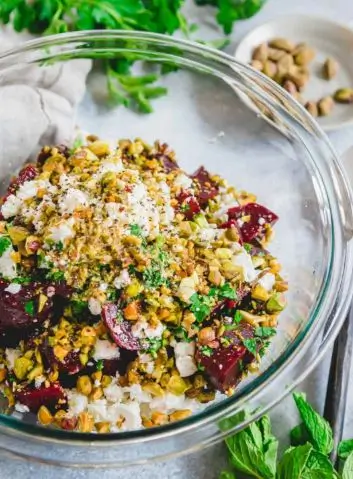
After assembling and dressing the beet feta salad — beets, feta crumbles, pistachios, parsley, mint, and dressing all combined — cover and refrigerate for 15 to 30 minutes before serving. This brief rest period allows the lemon dressing to penetrate the beet flesh slightly, the herbs to release their aromatic compounds into the dressing, and the feta to soften and meld with the other flavors in a way that produces a more cohesive, more developed flavor profile than the freshly assembled version. The pistachios retain their crunch through this short window — do not extend beyond 30 minutes if maximum crunch is a priority, or add the pistachios immediately before serving if the salad will sit longer.
Customization Matrix: Bulk It Up and Swap It Out
To Add Substance: Whole Grains
For a more filling, more substantial beet grain salad that works as a standalone lunch rather than a side dish, add cooked millet, quinoa, or brown rice — cooled to room temperature before incorporating. Millet provides a delicate, slightly nutty grain that doesn’t compete with the beet flavor. Quinoa adds protein and a slightly chewy texture. Brown rice is the most neutral option that adds volume without any competing flavor. Start with ½ cup of cooked grain per 4 servings and adjust to preference.
To Add Bitterness: Arugula
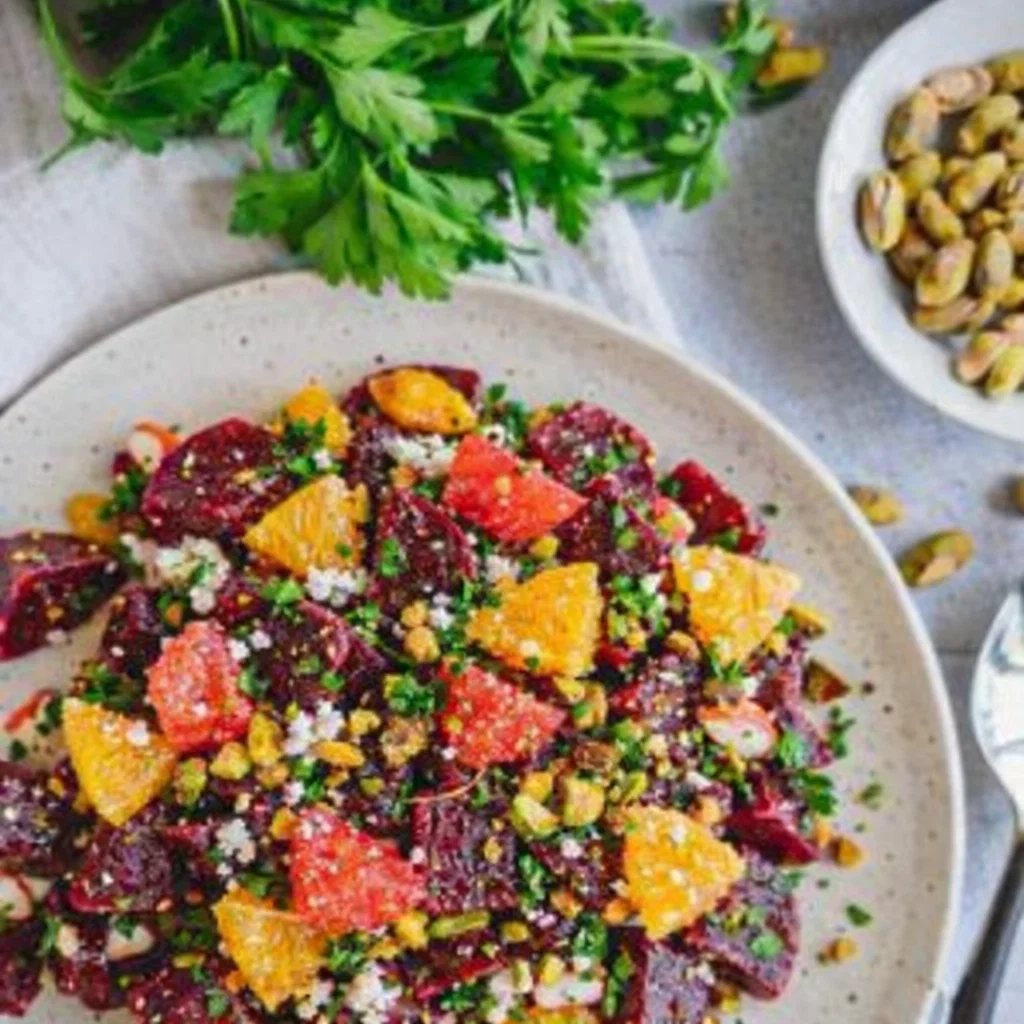
A handful of fresh arugula added to the assembled beet arugula salad with feta introduces a pleasant peppery bitterness that balances the earthy sweetness of the beets and the richness of the feta in a way that makes the overall flavor profile more complex and more interesting. Arugula also transitions this from a purely lettuce-free salad to a hybrid that maintains the structural integrity of the beet-based version while adding a green element.
To Add Sweetness: Fresh and Dried Fruit
Fresh pomegranate seeds are the most visually stunning addition — their jewel-red color against the deep purple of the beets creates a presentation that looks professionally styled. Their tart-sweet juice bursts provide a flavor contrast that amplifies both the sweetness of the beet and the saltiness of the feta. Fresh berries (raspberries or blueberries) add similar sweetness with a different visual character. Sliced apple adds crunch and mild sweetness. Dried cranberries or raisins add concentrated sweetness and a chewy texture that contrasts with the other components.
To Add Protein: Complete Meal Conversion
Add shredded rotisserie chicken — pulled into irregular, rustic pieces rather than uniformly sliced — to transform this beet salad with feta from a side dish into a complete meal beet salad that provides adequate protein for a satisfying dinner. The mild flavor of rotisserie chicken complements rather than competes with the beet and feta combination and requires zero additional cooking. Approximately 1 cup of shredded chicken per 4 servings converts the recipe to a main course.
Nut Swaps: Pistachio Alternatives
When pistachios are unavailable or cost-prohibitive, three nuts substitute effectively with different flavor results. Walnuts provide a slightly bitter, tannic quality that pairs particularly well with beets — their irregular shape and crunchy texture are similar to pistachios. Hazelnuts — toasted and roughly chopped — add a rich, slightly sweet nuttiness that is the most elegant pistachio alternative. Pecans add a sweeter, more buttery note that amplifies the natural sweetness of the beets.
Flavor Profiles and Serving Suggestions
The Science of Pairing: Why This Combination Works
The flavor success of this beet and feta salad is a textbook example of complementary and contrasting flavor pairing working simultaneously. Beets are earthy, sweet, and slightly mineral — flavor qualities that can feel heavy and one-dimensional without the right counterpoints. Feta provides saltiness and sharp, tangy dairy acidity that cuts directly through the earthiness of the beet and prevents it from dominating the palate. Lemon juice provides brightness and citric acidity that further lifts the earthy beet flavor and amplifies the freshness of the herbs. Pistachios add textural contrast and a mild, slightly sweet nuttiness that bridges the gap between the heavy beet and the sharp feta. The result is a salad where every component makes every other component taste better.
Perfect Pairings: What to Serve Alongside
Red meats: The earthy sweetness of beets has a particular affinity for the rich, savory depth of steak — specifically preparations like air fryer filet mignon where the clean, concentrated beef flavor is not complicated by heavy sauces. The beet salad functions as both side dish and palate-refresher between bites.
Elegant dinners: Pan-seared duck breast is the most sophisticated pairing for this elegant beet salad — duck’s rich, slightly gamey flavor and high fat content are ideally balanced by the acidity of the lemon dressing and the brightness of the fresh herbs.
General proteins: Roasted chicken, pork tenderloin, and turkey breast all pair comfortably with this salad across casual weeknight and more formal weekend dinner contexts.
The Official Recipe Card
Beet Salad with Feta Prep Time: 15 minutes | Cook Time: 0 minutes | Total Time: 15 minutes | Yield: 4 servings
Ingredients
For the Beet Salad
- 4 medium pre-cooked beets (approximately 2 cups when cut), cut into halves or quarters
- ½ cup good-quality block feta, crumbled into irregular pieces
- ¼ cup shelled roasted pistachios (salted or unsalted — see sodium note)
- ¼ cup fresh flat-leaf parsley, roughly chopped (start with less if using garden parsley)
- 2 tablespoons fresh mint leaves, roughly torn
For the Lemon and Olive Oil Dressing
- 2 to 3 tablespoons fresh lemon juice (adjust by taste — see lemon ratio note)
- 3 tablespoons extra-virgin olive oil
- Freshly ground black pepper to taste
- Kosher salt to taste (add last — after tasting assembled salad)
Nutritional Breakdown (Per Serving — Based on 4 Servings)
| Nutrient | Amount |
|---|---|
| Calories | 184 kcal |
| Total Fat | 14g |
| Saturated Fat | 4g |
| Protein | 5g |
| Carbohydrates | 11g |
| Dietary Fiber | 3g |
| Total Sugars | 7g |
| Sodium | 310mg |
| Vitamin C | 10mg |
Beyond the Salad: More Beet Inspiration
Leftover pre-cooked beets from this beet salad with feta open the door to a range of beet-based preparations worth exploring. Beet smoothies — blended with banana, apple juice, and ginger — use the sweetness and color of beets in a completely different application. Beet gratins — thinly sliced beets layered with cream and cheese and baked until tender — transform the same ingredient into a rich, warming winter side dish. Beet chips — thinly sliced, seasoned, and baked or air-fried until crispy — produce a snack that uses leftover beets before they deteriorate and that showcases the natural sweetness of the vegetable in a completely unexpected format.